
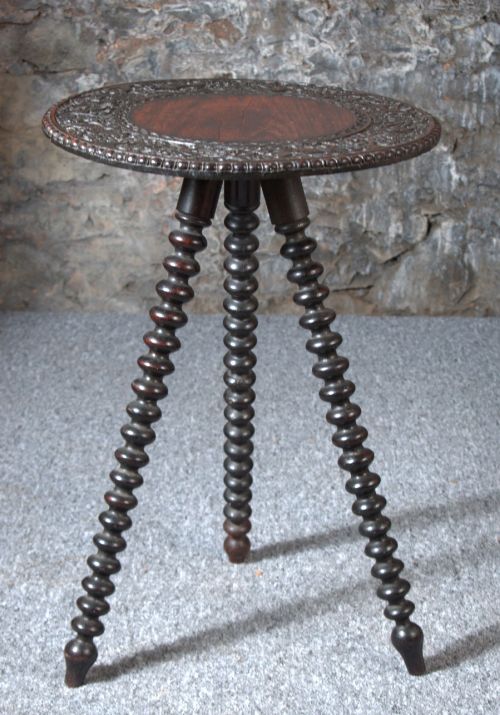


Vintage Indian Accent Table
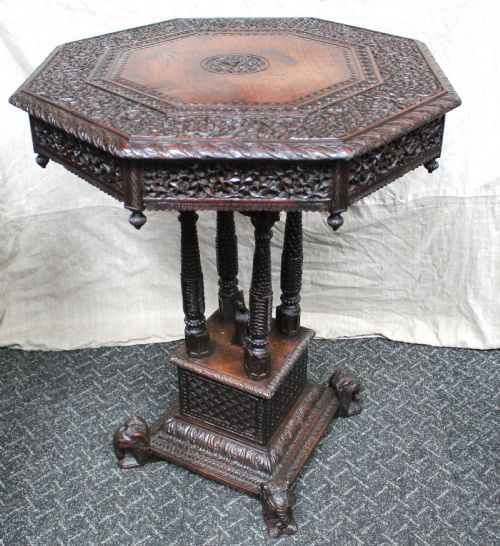
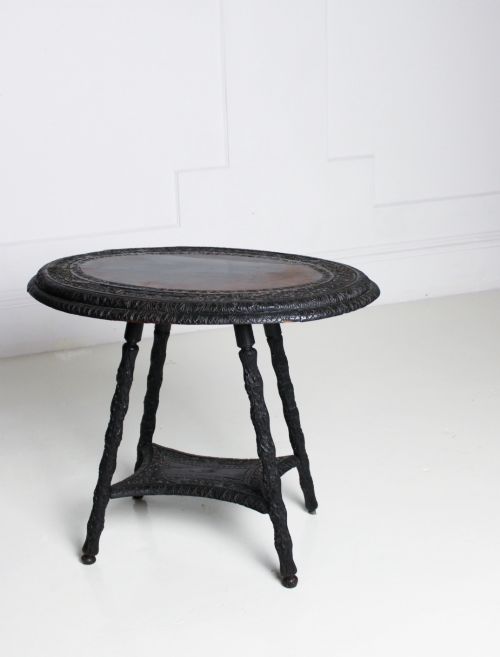
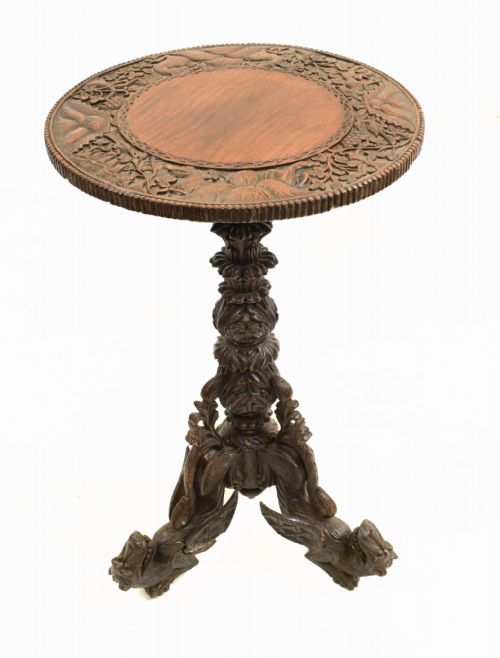
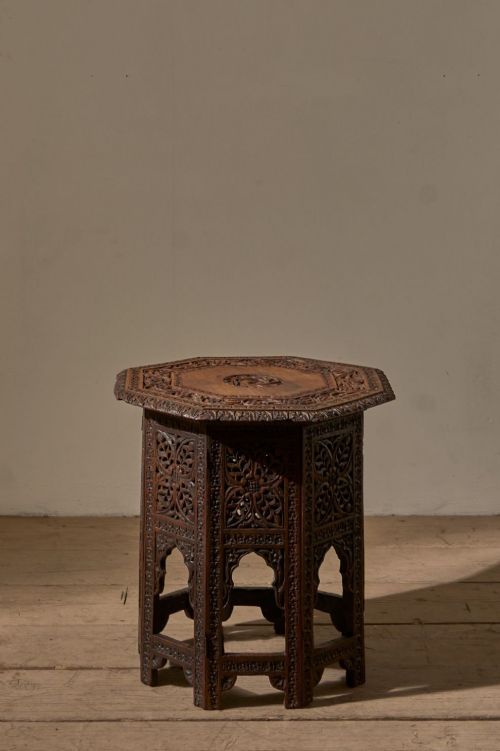
A vintage indian accent table brings intricate carved detail and rich timber into a room.
Vintage Indian Accent Table
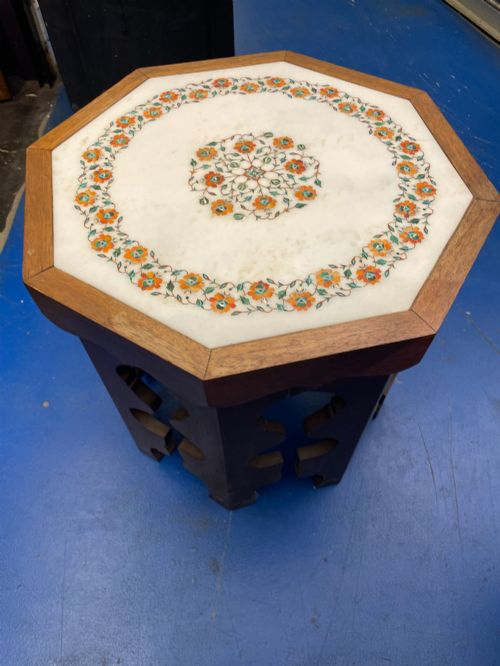
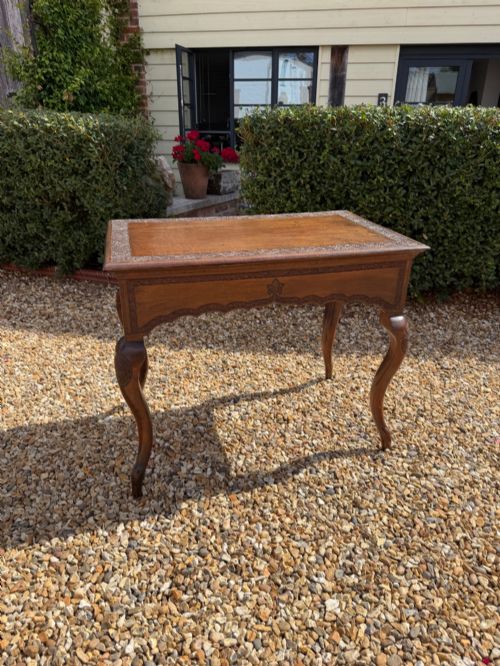
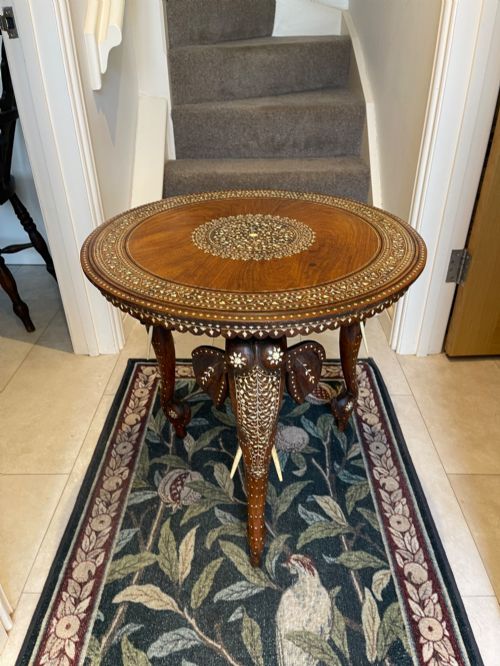
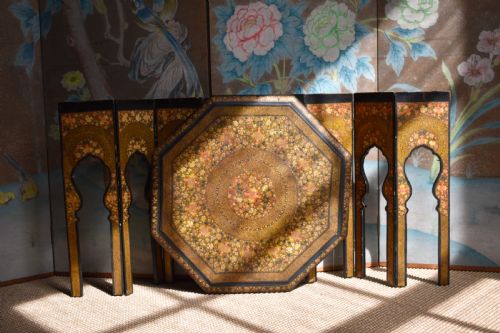
A vintage indian accent table encompasses small occasional surfaces, side tables, and coffee tables originating from the subcontinent during the nineteenth and early twentieth centuries. These pieces reflect diverse regional traditions, including Anglo-Indian, Kashmiri, and Burmese styles, created for both domestic use and export during the colonial period.
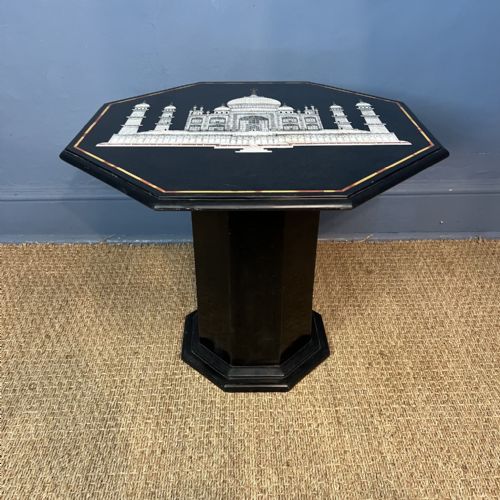
The selections available here range from folding teak and rosewood tables to elaborately decorated examples featuring regional motifs. Buyers frequently encounter low tables, pedestal supports, and nesting sets designed for functional placement within a contemporary interior.
Materials and construction methods
Artisans utilised dense regional timbers such as teak, rosewood, padauk, and walnut for structural integrity and fine carving work. These woods permitted deep relief carving, often depicting foliage, animal figures, or geometric patterns across the top and support structures.
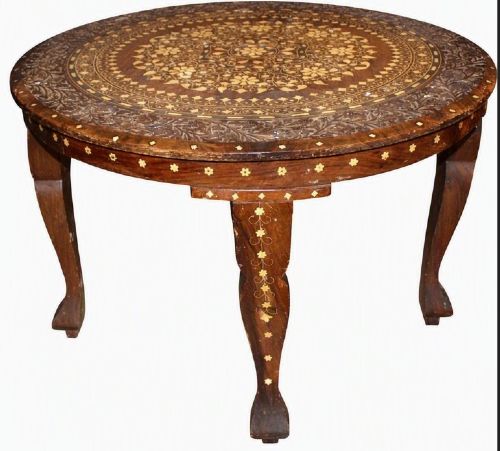
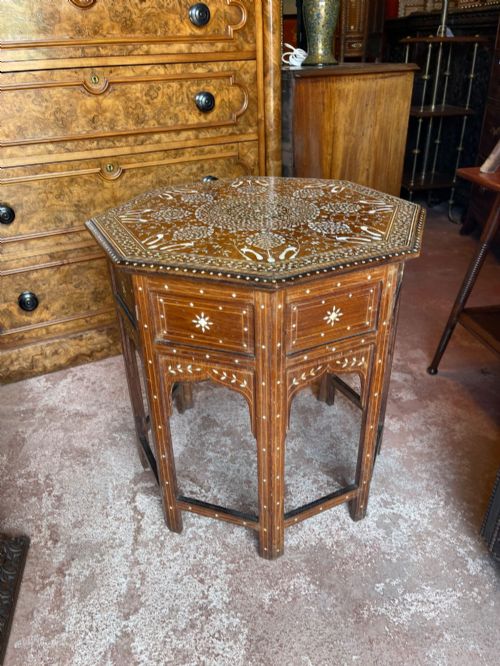
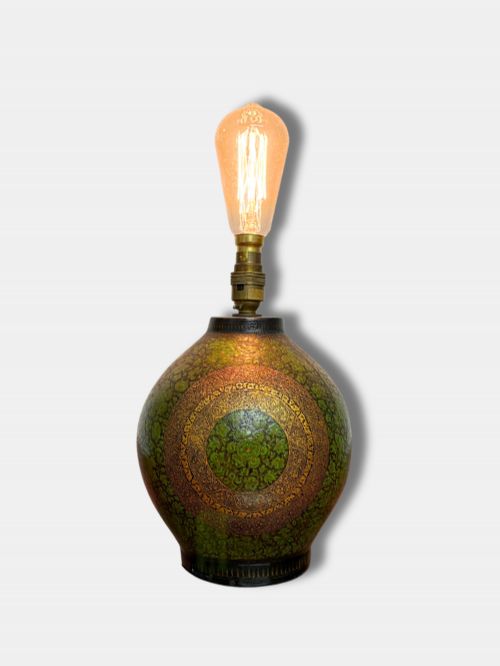
Surface ornamentation involved specialised techniques including bone inlay, mother-of-pearl placement, lacquering, and painted gilt decoration. Hoshiarpur pieces typically display intricate bone or wire inlay set flush into dark wood, while Kashmiri examples showcase colourful painted and gilt surfaces.
Vintage Indian Accent Table Retail Price Guide 2026
Typical asking prices for vintage indian accent table among the pieces listed under this phrase on Sellingantiques today, from the lower quarter to the upper quarter. They describe what is for sale here now, not the wider market.
Current listings feature materials including teak, rosewood, bone inlay, and brass, spanning the nineteenth and early twentieth centuries.
Indicators of quality
Quality in these tables rests upon the depth and precision of the hand carving, alongside the integrity of any inlaid elements. Superior examples exhibit crisp, sharp relief work without splintered edges, and retain all original bone or mother-of-pearl sections within the timber channels.
The choice of primary wood and the stability of the joinery also define superior manufacture. Solid dense hardwoods and robust folding mechanisms or tight pedestal joints separate standard export pieces from finer workshop productions.
Liberty & Co
The Vintage Indian Accent Table Glossary
- Anglo-Indian
- Describing items made in India under British influence, combining British furniture forms with traditional Indian decorative techniques. These objects often served colonial households or the European export market.
- Hoshiarpur
- A North Indian city renowned for intricate woodwork, specifically characterised by dense wooden surfaces covered entirely in geometric bone or brass wire inlay. Tables from this tradition utilise folding or tripod bases.
- Padauk
- A heavy, durable tropical hardwood displaying a reddish-brown hue that deepens with age. Artisans favoured this timber for carved side tables and figurative supports.
- Kashmiri
- Pertaining to decorative work from the Kashmir region, frequently featuring painted floral motifs, lacquer, and walnut construction. These items often include table lamps and low occasional surfaces.
Vintage Indian Accent Table: Frequently Asked Questions
How do I style a vintage Indian accent table?
These pieces function effectively as small side tables, bedside surfaces, or plant stands within modern and traditional rooms. Their carved tops and inlaid details provide a focal point when left clear or paired with simple ceramic objects.
Because many examples feature folding bases or compact footprints, they move easily between spaces as functional furniture. Positioning them near neutral seating allows the dense wood grain and surface decoration to stand out.
What is a Hoshiarpur table?
A Hoshiarpur table is a folding or tripod occasional table originating from the Punjab region, entirely covered in carved geometric patterns and bone inlay. Artisans set camel bone or brass wire into the timber surface to create intricate interlocking designs.
These tables typically feature octagonal tops and collapsible bases designed for easy transport. The technique demonstrates regional craftsmanship intended for both local utility and nineteenth-century export.
How do I date a nineteenth-century Indian table?
Dating relies upon examining the timber species, construction joinery, and the style of regional decoration. Pieces from the nineteenth century frequently employ solid rosewood, teak, or padauk with hand-cut fixings and deep relief carving.
Comparing motif styles against documented colonial export periods helps narrow the decade of manufacture. Maker stamps, when present, provide a direct point of reference for origin and date.