




Vintage Imari Wall Charger
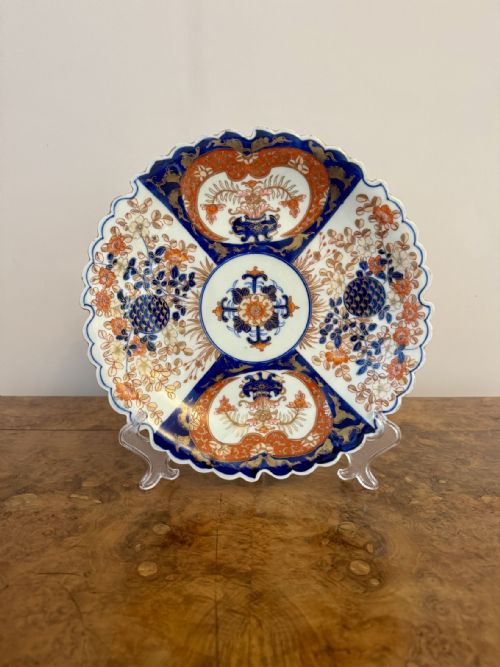
A vintage imari wall charger brings bold palettes of iron red, cobalt blue and gold leaf into a room, offering striking decorative presence on a wall or table.
Vintage Imari Wall Charger
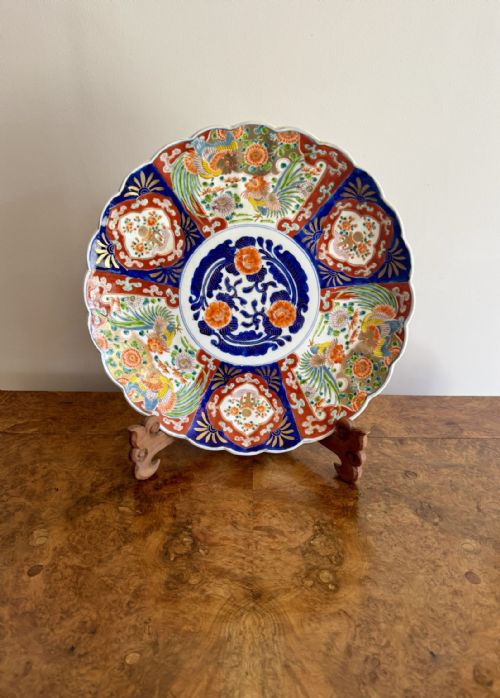
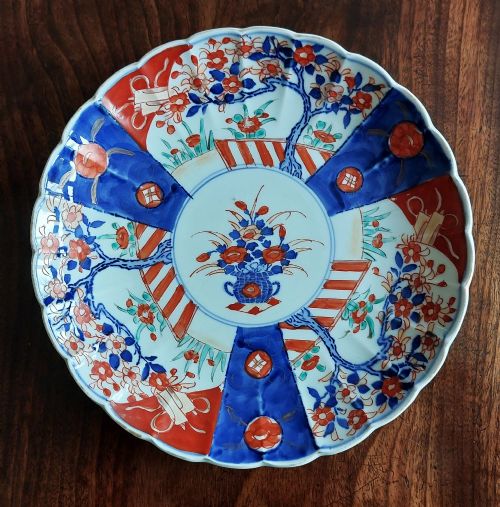
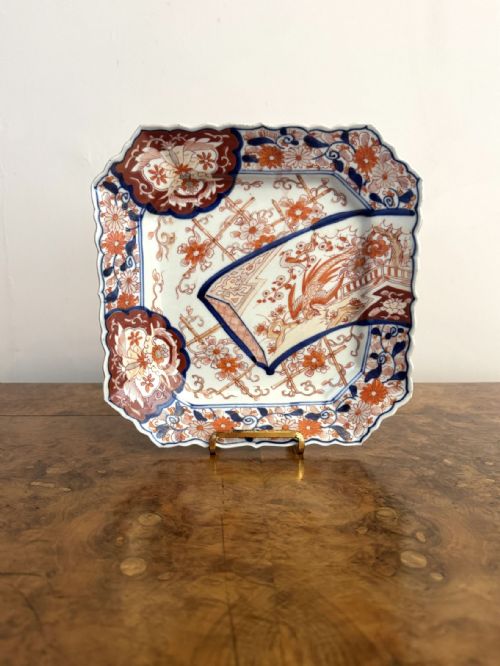
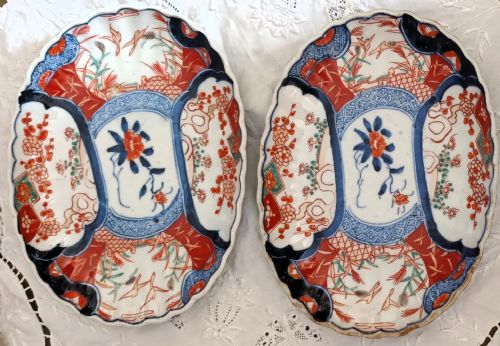
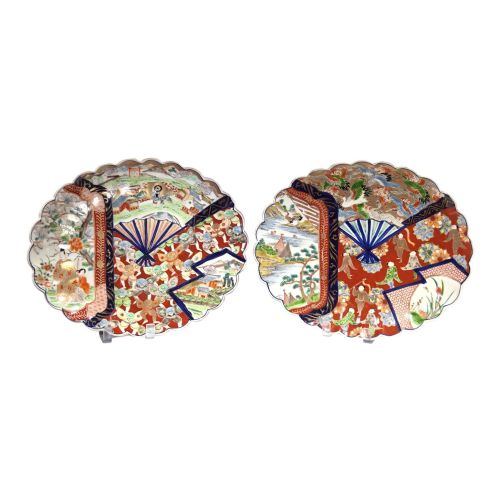
A vintage imari wall charger is a large decorative dish intended for display, featuring the traditional palette associated with Japanese and Chinese export ceramics. These pieces appear on this page in various forms such as large chargers, scalloped plates, square plates and oval dishes.
The selections span multiple periods, with pieces originating from the Edo period, Meiji period, and the nineteenth and twentieth centuries. Buyers encounter individual chargers, pairs and larger matched groups showing traditional motifs like the Seven Lucky Gods.
How they were made
Potters shaped these charger plates using ceramic and porcelain bodies, applying underglaze cobalt blue before the initial firing. Artisans then added enamel glaze and gold leaf or gilt highlights in intricate patterns across the surface before a secondary low-temperature firing.
Many examples feature hand-painted details combined with moulded or scalloped edges, square profiles or traditional circular forms. The combination of durable porcelain with rich enamel colours created robust decorative objects designed to retain their brightness.
Materials recorded across the selection include porcelain, ceramic, enamel, glaze, gilt, gold leaf and enamel glaze applied to various plate forms.
What varies in quality
The standard of a vintage imari wall charger rests upon the crispness of the hand-painted brushwork and the precision of the enamel and gilt application. Finer pieces demonstrate careful control over the cobalt blue underglaze and rich, densely layered enamel colours.
Form and shape also distinguish the range, as square plates, scalloped edges and unusual geometric profiles require greater skill in the ceramic shaping process. The complexity of the pictorial subject matter, such as multi-figure depictions of deities, elevates the character of the piece.
The Vintage Imari Wall Charger Glossary
- Imari
- A style of ceramic ware originating from the port of Imari in Japan, characterised by a distinctive palette of cobalt blue, iron red and gold.
- Charger
- A large decorative plate or dish traditionally used for display on a wall or sideboard rather than for dining.
- Meiji Period
- The era in Japanese history spanning from eighteen sixty-eight to nineteen twelve, known for prolific ceramic production exported to the West.
- Gilt
- A thin layer of gold or gold leaf applied to the surface of porcelain to highlight details in the design.
- Scalloped
- A decorative edge shaped into a series of flowing curves resembling a scallop shell.
Vintage Imari Wall Charger: Frequently Asked Questions
How do I hang a vintage imari wall charger safely?
These heavy porcelain plates require a robust, properly sized spring-clip hanger that distributes weight evenly around the rim without putting pressure on the ceramic body.
Ensure the wall fixing is secured into a stud or uses an appropriate wall anchor to support the substantial weight of a large charger safely.
What is the difference between Arita and Imari porcelain?
Arita is the actual town in the Hizen province where the porcelain clay was mined and fired, while Imari was simply the shipping port from which these wares were exported to Europe and beyond.
Over time, the style took the name of the port, meaning many Arita-made pieces are correctly identified as imari due to their characteristic palette.
Were these chargers meant for food use?
Larger chargers and decorative plates were primarily produced for visual display, ornament and export rather than everyday dining purposes.
The inclusion of delicate gold leaf and enamel glaze meant they functioned as decorative centerpieces in rooms rather than tableware.
How do I distinguish Meiji period pieces from later ones?
Meiji period ceramics typically exhibit finer hand-painted brushwork, denser enamel layering and greater weight within the porcelain body compared to twentieth-century alternatives.
Examining the depth of the cobalt blue underglaze and the application of the gold gilt often reveals the period's manufacturing standards.