




Vintage Imari Style Plate
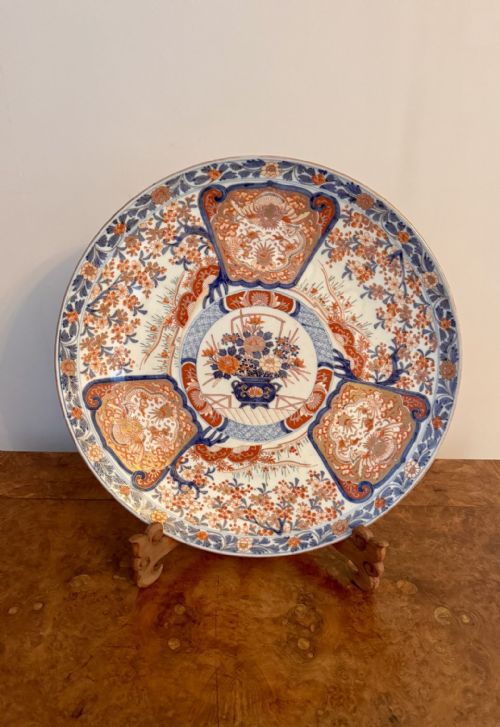
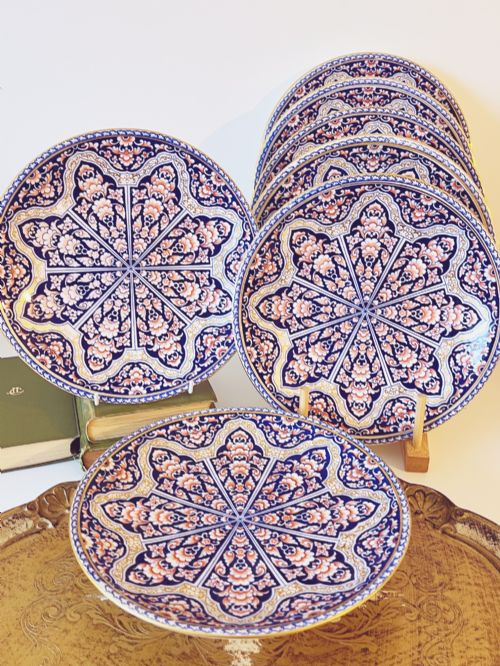
These vintage imari style plate examples bring together rich hand-painted palettes and varied forms from the nineteenth and early twentieth centuries.
Vintage Imari Style Plate
When you search for a vintage imari style plate, you encounter a mix of Japanese imports, Chinese export ware, and British interpretations from the Victorian, Edwardian, and later periods. The selections here range from standard decorative plates to larger chargers, oval platters, fan-shaped dishes, and complete dessert or dinner services.
Japanese examples dominate the listings, particularly pieces datable around nineteen hundred, alongside ironstone productions and nineteenth-century English services. You will find scalloped edges, blue and white imari variations, and pieces bearing traditional patterns intended for display or formal dining.
How they were made
The physical construction relies on porcelain, ironstone, bone china, and earthenware formed into plates, chargers, and ashets. Potters shaped these ceramics before applying underglaze and overglaze techniques to achieve the characteristic finish.
Makers utilised vibrant enamel colours alongside glaze and occasional gold leaf to build up the intricate surface decoration. This combination of ceramic body, fired glaze, and enamel painting creates the distinct visual weight associated with the style.
Vintage Imari Style Plate Retail Price Guide 2026
Typical asking prices for vintage imari style plate among the pieces listed under this phrase on Sellingantiques today, from the lower quarter to the upper quarter. They describe what is for sale here now, not the wider market.
Listings feature porcelain, ironstone, bone china, and earthenware across the nineteenth and early twentieth centuries.
What varies in quality
The standard of the painting and the crispness of the enamel work set the finer examples apart from simpler production ware. Precision in the brushwork and the depth of the glaze determine how successfully the decorative scheme holds the eye.
The integrity of the ceramic body, whether porcelain, ironstone, or bone china, also dictates the calibre of the piece. Superior items maintain sharp moulding along scalloped edges and well-preserved gilding without excessive rubbing.
Royal Crown Derby
The Vintage Imari Style Plate Glossary
- Imari
- A style of ceramic decoration originating in Japan, characterised by a palette of cobalt blue, iron red, and gold. This aesthetic heavily influenced European potteries during the nineteenth century.
- Charger
- A large decorative plate used historically for service or display rather than individual dining. These substantial pieces show off intricate patterns across a broader surface area.
- Ironstone
- A heavy, durable earthenware developed in Britain as a robust alternative to porcelain. It provides a sturdy base for printed and painted patterns.
- Ashet
- A regional British term for a large meat platter or serving dish. These oval or rectangular pieces form part of larger nineteenth-century dining services.
- Enamel
- Opaque glass-like material fused to the surface of fired ceramics during secondary firing stages. It provides the raised, vibrant colours distinct from underglaze blue.
Vintage Imari Style Plate: Frequently Asked Questions
How do I date an imari plate?
Dating relies on examining the ceramic body, backstamps where present, and the characteristics of the enamel colours. Nineteenth-century examples often display heavier ironstone or distinct crackleur in the glaze compared to later twentieth-century pieces.
Style shifts also offer clues, as Victorian interpretations frequently incorporate different border motifs than traditional Japanese exports from around nineteen hundred.
Can I use these plates for dining?
While many vintage imari style plate examples were originally part of functional services, age and wear mean most are now treated as decorative items. Older enamel and gold leaf can degrade with frequent use and modern dishwasher cycles.
For nineteenth-century porcelain or ironstone, gentle hand washing preserves the painted surface. Displaying them on plate stands or wall mounts keeps them safe from daily knocks.
What is the difference between Japanese and English imari?
Japanese pieces originate from the source of the tradition, focusing on porcelain bodies with hand-painted iron red, cobalt blue, and gold details. They often feature scalloped edges or unconventional shapes like fans.
English potteries, including nineteenth-century ironstone makers, reinterpreted the aesthetic using local clay bodies and adapted patterns to suit European dining habits of the period.
How should I display a large charger?
Chargers require sturdy wall hooks designed for heavy ceramics or dedicated cabinet stands that support their broader diameter. Because they are wider than standard plates, stability is the primary consideration.
Positioning them away from direct, harsh sunlight prevents the enamel colours and gold leaf from fading over years of exhibition.