


Vintage Hunting Dog Art
Vintage hunting dog art brings field sports and canine portraits into the room through oil paintings, watercolours, and bronze sculptures.
Vintage Hunting Dog Art
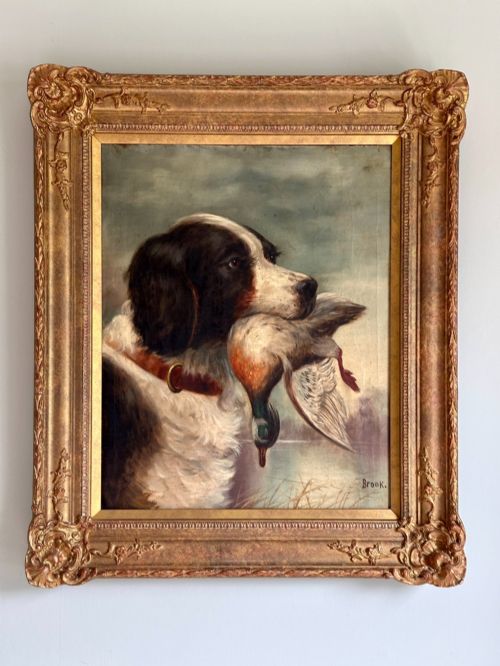
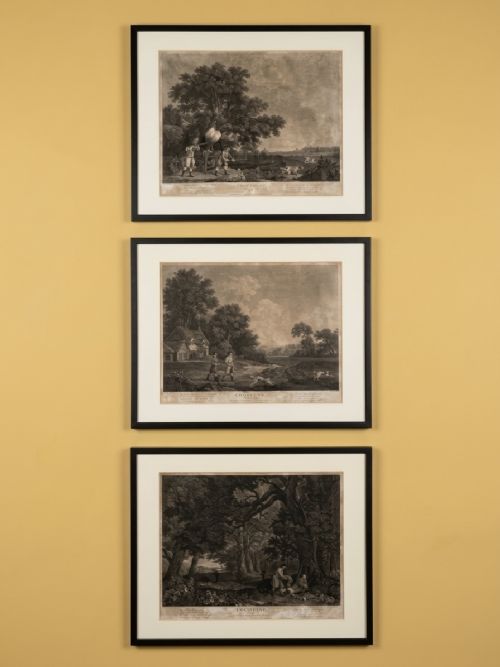
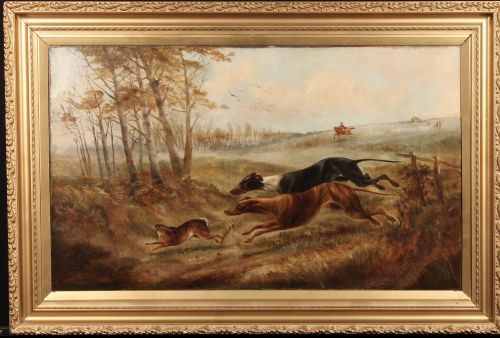
Vintage hunting dog art encompasses works depicting hounds, pointers, terriers, and spaniels engaged in field sports or portrayed within landscapes. Collectors searching for vintage hunting dog art encounter a range of mediums, with oil paintings on canvas and framed watercolours forming the majority of the available selection. These pieces originate from periods spanning the Georgian era through the Victorian period and into the mid-twentieth century, capturing domestic working dogs and pack animals.
The objects take the form of framed wall art, decorative glass plates, spelter and bronze figures, and marble table lamps. Painters and sculptors record individual breeds such as black pointers, clumber spaniels, Jack Russell terriers, and Russian borzois in rural settings. The inventory relies heavily on nineteenth-century sporting art traditions, reflecting how historical artists documented the working relationship between humans, hounds, and quarry.
Materials and methods
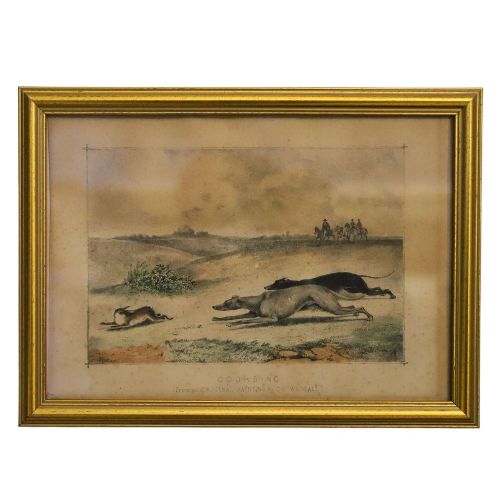
Artisans applied oil paint to canvas or board, and watercolours to paper, utilising traditional brushwork to render animal anatomy and landscape backgrounds. Lithographs and printed plates reproduce original compositions using pressed paper or pressed glass techniques.
Sculptors cast figures in bronze, spelter, and porcelain, frequently mounting metal or ceramic hounds onto marble bases. Carvers utilised organic materials such as coconut shell for drinking vessels, while manufacturers combined brass and marble for functional decorative lighting.
Material choices extend from carved coconut shell and brass to marble and porcelain figurines.
What distinguishes finer examples
Quality rests upon the artist's command of canine anatomy, muscle structure, and expression in the painted or sculpted form. Superior works convey alertness and posture with precision, whereas lesser examples present stiff or generic animal shapes without individual character.
The depth of the background landscape and the integration of the hound into its environment elevate a piece. Finer items exhibit confident brushwork or clean casting lines, while lower-tier mass-produced items lack detailed hand-finishing.
George Armfield·C. H. Weigall·John Frederick Herring Senior·Thomas Hicks·Arthur Wardle·Rene Lalique·C Masson·J F Marie Huet Villiers·Jules Chardigny·Michael Lyne·Henri Schouten·Tom Carr·Royal Dux·James Ward·Henry Frederick Lucas-Lucas·Robert Cleminson·William Albert Clark·Frank Dadd
The Vintage Hunting Dog Art Glossary
- Sporting art
- Depictions of rural pastimes, including shooting, hunting, and fishing, often featuring horses and hounds. This genre developed significantly in Britain during the eighteenth and nineteenth centuries.
- Lithograph
- A print made from a design drawn on limestone or metal plate using an oily medium. The process allows multiple flat impressions of an original drawing.
- Spelter
- An alloy of zinc, sometimes mixed with lead or copper, cast into decorative figures and patinated to resemble bronze. It served as an affordable material for ornamental statues.
- Watercolour
- A painting method in which fine pigments are suspended in a water-soluble binder, applied to paper surfaces. It creates translucent washes of colour favoured for field sketches.
Vintage Hunting Dog Art: Frequently Asked Questions
What breeds appear in hunting art?
Painters and sculptors record hounds, pointers, terriers, spaniels, and borzois across these works. These specific breeds reflect the working dogs utilised in historical field sports.
Artists frequently depicted animals in packs or as individual portraits within rural landscapes.
How do I date a painting?
Dating relies on stylistic clues, framing methods, and signatures recorded by the artist or gallery. Victorian and Georgian pieces display specific canvas preparations and pigment usage.
Assessing the clothing of any human figures present also helps narrow the production period.
Are these pieces originals?
The selection includes original oil paintings, unique watercolours, and period lithographs or moulded glass plates. Each listing notes the specific medium used by the maker.
Buyers find both hand-painted canvases and vintage decorative objects from the twentieth century.
How should I display sculptures?
Metal and ceramic figures mounted on marble bases require stable shelving away from direct sunlight. Bronze and spelter pieces benefit from occasional dusting with a soft cloth.
Table lamps combine functional lighting with sculptural hound bases for placement on side tables.