
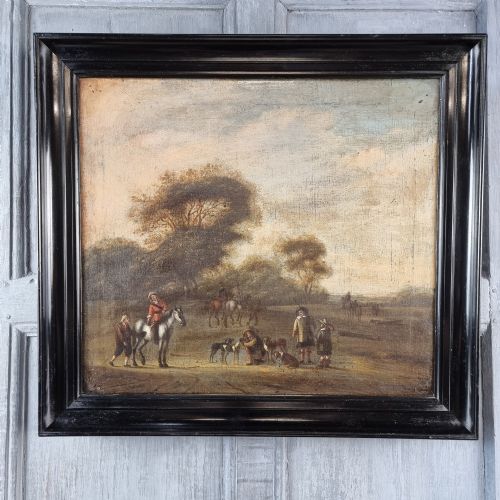
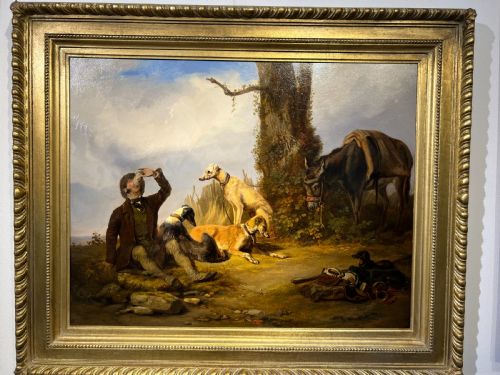


Framed Oil Hound Painting
A framed oil hound painting brings the movement and character of traditional sporting art directly onto the wall.
Framed Oil Hound Painting
A framed oil hound painting captures the intensity and companionship of sporting dogs through centuries of British and European tradition. These works range from intimate single dog portraits to sweeping fox hunting scenes executed across the seventeenth, eighteenth, and nineteenth centuries.
The most common examples on this page date from the Victorian era, reflecting a period when animal painting and sporting art gained immense popularity. Whether depicting a solitary retriever or a pack in full cry, each piece records the physical build and alert posture of the hound.
Makers and artists working within this genre recorded both individual animals and dynamic pack movements. Works vary from detailed studies on canvas and board to broader landscape compositions incorporating huntsmen and horses.
Materials and technique
Artists painted primarily with oil on canvas or wooden boards, applying rich pigments to build depth and texture within the animal coats and surrounding landscapes. Oil paint allowed painters to layer tones and capture the play of light across fur and woodland scenery.
The physical framing forms an integral part of the piece, frequently utilising carved giltwood or traditional wood moulding to complement the dark, earthy palettes of the Victorian and Georgian periods. Gold leaf accents on the frames added contrast to the deep greens and browns of the hunting scenes.
Listings feature works spanning from the seventeenth century through the nineteenth century, executed in oil on canvas, wood, and board.
What separates the work
Quality in a framed oil hound painting rests on the artist's ability to render anatomical accuracy and convincing movement within the animal subjects. Weaker examples often rely on stiff, formulaic postures, whereas superior works convey the distinct muscle structure, intelligent expression, and focused energy of the hound.
The handling of the surrounding landscape and atmospheric conditions also divides standard decorative pictures from accomplished fine art. A skilled hand integrates the dogs naturally into the terrain, balancing detailed brushwork on the subjects with looser, more atmospheric treatment of distant skies and foliage.
Sir Edwin Henry Landseer·George Wright·Samuel Raven·Colin Graeme Roe·Fannie Moody·Henri Schouten·Ludolf de Jongh·Heywood Hardy·Guillaume Urban Régamey·George Goodwin Kilburne·Thomas Blinks·Philip Eustace Stretton·Richard Waitt·Henry Frederick Lucas-Lucas·Edward B Herberte
The Framed Oil Hound Painting Glossary
- Oil on canvas
- A painting medium where pigments suspended in drying oils are applied to stretched woven fabric. This method allows for subtle blending and rich texture.
- Giltwood
- Wood carved and coated with gold leaf or gold paint. It provides a bright, ornate border that contrasts with traditional dark oil paintings.
- Sporting art
- Fine art depicting bloodsports, racing, coaching, and domestic animals. This genre flourished in Britain throughout the eighteenth and nineteenth centuries.
- Oil on board
- A technique where rigid wood or panel supports replace stretched canvas. This surface offers a firm foundation for detailed brushwork.
- Full cry
- A hunting term describing hounds baying simultaneously when actively pursuing quarry. Artists used this dynamic moment to create lively, multi-figure compositions.
Framed Oil Hound Painting: Frequently Asked Questions
How should I hang a framed oil hound painting?
Hang the painting at eye level on a wall with stable ambient conditions, away from direct heat sources and strong sunlight. This protects both the oil pigment and the wooden frame from warping or cracking.
Ensure the wall fixings are rated to support the weight of the heavy antique wooden and gilt frames typical of nineteenth-century sporting art.
How can I tell the period of a hound painting?
Examine the materials, stretcher bars, and the construction of the frame on the reverse side. Canvas types, hand-cut nails, and framing styles often provide reliable clues to the century of creation.
Artist signatures, inscriptions, and stylistic traits typical of Victorian or Georgian sporting art also help narrow down the date.
What is the difference between canvas and board?
Canvas consists of woven fabric stretched tightly over a wooden frame, offering slight give and a textured surface for brushstrokes. Board provides a rigid, solid panel support favored for smaller studies and works on wood.
Both supports were widely used across different periods, though boards frequently indicate smaller cabinet paintings or preparatory sketches.