


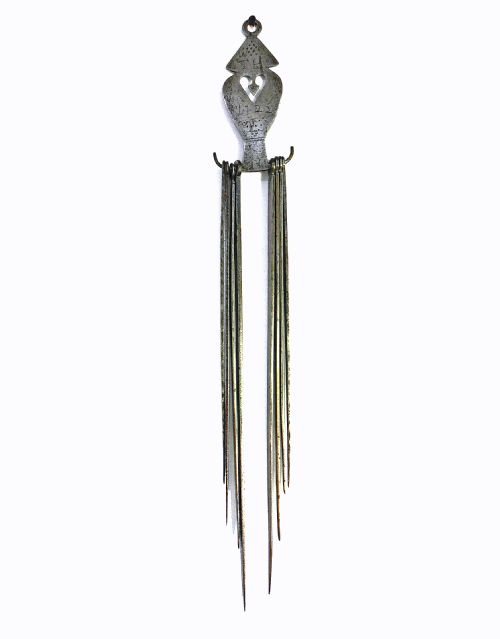
Vintage Hearth Tool Set
A vintage hearth tool set brings functional metalwork and period character to the fireplace, offering the poker, tongs, and shovel needed for daily maintenance.
Vintage Hearth Tool Set
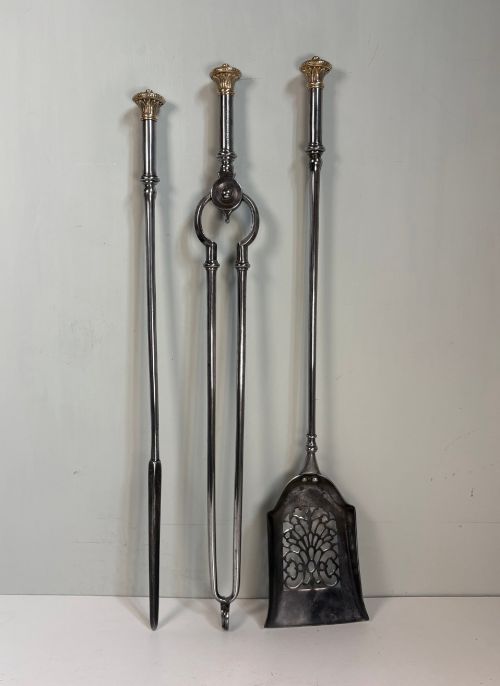
A vintage hearth tool set comprises the essential implements required to manage an open fire, gathered together in matching configurations or complementary stands. When exploring this selection, buyers encounter formats ranging from simple utilitarian groupings to decorative displays designed for country houses and town residences.
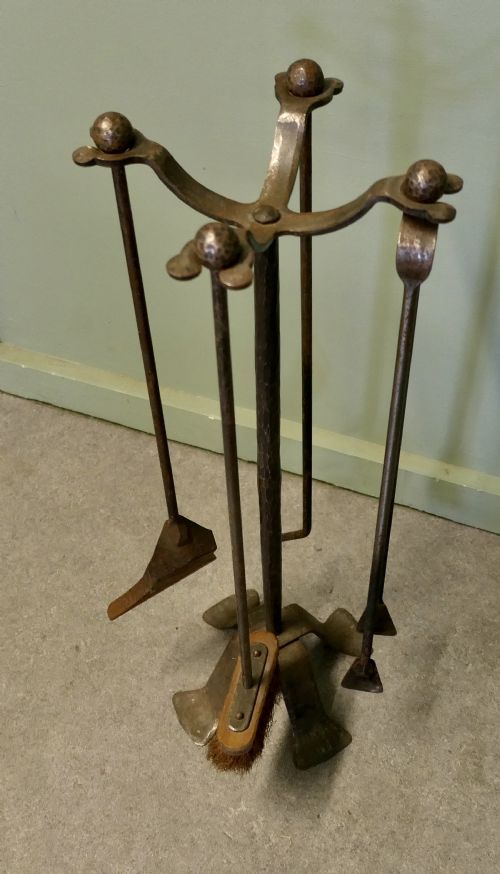
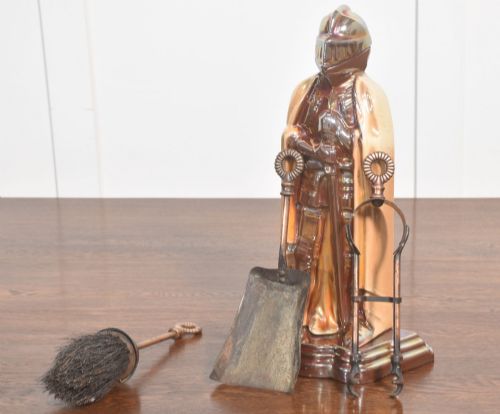
The pieces visible here span multiple periods, from eighteenth-century examples to twentieth-century sets reflecting Edwardian and Arts and Crafts design principles. Common configurations include three-piece fire irons, companion sets with dedicated stands, and ensembles incorporating fire dogs or fenders.
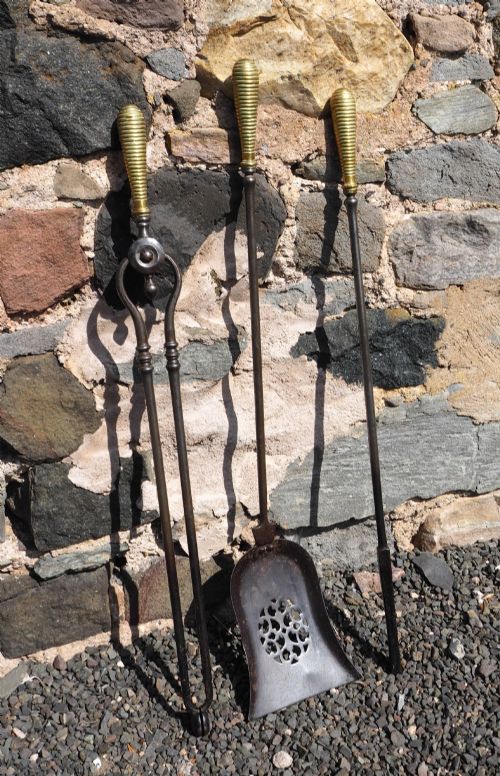
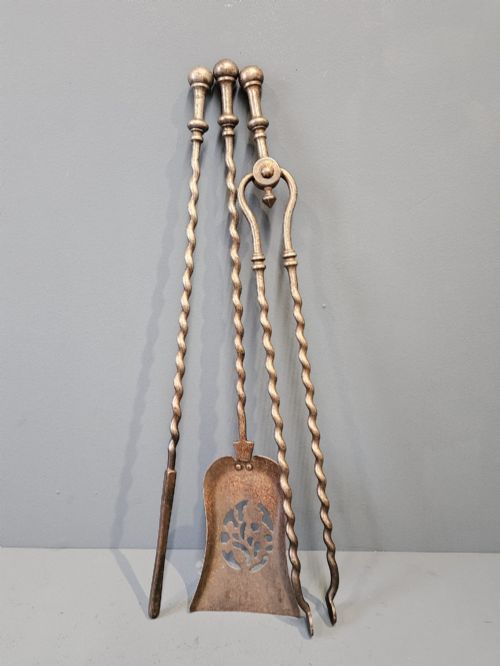
Origins vary across English, French, and broader traditional styles, incorporating regional metalworking traditions into everyday domestic objects. Buyers frequently meet Victorian brass and steel pairings alongside robust wrought iron examples suited for large inglenook fireplaces.
Materials and construction methods
Makers relied primarily on brass, steel, and iron to forge these implements, selecting metals based on both structural strength and decorative potential. Steel provided the resilience needed for pokers and tongs, while brass offered a bright finish for handles and decorative mountings.
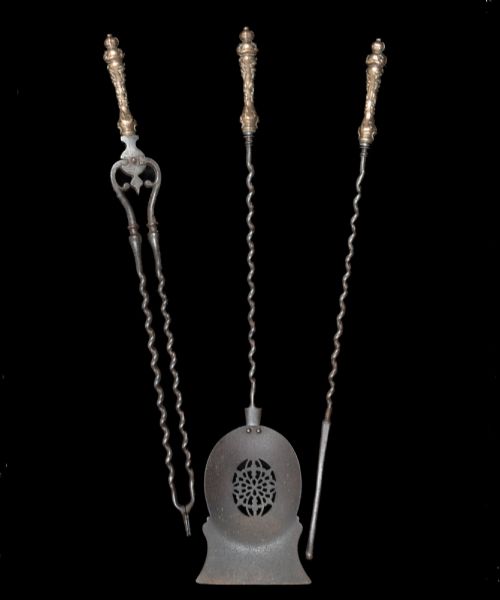
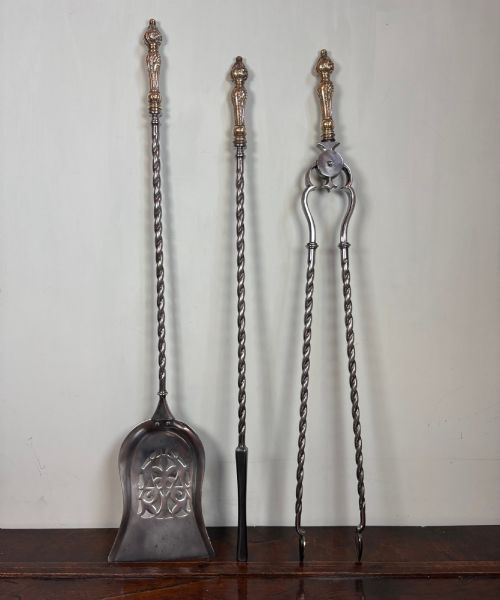
Techniques combined hand-forging, casting, and polishing, with craftsmen utilising wrought iron for sturdy rustic frames and polished steel for refined nineteenth-century profiles. Details such as rope-twist handles and engraved surfaces demonstrate traditional metalworking skills passed down through workshops.
Listings feature materials including brass, steel, iron, wrought iron, cast iron, copper, and polished steel across multiple centuries.
Markers of distinction
Quality in a vintage hearth tool set rests in the heft of the metal and the integrity of the joins between handles and shafts. Superior examples exhibit balanced proportions that make lifting and using the poker or shovel feel natural and secure.
Finishes also separate standard utility items from finer productions, seen in crisp casting details on brass mounts and careful hand-polishing on steel shafts. The inclusion of matching stands, fire dogs, or coordinated fenders elevates an ensemble from a simple collection of tools to a unified decorative arrangement.
The Vintage Hearth Tool Set Glossary
- Companion set
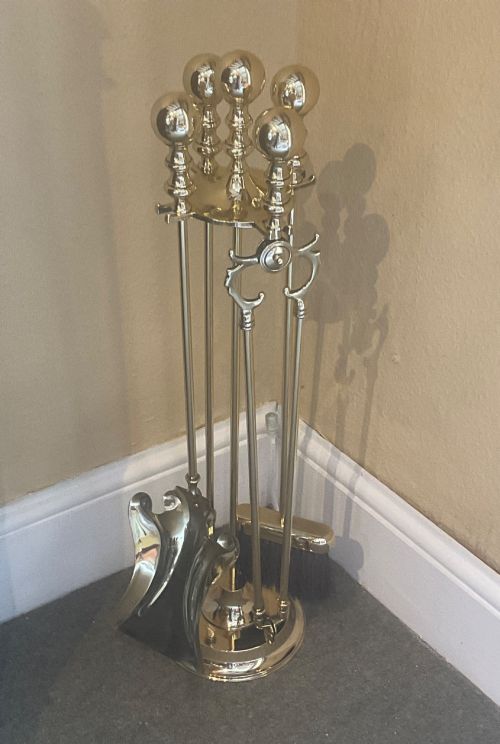
- A collection of fireplace tools housed on a dedicated stand or rack. These groupings typically include a poker, tongs, and shovel.
- Fire irons
- The individual metal implements used to tend a fire, traditionally consisting of a poker, shovel, and tongs. They often rest against a fender or stand in a hearth basket.
- Inglenook
- A large recessed space around a fireplace, often accommodating seating. Tools designed for these deep hearths tend to be larger and heavier.
- Rope-twist
- A decorative spiral pattern carved or cast into the handle or shaft of a metal tool. This technique adds texture and grip to brass and steel implements.
Vintage Hearth Tool Set: Frequently Asked Questions
What tools belong in a standard set?
A standard set typically includes a poker for adjusting logs, tongs for moving burning fuel safely, and a shovel for clearing ash.
Many arrangements also incorporate a brush or hang from a dedicated stand beside the fireplace.
How do I care for brass and steel tools?
Regular dusting and occasional light cleaning help maintain the finish of brass and steel implements.
Avoiding abrasive cleaners preserves the historical patina accumulated over decades of domestic use.
Can these tools be used on an active fire?
Most period iron and steel pieces are built for practical use and handle regular tending without difficulty.
Lighter decorative brass sets from later periods are often better suited for display rather than heavy daily stoking.
How do I identify a Victorian set?
Victorian examples often feature robust brass construction, sometimes paired with polished steel shafts and detailed handles.
Stylistic cues range from ornate Rococo revival motifs to simpler utilitarian designs found in nineteenth-century country houses.