



Black Iron Fire Tools
These black iron fire tools bring practical utility and character to an open hearth, forged from robust metals to serve a working fireplace.
Black Iron Fire Tools
When you search for black iron fire tools, you encounter functional hearth equipment designed for tending coal or wood fires. These pieces typically comprise companion sets, individual fire irons, and associated rests or grates.
You are most likely to meet 19th century and Victorian examples on this page, reflecting the heavy domestic use of solid metal accessories during that era. Items range from simple country house inglenook tools to French companion sets.
Alongside standard tool sets, the selection includes related fireplace accessories such as andirons, fire dogs, log grabbers, and fenders. These objects originate from English and French workshops, utilising durable materials built for daily service.
How they were made
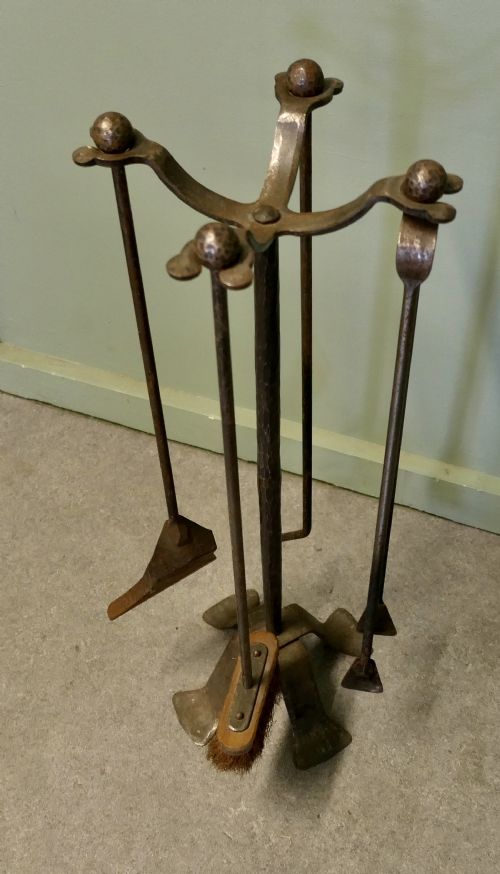
Black iron fire tools rely on traditional metalworking methods, primarily utilising wrought iron and cast iron. Wrought iron pieces often show the marks of hand forging, creating tough implements designed to withstand intense hearth heat.
Cast iron is frequently employed for heavier structural items like andirons, fire dogs, and fenders, allowing for moulded decorative details. Some domestic accessories also incorporate wood elements for handles or supports, contrasting with the dark metal bodies.
Black Iron Fire Tools Retail Price Guide 2026
Typical asking prices for black iron fire tools among the pieces listed under this phrase on Sellingantiques today, from the lower quarter to the upper quarter. They describe what is for sale here now, not the wider market.
One surviving piece bears a distinct date of 1580, proving that Tudor hearth tenders were built to outlast their owners.
What varies in quality
Quality in these implements rests on the integrity of the forging and the weight of the metal. Heavier hand forged pieces demonstrate greater skill in shaping the iron than mass produced alternatives.
The sophistication of the design also distinguishes finer examples, ranging from utilitarian country items to ornate Gothic Revival or Art Nouveau styling. Preservation of the original iron surface without excessive pitting indicates superior historical care.
The Black Iron Fire Tools Glossary
- Wrought iron
- A tough, malleable form of iron that can be heated and worked with a hammer. It is frequently used for hand forged fire tools and companion sets.
- Cast iron
- Iron that has been melted, poured into a mould, and cooled. This material is common for heavy hearth accessories like fire dogs and fenders.
- Companion set
- A matched group of fire tending implements housed together on a stand or rest. These sets typically include pokers, tongs, and shovels.
- Andirons
- Supports used to hold logs burning in an open fireplace, often featuring decorative front pillars. They are also known as fire dogs.
- Inglenook
- A recessed corner by a large fireplace, traditionally used as a seating area. Tools designated for this space are usually substantial in scale.
Black Iron Fire Tools: Frequently Asked Questions
What is included in a companion set?
A companion set usually groups several essential fire tending implements together on a shared stand or rest. These collections provide the necessary tools to manage an open fire efficiently.
Typical components include pokers, shovels, and tongs, designed to handle fuel and ash safely. Matching sets create a uniform appearance beside the hearth.
How do I date an iron fire tool?
Dating iron hearth equipment involves examining the manufacturing techniques and stylistic details present in the piece. Hand forging marks often suggest earlier periods, while specific decorative motifs point to Victorian or Art Nouveau origins.
Contextual clues such as maker attribution, regional styles, and material characteristics also help narrow down the century of production. Comparing the object to dated architectural hardware provides further accuracy.
Were these tools used for wood or coal?
Fire tools were adapted to suit the primary fuel burned in the hearth during their respective periods. Implements like log grabbers were specifically designed for managing large pieces of wood.
Other tools, such as pokers and shovels, served dual purposes for breaking up coal or shifting wood ash. The scale and weight of the iron generally reflect the intended fuel type.
How do I care for antique iron?
Maintaining antique iron requires keeping the metal dry and free from moisture to prevent active corrosion. Periodic application of specialised waxes or oils helps protect the dark surface finish.
Avoid harsh chemical cleaners that can strip the historic patina accumulated over centuries of use. Gentle dusting and occasional light conditioning preserve the structural integrity of the metal.