


Wrought Iron Fire Tools
Wrought iron fire tools are heavy, forged metal hearth implements built to manage hearth fires, combining robust utility with period craftsmanship.
Wrought Iron Fire Tools
Wrought iron fire tools comprise fireplace tools, companion sets, fire irons, and associated hearth accessories designed for domestic and manor house heating. Buyers seeking wrought iron fire tools encounter robust implements intended for heavy hearth use, spanning centuries of British, French, and continental domestic life.
The pieces on this page appear primarily from the nineteenth century, eighteenth century, Georgian, and Victorian periods, alongside specific vernacular styles such as French country, rustic country, and Gothic revival. Forms range from large companion sets and inglenook tools to individual log grabbers, ember tongs, and toasting forks.
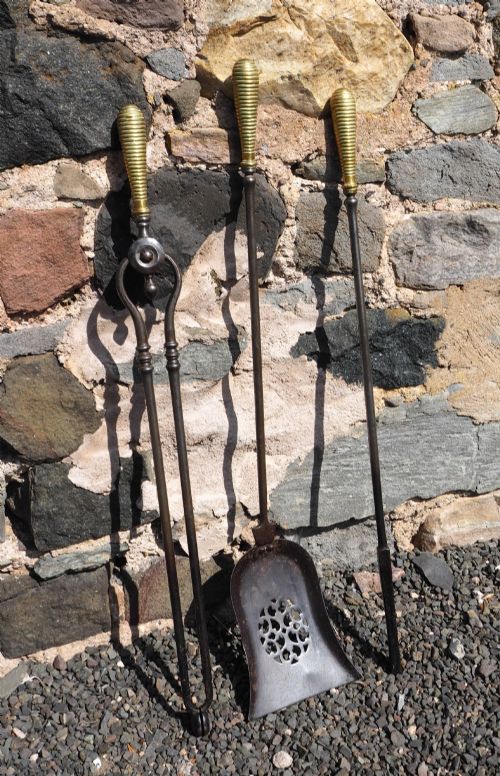
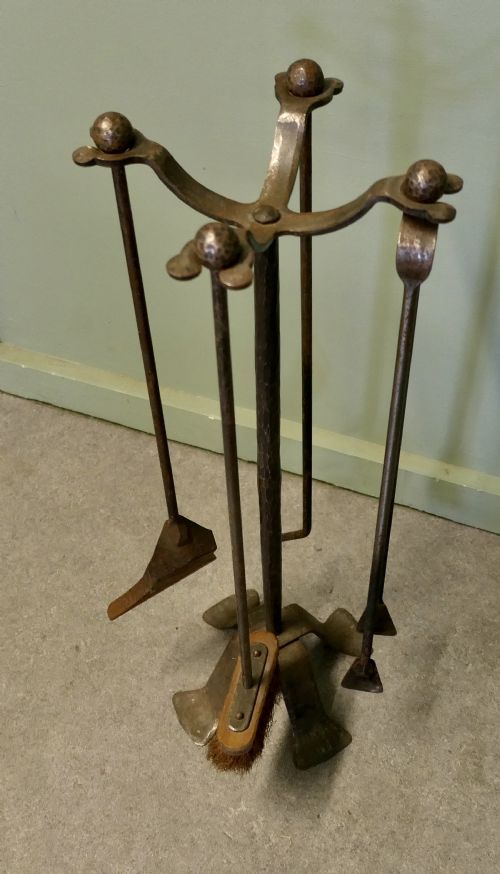
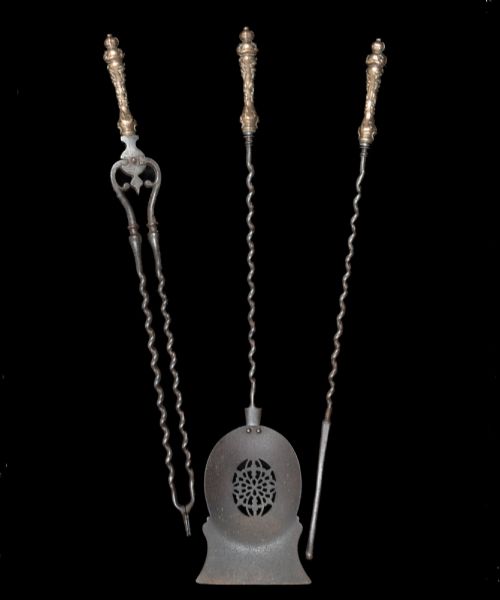
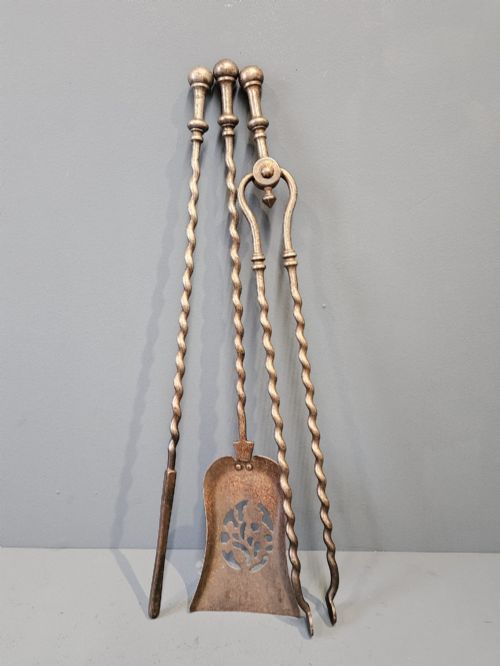
Sets frequently include tongs, pokers, and fire dogs or tool rests, occasionally incorporating brass, polished steel, or yew wood elements. The domestic hearth required durable ironwork to withstand intense heat, leading to hand-forged constructions that survive from manor houses and country estates.
How they were made
Smiths utilised hand-forged wrought iron and steel, shaping the metal while hot upon the anvil using traditional hammers and chisels. This process produced durable hearth implements where tool heads and shafts were often forged as single pieces or joined securely.
Makers integrated mixed materials on specific examples, combining iron and steel with polished steel, brass mounts, and turned yew wood handles. Surface finishes derived from the hammering process, leaving texture and tool marks characteristic of manual forge work.
Styles recorded span French country, rustic country, Gothic revival, and Art Nouveau across eighteenth and nineteenth century examples.
What varies in quality
Quality in these hearth implements rests upon the proportion and balance of the forged shafts and handles, distinguishing estate-made utility pieces from finer decorative sets. Heavier gauge ironwork and deliberate hand-forged detailing, such as arrow head designs or turned wooden grips, separate standard production from superior examples.
The integrity of the joins between handles and working ends dictates structural longevity under daily hearth conditions. Greater refinement in the shaping of tongs, pokers, and companion rests marks the upper end of the surviving range.
The Wrought Iron Fire Tools Glossary
- Companion set
- A matched group of hearth implements, typically including a poker, tongs, and shovel, housed together on a stand or rest.
- Fire dog
- A horizontal support iron used in pairs within a hearth to hold logs above the floor for better airflow, often incorporating tool rests.
- Ember tongs
- Pincer-like implements utilised for moving individual hot coals or embers within the fireplace basket.
- Log grabber
- A scissor-action tool designed for lifting and positioning heavy logs safely onto an open fire.
- Toasting fork
- A long-handled wrought iron or steel utensil featuring multi-pronged forks used for preparing food directly over hearth embers.
Wrought Iron Fire Tools: Frequently Asked Questions
How do I use antique fire tools?
These implements serve for tending open fires, positioning logs, and managing embers using pokers, tongs, and grabbers.
Their substantial forged construction handles daily hearth duties while remaining decorative beside an open fireplace.
What periods do these pieces span?
The selection includes items from the eighteenth and nineteenth centuries, encompassing Georgian, Victorian, and Art Nouveau eras.
Stylistic shifts reflect changing domestic interiors, moving from utilitarian country house ironwork to ornate Victorian revival designs.
Are companion sets always matched?
Survival rates mean sets often combine pieces forged together originally or assembled later as country house companion groupings.
Hand-forged details like arrow head terminals help identify unified sets created by a single smith.
How do I care for wrought iron?
Maintenance involves keeping iron dry and occasionally applying light protective oils to preserve the forged surface.
Avoid abrasive cleaners that remove the natural dark patina developed through centuries of handling and hearth heat.