








Vintage Harbour Scene Artwork
Vintage harbour scene artwork captures maritime life across painting and watercolour from the nineteenth century to the mid-twentieth century.
Vintage Harbour Scene Artwork
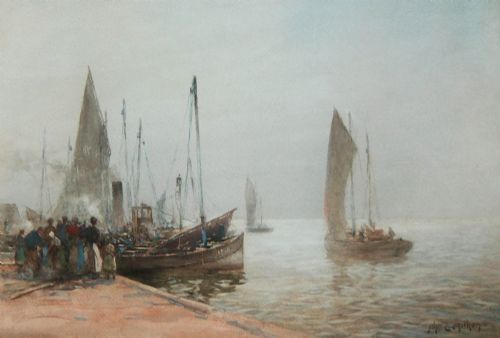
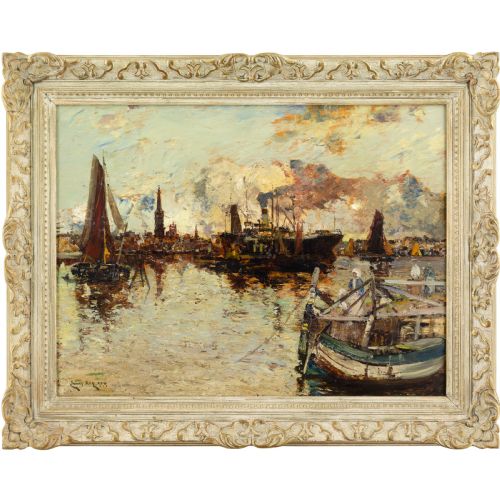
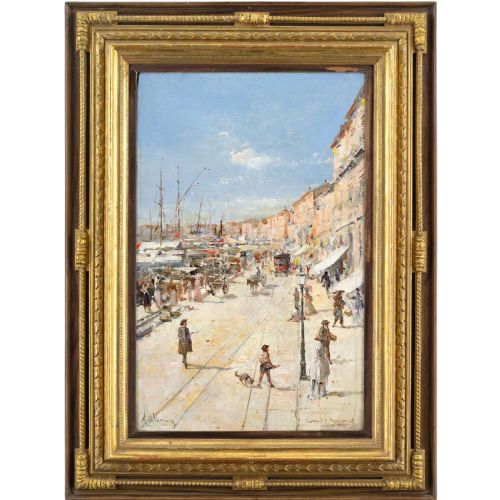
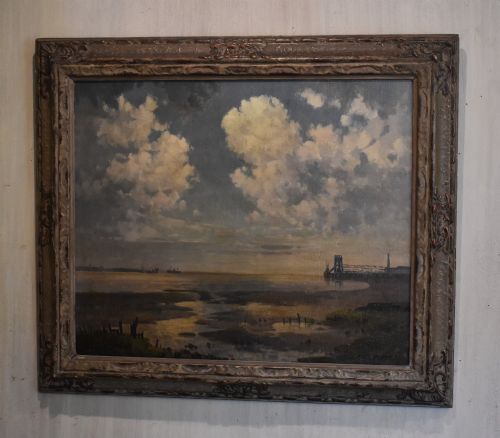
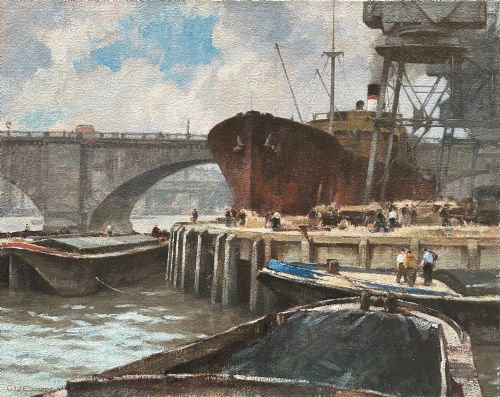
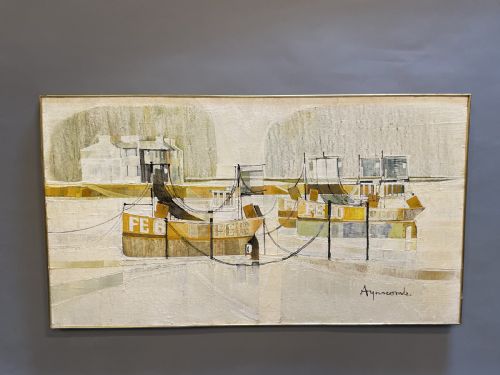
A vintage harbour scene artwork records coastal life, fishing fleets and maritime architecture from British and European ports. These works span the nineteenth century through the 1960s, capturing working docks from Cornwall to Scotland and overseas locations like Sicily and Normandy.
Buyers encounter varied formats including framed oil paintings on canvas and board alongside delicate watercolours on paper. The selection ranges from traditional Victorian coastal views to mid-century impressionistic interpretations of fishing boats and tides.
Materials and methods
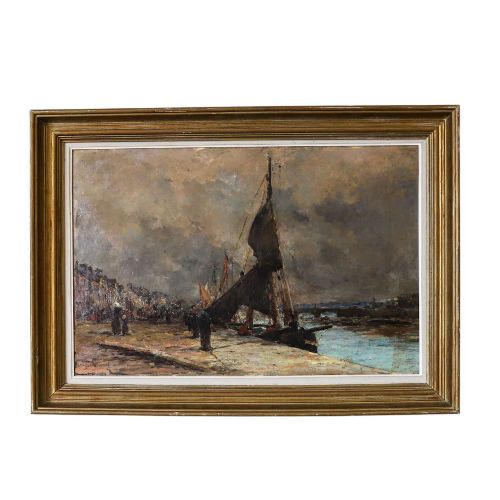
Artists painted these scenes using oil paint or watercolour applied to canvas, wood, paper and board. Oil works often show textured brushwork in gilt frames, while watercolours rely on paper supports to capture lighter maritime atmospheres.
Makers utilised traditional pigments and supports typical of British Impressionism, Edwardian art and mid-century modern movements. Many pieces retain original framing incorporating wood and glass to protect the painted surface.
Materials documented on this page include oil paint, watercolour, canvas, wood, paper, and glass.
Determinants of quality
Quality rests on the artist's ability to render light, water movement and vessel construction with conviction. Stronger compositions balance the architectural weight of quaysides with the fluid expanse of the sea.
Condition of the medium and the presence of original framing contribute significantly to a piece's standing. Works that retain clear signatures and well-documented provenance from recognised regional schools command greater attention.
Kenneth Cozens·James E. Aitken·John E. Aitken·William Banks Fortescue·James Kay·Augusto Alberici·Clive Browne·Paul Bret·Cyril Walduck Edwards·Frank Kelsey·George F Pennington·Alfred George Morgan·William Edward Webb·Richard Harry Carter·Gyrth Russell·Raymond Picque·William Lee Hankey·George Turland Goosey·Fred Lawson·Arthur Tucker·Adrian Van Porten·William Tuck·Donald McIntyre·Doyly-John·T.S. Wallis
The Vintage Harbour Scene Artwork Glossary
- Watercolour
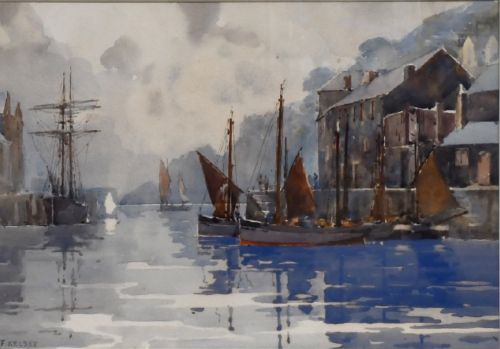
- A painting method where fine pigment is suspended in water-based solution on paper. This medium suits translucent coastal atmospheres.
- Impressionism
- An art style focusing on light and its changing qualities rather than precise detail. Artists employed visible brushstrokes to capture fleeting atmospheric effects.
- Gilt frame
- A decorative wooden frame covered with gold leaf or metallic gilt. These ornate surrounds frequently accompany nineteenth-century oil paintings.
- Provenance
- The documented history of a piece's ownership and origin. Clear attribution links works to specific artists and exhibitions.
Vintage Harbour Scene Artwork: Frequently Asked Questions
What periods do these artworks cover?
The pieces span from the nineteenth century through the 1900s, 1910s, 1920s, 1930s, 1940s, and 1950s into the 1960s.
This broad timeline incorporates Victorian realism, Edwardian illustration, and mid-century impressionism.
Which locations appear most frequently?
Cornish locations such as St Ives, Polperro, and Mousehole feature prominently alongside Scottish ports and northern English fishing towns.
Overseas views from Sicily, Normandy, and Antwerp also occur within the selection.
How should I display these watercolours?
Watercolours require placement away from direct sunlight to prevent fading of the paper and pigments. Glazing with protective glass helps shield the delicate washes from atmospheric moisture.
Proper framing preserves the integrity of both the paper and any historic mounts.
How do oil paintings differ from watercolours here?
Oil paintings utilise heavy pigments on canvas, wood, or board, often housed in gilt frames. They offer textured surfaces suited to choppy seas and robust maritime weather.
Watercolours provide a lighter, translucent quality executed on paper supports.