





Vintage Hallway Floor Runner
A vintage hallway floor runner brings hand-knotted warmth and enduring character to narrow spaces underfoot.
Vintage Hallway Floor Runner
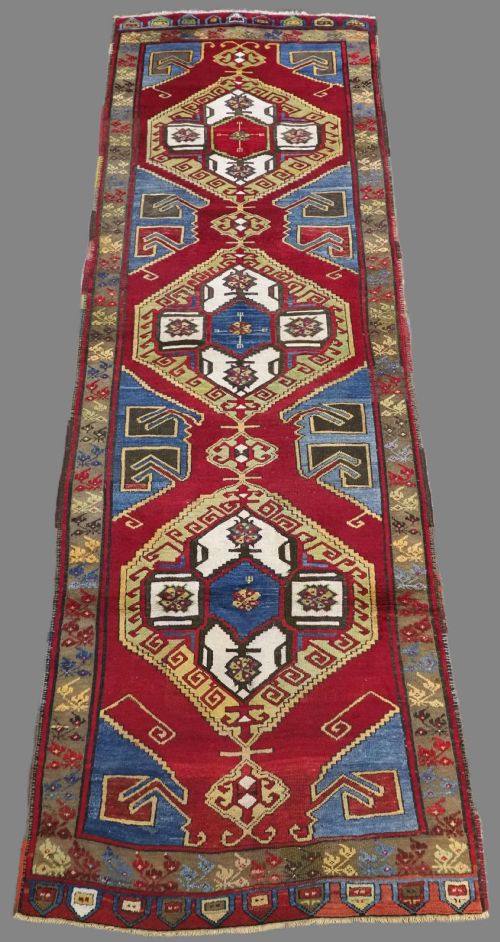
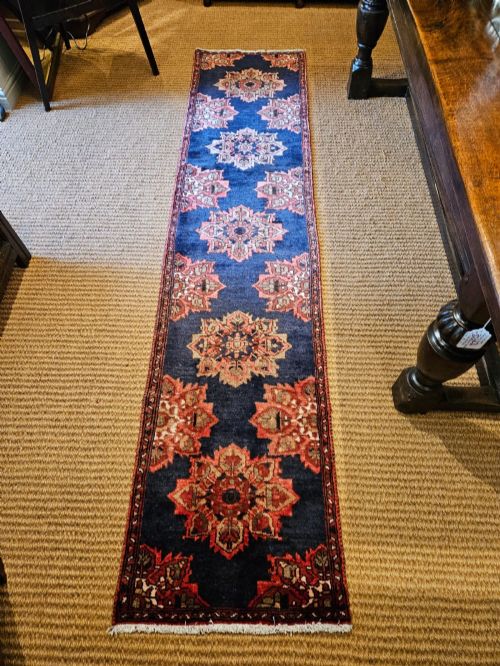
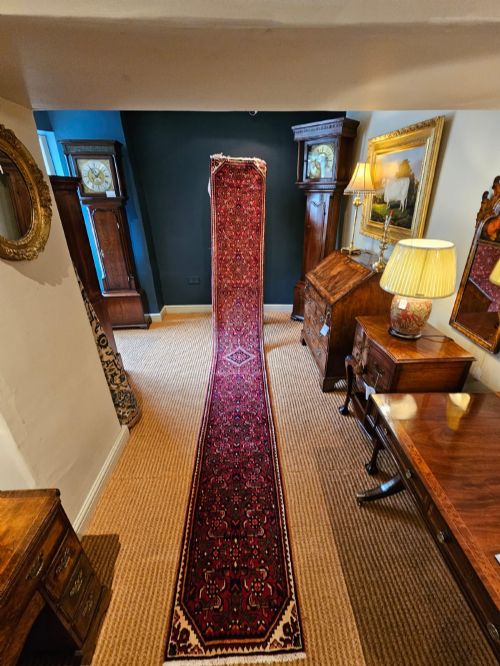
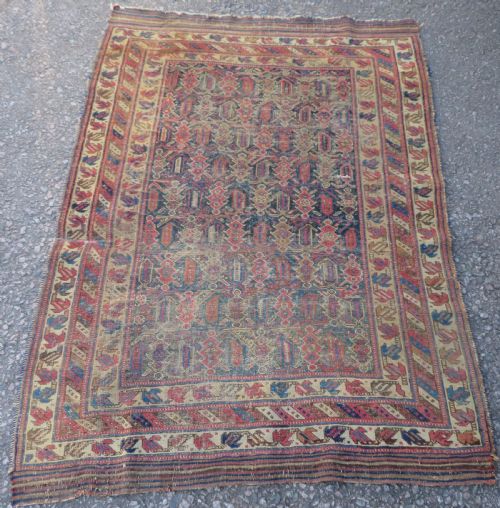
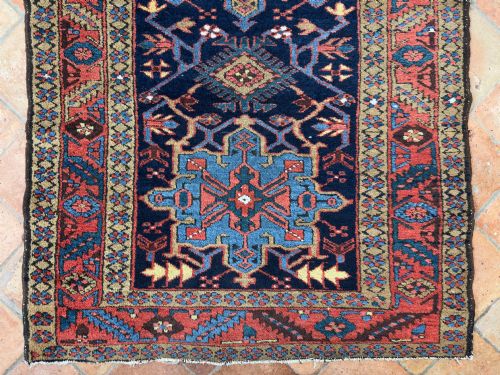
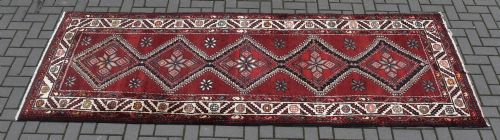
A vintage hallway floor runner spans elongated formats designed specifically for corridors, passages and narrow transitional spaces within a home. These textiles originate primarily from Persian, Turkish, Caucasian and nomadic tribal weaving traditions dating from the nineteenth and early twentieth centuries. The selection centres heavily on hand-knotted wool and cotton constructions that display traditional geometric, floral lattice and shrub designs.
Buyers encounter long narrow carpets attributed to specific regional workshops and tribal groups such as Heriz, Bidjar, Ushak and Kurdish makers. These pieces vary from room-length corridor carpets down to narrower formats tailored for tight Victorian or Edwardian hallways. The prevalent aesthetic relies on natural vegetable dyes that have mellowed softly over decades of use.
How they were made
Weavers constructed these runners using hand-knotted wool piles set upon sturdy cotton or wool foundation warps and wefts. The dense knotting technique provides the structural resilience required to withstand heavy foot traffic in busy household corridors. Artisans utilised hand-spun yarn dyed with traditional pigments derived from natural sources, yielding rich navy blue, red and earthy tones.
The looms employed were traditional upright wooden frames operated by village and nomadic weavers working from memory or established tribal patterns. Selvedges were overcast by hand to protect the edges, and foundation fringes were secured to prevent unravelling. This meticulous manual assembly explains why these floor coverings retain their structural integrity across generations.
Certain antique Kurdish and Turkish runners preserve the slight wobble of a weaver's hand where village life interrupted the loom.
What varies in quality
Knot density and wool quality dictate the fineness of the weave and the crispness of the geometric or floral design. Tighter knotting allows intricate patterns, such as those found in Bidjar or Heriz runners, to remain sharp and defined over long stretches. Superior raw materials ensure the pile springs back underfoot rather than matting flat.
The depth and harmony of the dye palette further separate exceptional examples from standard production. Ageing brings out a desirable patina where secondary tones emerge gently through the surface wear. Proportion also plays a role, as particularly narrow or exceptionally long formats require skilled geometrical planning by the original weaver.
The Vintage Hallway Floor Runner Glossary
- Warp
- The vertical foundation threads stretched lengthwise on the loom before knotting begins. These form the structural skeleton of the runner.
- Weft
- The horizontal threads passed alternately over and under the warp threads after each row of knots is tied. They bind the structure together firmly.
- Pile
- The upright cut or looped yarn surface forming the soft upper layer of the rug. This is the part that absorbs foot traffic.
- Selvedge
- The finished side edges of a runner formed by wrapping the outermost warp threads. Good finishing prevents the sides from fraying.
- Patina
- The surface sheen and softening of colour developed through decades of natural ageing and use. It indicates genuine antique status.
Vintage Hallway Floor Runner: Frequently Asked Questions
How do I choose the right length for my hallway?
Measure your corridor length while leaving a consistent border of exposed wooden flooring or tiles around the perimeter. This frames the textile properly without crowding the architectural space.
Keep in mind that very long runners require straight corridors, whereas shorter sectional runners suit hallways with multiple doors or awkward turns.
Can these antique runners handle heavy hallway foot traffic?
Traditional village and tribal rugs were built for everyday domestic utility using dense wool piles on sturdy foundations. They withstand normal household footsteps remarkably well.
Using a quality underlay beneath the runner prevents slipping and cushions the pile against hard subfloors, extending the lifespan of the textile.
How do I clean and maintain a wool runner?
Regular gentle vacuuming without a rotating power brush removes surface dust before it settles deep into the wool pile. Professional specialist cleaning is recommended every few years.
Avoid soaking antique natural dyes in water or harsh chemical detergents, as these can cause bleeding or damage the historical fibres.
How can I tell a Heriz runner from a Bidjar runner?
Heriz runners typically feature bold, geometric medallions with strong angular lines and a robust, heavier handle. They often use distinctive terracotta and navy blue shades.
Bidjar runners are renowned for extreme structural density and stiffness, often featuring all-over Herati or floral trellis patterns woven on sturdy cotton foundations.