
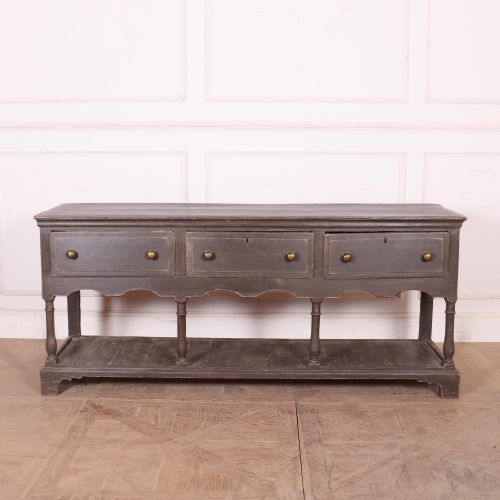

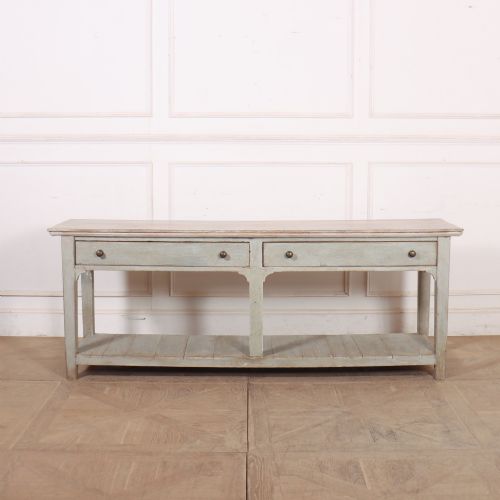


Vintage Grey Sideboard
A vintage grey sideboard brings grounded utility and muted tone to a room, drawing on country traditions and painted finishes.
Vintage Grey Sideboard
A vintage grey sideboard encompasses painted cupboards, dressers, commodes, and servers spanning the eighteenth, nineteenth, and early twentieth centuries. These pieces originate from English, French, Danish, Swedish, and broader continental workshops, reflecting regional rural and formal designs.
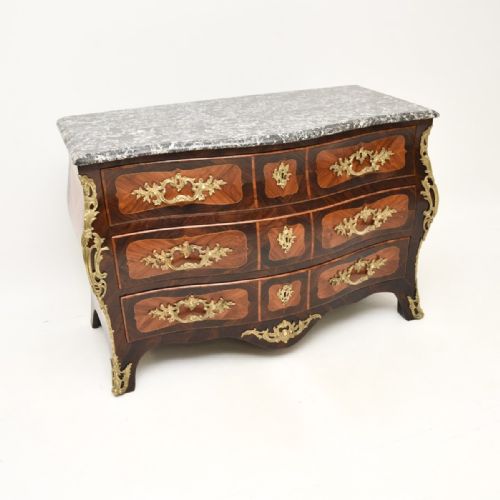
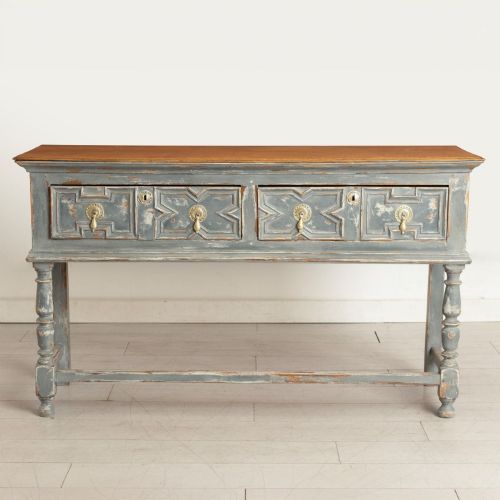
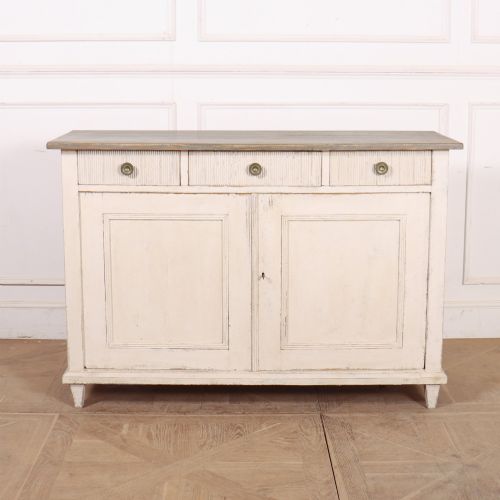
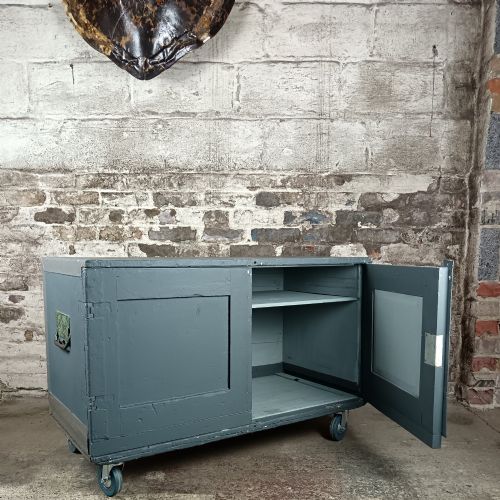
The selection on this page relies heavily on painted wood surfaces applied to forms such as potboard dresser bases, serpentine commodes, and continental buffets. Alongside these, buyers find related storage furniture including walnut commodes with marble tops and pine shop counters.
The version most commonly met here is the painted wooden dresser base or commode finished in muted tones, often showing the character of French provincial or Scandinavian country styles. These forms provide practical surface area and enclosed storage suited to modern interiors.
Assessing quality
Quality rests on the integrity of the timber carcase, the precision of the drawer construction, and the harmony of the proportions. Superior pieces maintain original structural timber without excessive modern replacement.
The character of the surface finish plays a significant part in the appeal, where historic paint layers or patinated wood display depth rather than flat, uniform treatment. Finer examples balance robust utilitarian construction with refined decorative details such as serpentine fronts or parquetry.
Listings feature items spanning the eighteenth to early twentieth centuries, constructed from pine, oak, walnut, and mahogany with painted finishes.
Jacques Bircklé·Liberty & Co
The Vintage Grey Sideboard Glossary
- Dresser base
- A low sideboard or table base featuring drawers and frequently a lower potboard shelf. These pieces served historically for food preparation and storage in large country kitchens.
- Commode
- A low French chest of drawers or cabinet designed for domestic rooms. They often feature serpentine fronts and marble tops.
- Potboard
- An open lower shelf fitted between the legs of a dresser base. It was traditionally used to store pots and heavy tableware.
- Serpentine
- A furniture front characterised by a wavy contour with a convex centre flanked by concave curves. This shape requires skilled woodworking.
- Parquetry
- Geometric wood mosaic work used for decorative surface patterns. It is commonly found on the top or drawer fronts of finer continental cabinets.
Vintage Grey Sideboard: Frequently Asked Questions
Can I use a commode as a sideboard?
Commodes and small chests of drawers make excellent sideboards in dining rooms or living spaces. Their drawer configurations and surface tops provide practical storage for tableware and linens.
Consider the height and depth of the piece relative to your room space before placement. Marble-topped versions offer durable surfaces for serving food or displaying items.
How do I identify a piece from the eighteenth century?
Eighteenth-century pieces often display hand-cut dovetail joints and solid timber construction without modern mechanical fasteners. Tool marks and natural wood movement indicate age and manual fabrication.
Stylistic cues such as Georgian proportions or specific regional carving help narrow the date. Comparing construction details with documented examples provides further confirmation.
Are marble tops original to these pieces?
Marble tops on commodes and washstands are frequently original, providing a durable and cool surface for washing or serving. They were cut to fit the specific carcase during manufacture.
Inspect the edges and underside of the marble to check for matching fit and historic fixings. Minor chips can occur over time while the stone remains structurally sound.