
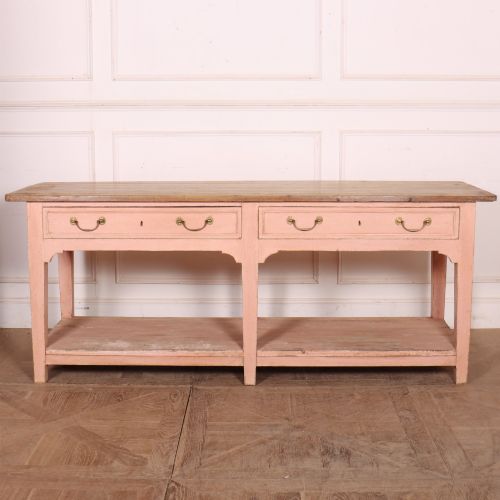


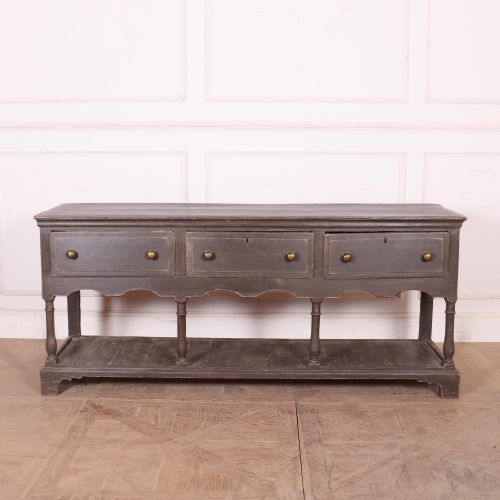
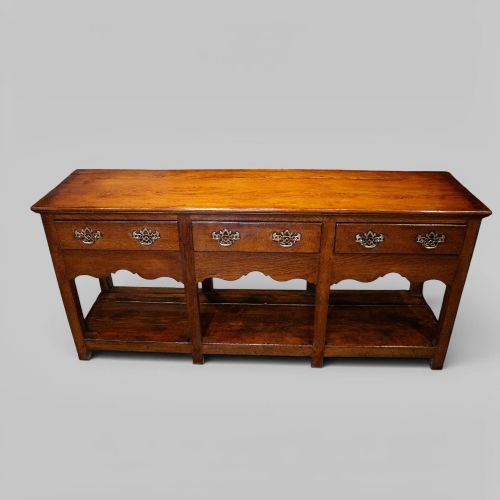

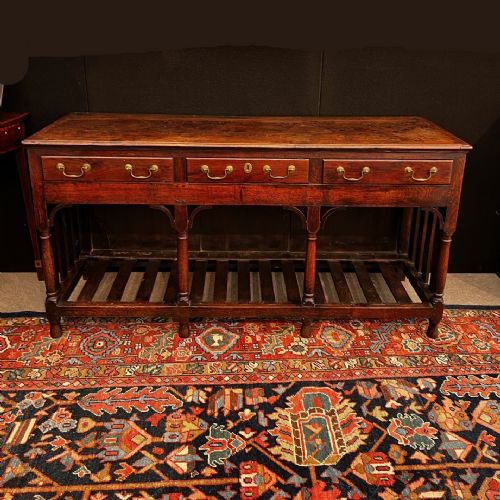


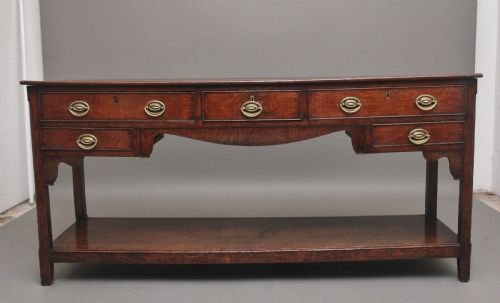


Low Potboard Sideboard
A low potboard sideboard gives you a sturdy timber surface above an open display shelf, grounding a room with honest domestic utility.
Low Potboard Sideboard
When you search for a low potboard sideboard, you encounter sturdy timber base units that combine drawer storage above with an open lower shelf.
These pieces hail primarily from the eighteenth and nineteenth centuries, spanning Georgian and Regency periods, as well as English country and rustic farmhouse traditions.
You are most likely to meet oak and elm examples on this page, often showing regional English, Welsh, or Scottish vernacular origins.
Materials and construction
Cabinetmakers built these heavy bases using solid oak, frequently incorporating elm for structural elements and pine for secondary woods.
Drawers feature hand-cut joinery, while the signature low potboard provides a stable lower platform beneath the main working surface.
Some examples retain historic painted finishes on timber surfaces, while others show patinated bare wood alongside cast brass hardware.
Assessing quality and character
The division between everyday utility pieces and finer examples rests upon the depth of the timber's grain and the integrity of the surface patina.
Proportion dictates much of the visual weight, with well-balanced drawer configurations and undisturbed potboards commanding greater presence in a room.
Regional variations in construction, such as distinctive Welsh or Scottish framing methods, separate standard country pieces from more refined workshop output.
The Low Potboard Sideboard Glossary
- Potboard
- The open lower shelf of a dresser base, traditionally used for storing pots and pans. It sits just above the floor.
- Dresser base
- The lower section of a kitchen or dining dresser, fitted with drawers and occasionally cupboards, functioning independently as a sideboard.
- Vernacular
- Furniture built by local country craftsmen for everyday domestic use rather than following strict metropolitan stylistic rules.
- George III period
- The era spanning from 1760 to 1820, characterised in country furniture by robust proportions and honest timber construction.
- Elm
- A tough, interlocking wood frequently used by country makers for drawer linings, seats, and structural boards where splitting resistance mattered.
Low Potboard Sideboard: Frequently Asked Questions
What is a potboard sideboard?
A potboard sideboard is a low timber storage unit featuring drawers across the top and an open shelf at the bottom.
Historically, kitchens utilised this lower shelf to keep heavy pots and kitchenware off damp flagstone floors.
Where were these pieces made?
Country workshops across England, Wales, and Scotland produced these sturdy oak and elm bases for rural domestic use.
Regional joinery methods often hint at whether a particular piece originated in Welsh valleys or Scottish farmhouses.
How do I style a low potboard sideboard?
The low profile makes these pieces ideal for dining rooms or hallways, offering surface space for lamps or ceramics.
The open potboard below allows you to stack large serving platters, books, or woven baskets in plain sight.
How do I date an antique dresser base?
Dating relies on observing construction techniques, tool marks inside drawers, and the natural wear accumulated across centuries of use.
Eighteenth-century examples often display simpler hand-planed boards, while nineteenth-century pieces may show slightly more standardised framing.