
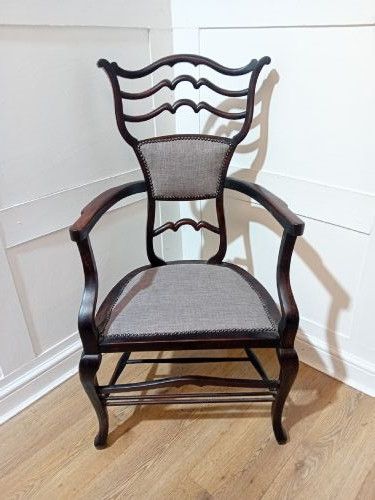
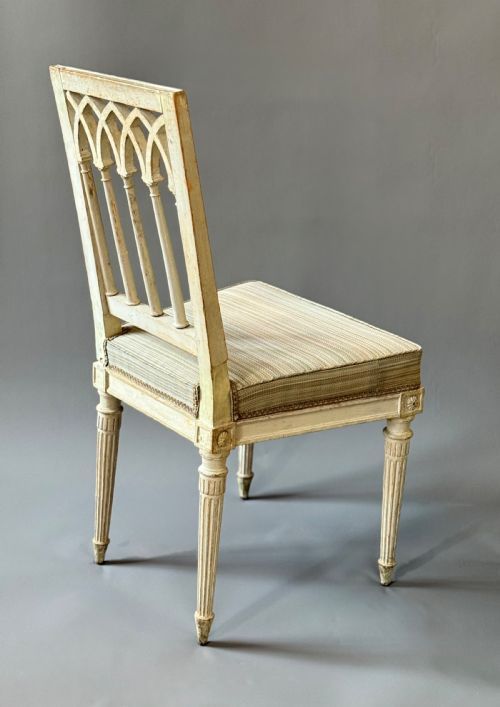
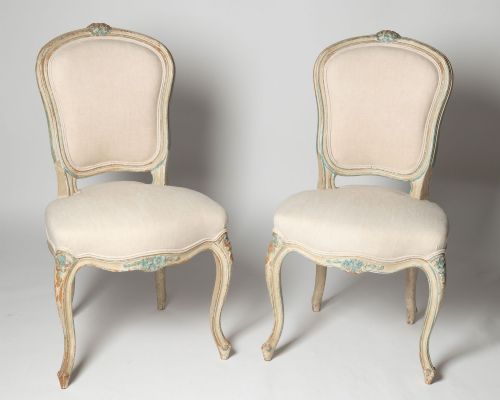
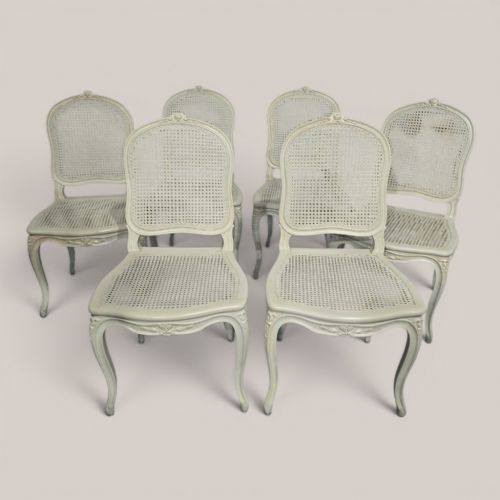





Vintage Grey Side Chairs
Vintage grey side chairs bring understated elegance and neutral warmth to a room, offering versatile seating grounded in historical craftsmanship.
Vintage Grey Side Chairs
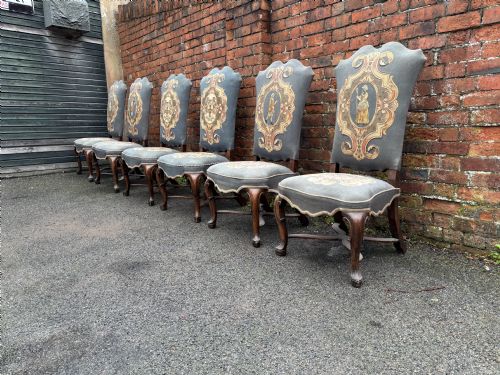
When searching for vintage grey side chairs, you encounter a selection spanning the eighteenth century through to the early twentieth century. These pieces encompass various regional interpretations, including French chateau styles, Italian baroque forms, and English revival designs.
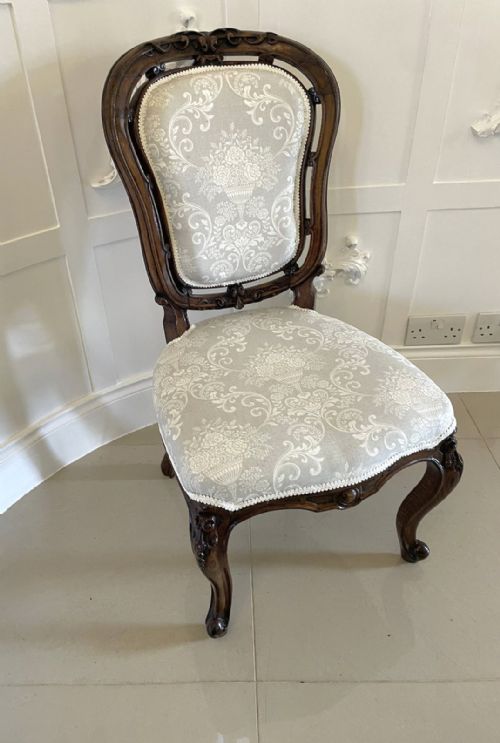
Forms range from simple single side chairs to extensive sets of dining chairs and occasional salon seating. Many incorporate upholstered pads, fabric coverings, or woven cane and rattan details to enhance comfort.
Materials and construction methods
Makers utilised solid timbers such as mahogany, walnut, oak, and beech to build the foundational frames of these chairs. Structural integrity relied on traditional joinery methods suited to the demands of daily dining and salon use.
Surface treatments frequently involved layers of paint applied over wood, creating the characteristic grey finishes seen across French and provincial designs. Skilled artisans also executed hand-carved decorative motifs directly into the wooden framework.
Seating areas incorporated supportive elements including stretched fabric, upholstered padding, and woven cane or rattan panels. These materials required precise tension and attachment to ensure lasting durability.
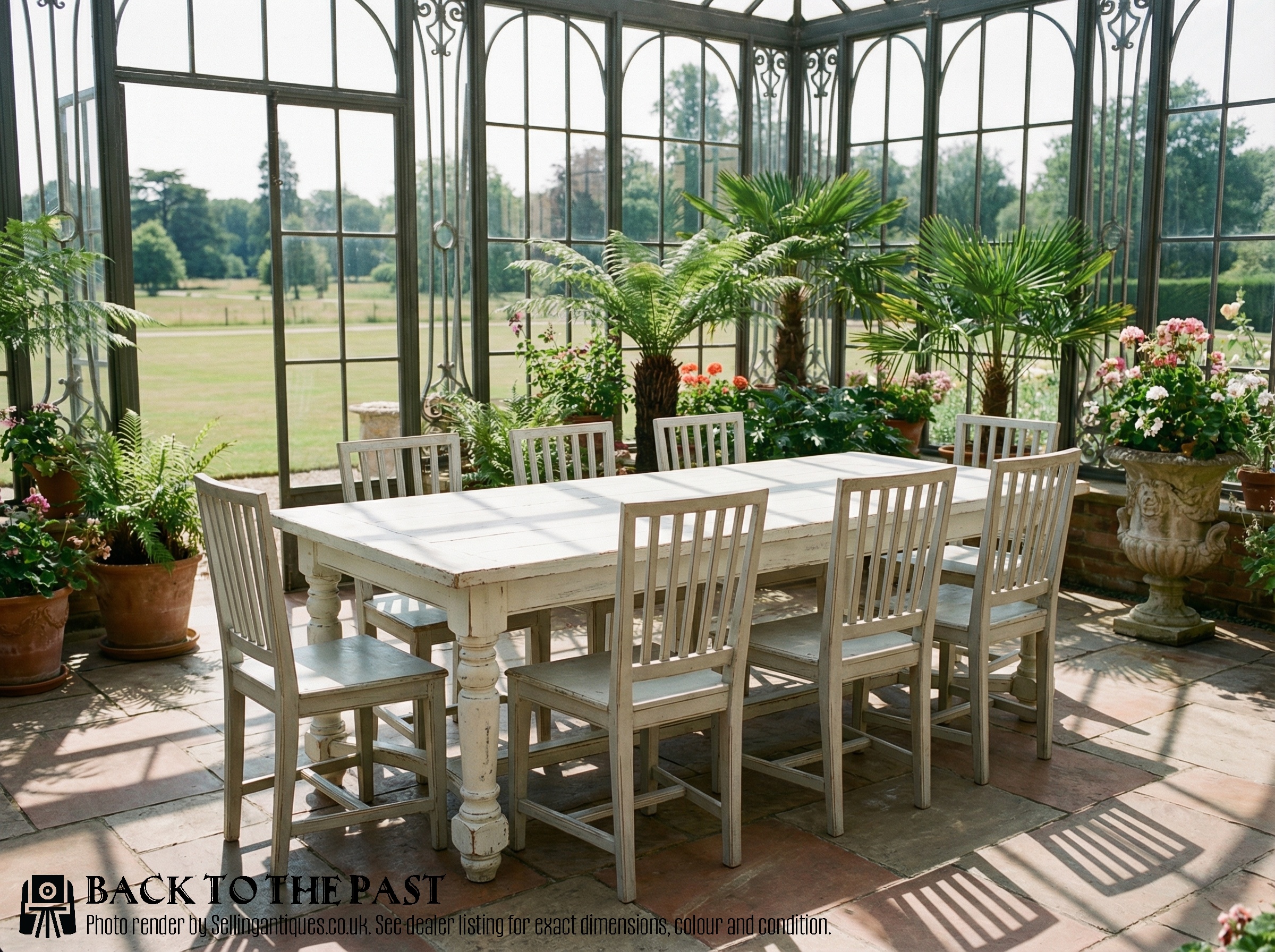
Several chairs proudly wear their age in layers of muted grey paint, each coat whispering tales of long-forgotten dining rooms and sunlit salons.
Distinctions in craftsmanship and finish
The standard of hand-carved detail on the wooden frames separates standard production from finer examples. Crisp lines, well-defined floral or scroll motifs, and balanced proportions indicate greater artisan skill during construction.
The application and preservation of the painted surface significantly influence the overall character of each chair. Original or sensitively layered historical paint finishes retain a depth that mechanical or modern repainting often lacks.
The integrity of the structural joinery and the condition of integrated elements like cane panels or upholstery foundations determine longevity. Chairs that maintain rigid frames and tight joints represent superior enduring construction.
The Vintage Grey Side Chairs Glossary
- Side chair
- A chair without arms, typically designed for dining tables or occasional placement around a room. These pieces provide compact seating without visual bulk.
- Bergere
- An enclosed upholstered armchair featuring wooden frames and enclosed sides filled with cane or upholstery. This French form prioritises comfortable lounge seating.
- Louis XV style
- A design aesthetic characterised by asymmetrical curves, cabriole legs, and naturalistic plant motifs. It originated in eighteenth-century France and inspired numerous later revivals.
- Cane
- Woven material derived from the peeled stalk of rattan palms, utilised for flexible and breathable seat panels or backrests. It adds lightness to heavy wooden furniture frames.
- Gothick taste
- An eighteenth-century revival style incorporating medieval architectural elements like pointed arches and tracery into domestic furniture. It merges Gothic drama with domestic refinement.
Vintage Grey Side Chairs: Frequently Asked Questions
Can I mix different styles around a table?
Combining various styles like Louis XV and Victorian side chairs creates a curated, collected interior. Ensure the seat heights align comfortably with your dining table surface.
Matching the grey paint tone or timber finish helps unify disparate chairs when gathered together. Balance heavier carved oak pieces with lighter painted or caned designs for visual harmony.
Are these chairs suitable for daily use?
Most antique side chairs were built for regular domestic dining or salon activities using sturdy hardwoods. Checking the stability of the joints ensures they withstand daily sitting.
Adding discreet protective pads to the feet prevents wear on hard flooring surfaces. Regular gentle maintenance preserves both the structural frame and the decorative surface.
How do I date a painted chair?
Examine the timber species, tool marks, and construction techniques hidden beneath the paint layers. Hand-cut joinery and older wood preparation methods point towards earlier manufacturing periods.
Stylistic cues such as cabriole legs or specific revival motifs provide clues to the era of production. Paint analysis can sometimes reveal the sequence of finishes applied over the decades.