
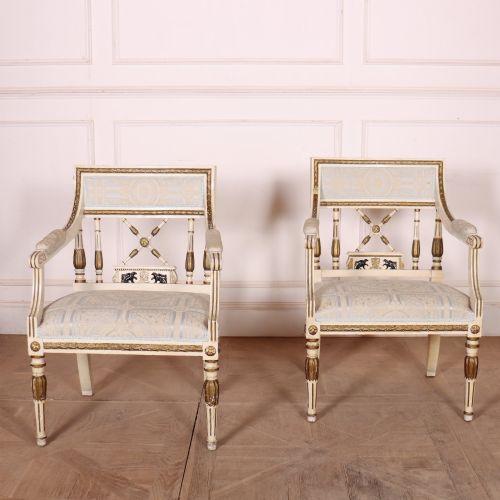
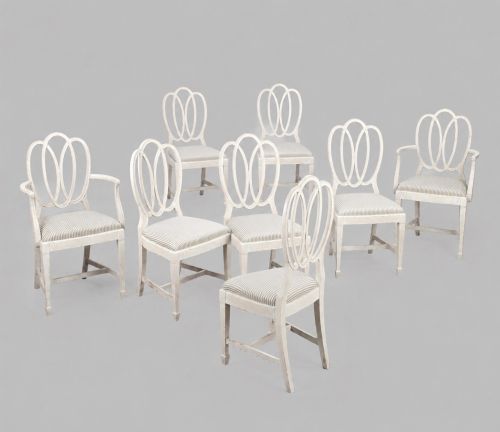
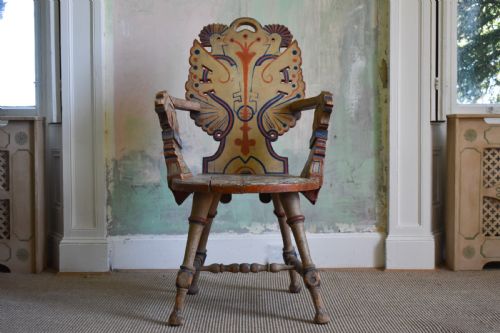


Gustavian Style Painted Chairs
Gustavian style painted chairs bring calm restraint and northern light into a room, offering enduring elegance through pared-back classicism.
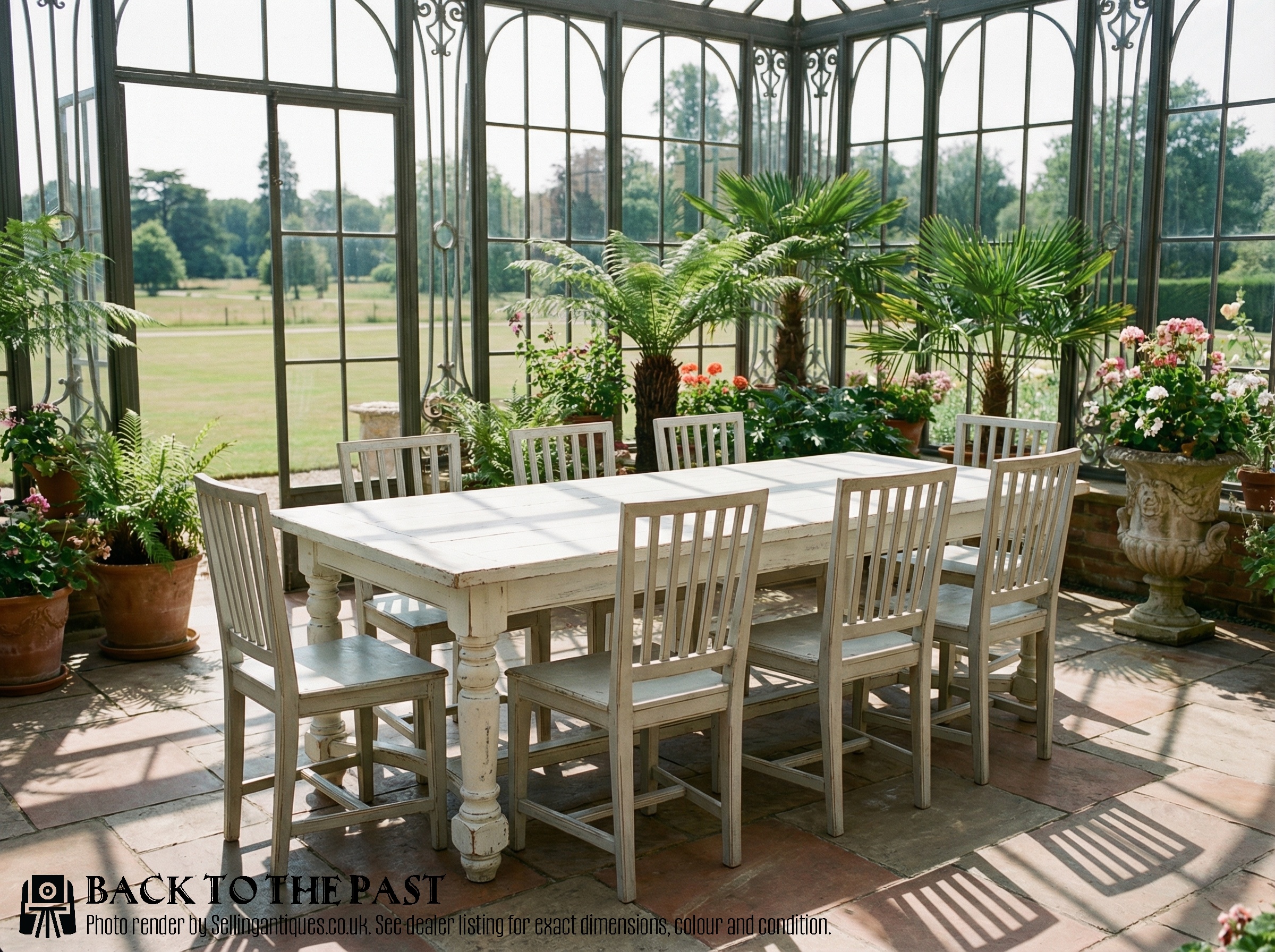
Gustavian Style Painted Chairs
Gustavian style painted chairs represent a northern European translation of classical forms, combining restrained French influence with clean Scandinavian proportions. When searching for gustavian style painted chairs, buyers encounter seating designed to brighten understated interiors through pale finishes.
The selection on this page centres on painted wood dining chairs, armchairs and highchairs spanning the nineteenth and twentieth centuries. These pieces appear in matched sets of various sizes as well as pairs and single armchairs.
Origins stretch from nineteenth-century work to later twentieth-century interpretations, drawing on Swedish and broader Scandinavian traditions. Painted pine and fabric upholstery dominate the construction across these historical periods.
How they were made
Makers built these chairs primarily using solid wood and pine, shaping frames with turned and carved details suited to paint finishes. Workshops applied layered paint finishes, notably french grey and lacquer, to achieve the characteristic pale surfaces.
Upholstered elements incorporated durable textiles and fabrics fixed to the wooden frames to provide comfort in dining and armchair variants. Construction techniques balanced sturdy joinery with the lighter decorative demands of Scandinavian country and empire styles.
One lonely highchair stands ready for a very small, very polite nineteenth-century aristocrat.
What varies in quality
Quality rests upon the proportion of the carving and the integrity of the underlying wooden frame. Finer examples display crisp detail in the woodwork and harmonious proportions across larger dining sets.
The character and application of the painted finish determine visual depth, with layered historic paint or careful lacquering elevating the piece. Uniformity within larger sets of chairs also separates standard production from superior craftsmanship.
The Gustavian Style Painted Chairs Glossary
- Gustavian
- The Swedish neoclassical style developed during the late eighteenth century under King Gustav III. It is characterised by lighter interpretations of French Louis XVI designs.
- Painted pine
- A soft timber substrate commonly utilised in Scandinavian furniture production. It provides a stable base for the pale paint finishes characteristic of the region.
- Armchair
- A seating furniture piece featuring structural side supports for the arms. These versions offer greater decorative presence than standard dining variants.
- Giltwood
- Timber decorated with gold leaf or metallic powder to accent carved details. This finish occasionally highlights neoclassical ornament on northern European seating.
Gustavian Style Painted Chairs: Frequently Asked Questions
How do I use them daily?
These chairs suit everyday dining rooms and living spaces when paired with appropriate tables. Their sturdy wooden frames handle normal domestic use while adding classic character to a room.
Protect the painted surfaces from heavy knocks and moisture. Using suitable textile care keeps the upholstered elements fresh over years of daily service.
Are large sets hard to find?
Sets of six, eight or fourteen chairs appear periodically alongside smaller pairs and single armchairs. Larger groupings require patient searching since matching sets were produced in smaller quantities.
When large sets do turn up, they offer a unified look for principal dining tables. Mixed groupings of similar painted chairs also create an effective informal interior.
How do I date the paint?
Dating painted furniture involves examining the layers of pigment and the wear patterns on the timber beneath. Nineteenth-century pieces often show characteristic craquelure and softer patination from age.
Twentieth-century interpretations tend to display more uniform surfaces while still adopting traditional colour palettes. Close inspection of the wood joinery helps confirm the underlying period.
What styles accompany gustavian chairs?
These chairs sit comfortably alongside Scandinavian folk art, Swedish empire and French provincial pieces. The shared use of pale paint finishes and restrained lines unifies these related traditions.
Mixing regional variations adds depth to a scheme without disrupting the overall aesthetic. The common denominator remains the light-reflecting painted wood surface.