
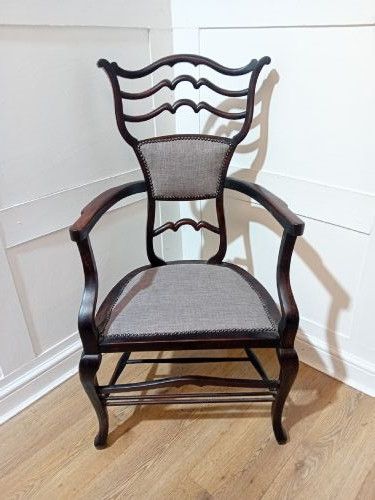
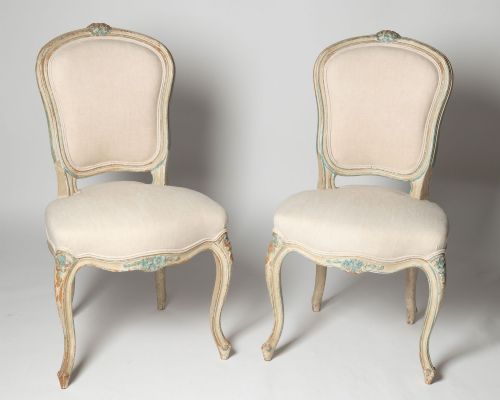


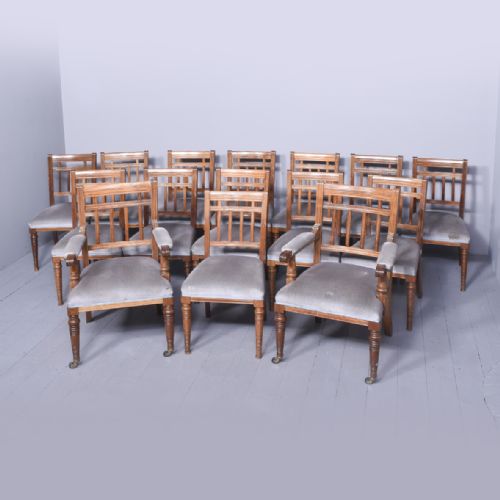

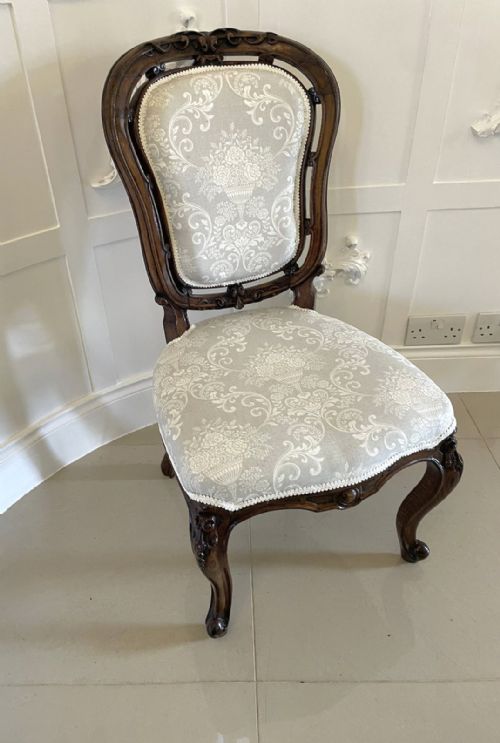

Grey Wooden Side Chairs
Grey wooden side chairs bring painted finishes and rich timber grains together in practical seating found across Victorian and Edwardian dining rooms and halls.
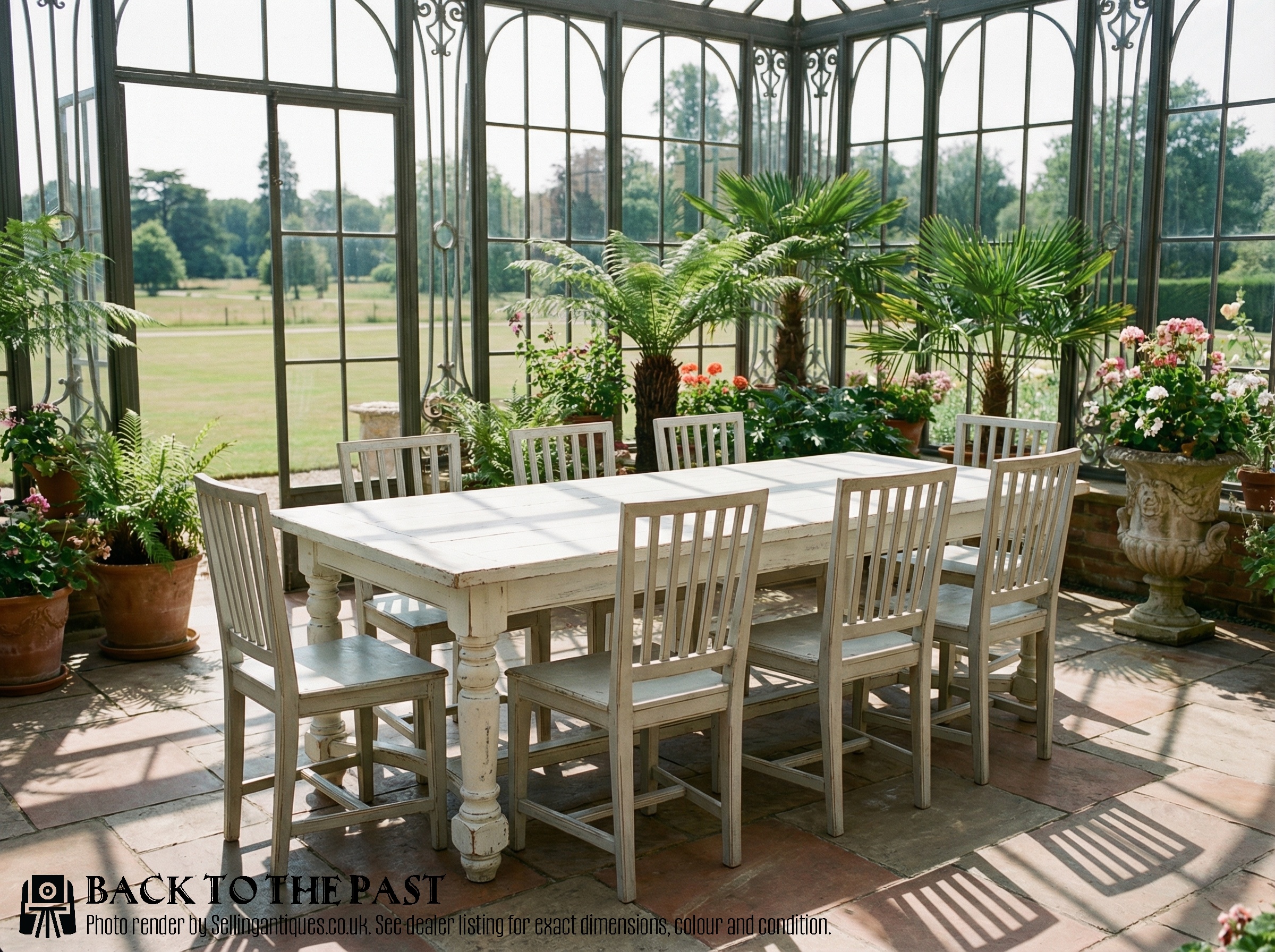
Grey Wooden Side Chairs
The form typically serves a practical function as a side chair or dining chair, lacking arms to allow easy placement around a table or against a wall. Their presence combines solid timber construction with decorative painted surfaces.
How they were made
Makers utilised traditional hardwoods like mahogany, walnut, and oak as the foundational structure for these chairs, often shaping the timber through carving and turning. These woods provided the necessary strength for daily seating use.
Surfaces were frequently treated with paint to achieve the characteristic grey finish, sometimes applied over earlier timber grounds. Upholstered elements incorporate fabric, velvet, and brass upholstery studs to secure the padding.
Listings feature periods spanning from the Victorian era up to 1930, utilising mahogany, walnut, oak, and fabric.
What varies in quality
Quality in these chairs rests upon the depth of the carving and the integrity of the wooden frame construction. Pieces featuring detailed hand carving and substantial timber scantlings stand apart from simpler iterations.
The preservation of the painted surface and the quality of any applied upholstery materials also define the hierarchy. Original painted finishes that show honest age carry distinct character compared to later, heavier repaintings.
The Grey Wooden Side Chairs Glossary
- Sgabello
- A type of Renaissance hall chair characterised by a high back and trestle supports instead of four legs. They were primarily used in grand halls rather than for comfortable dining.
- French Provincial
- A style reflecting regional French interpretations of court furniture, known for curved lines and painted finishes. It offers a more rustic aesthetic than formal Parisian pieces.
- Edwardian Empire Revival
- A revival style from the early twentieth century drawing on classical Roman and French Napoleonic motifs. It combines severe classical lines with rich mahogany timbers.
Grey Wooden Side Chairs: Frequently Asked Questions
Are grey wooden side chairs comfortable?
Comfort varies depending on whether the seat is solid wood or upholstered with fabric and velvet. Many side chairs were designed for formal dining rather than long lounging.
Adding appropriate seat cushions can improve comfort for modern daily use around a dining table.
How do I date a grey wooden chair?
Dating relies on identifying the underlying timber, construction methods, and stylistic cues such as Victorian balloon backs or Edwardian revival motifs. Paint analysis can also reveal whether the grey finish is period or a later addition.
Examining the underside and joinery provides further clues about the manufacturing era between the mid-nineteenth and early twentieth centuries.
Can I mix different styles of grey chairs?
Mixing French Provincial, Victorian, and Edwardian styles is common when creating an eclectic dining room setting. Matching the shade of grey paint helps unify disparate forms around a single table.
Pairing chairs of similar height ensures a balanced look while celebrating different historical periods.
How do I care for painted wooden chairs?
Painted surfaces require gentle dusting with a soft cloth and protection from direct sunlight to prevent fading. Avoid harsh chemical cleaners that might strip the historic paint layer.
Waxing unpainted wooden elements helps preserve the underlying timber grain against drying out.