
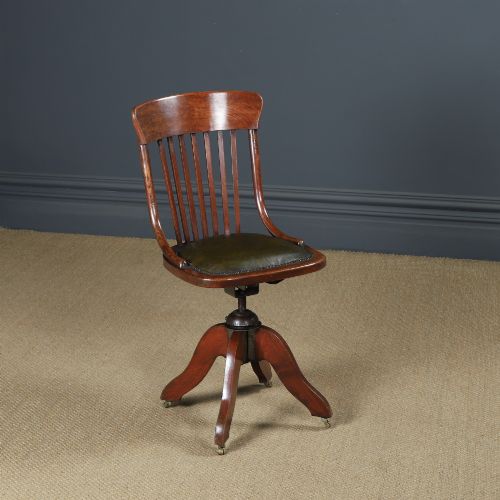


Vintage Green Leather Chairs
These vintage green leather chairs bring working forms and deep colour into a room, offering both sturdy seating and period character.
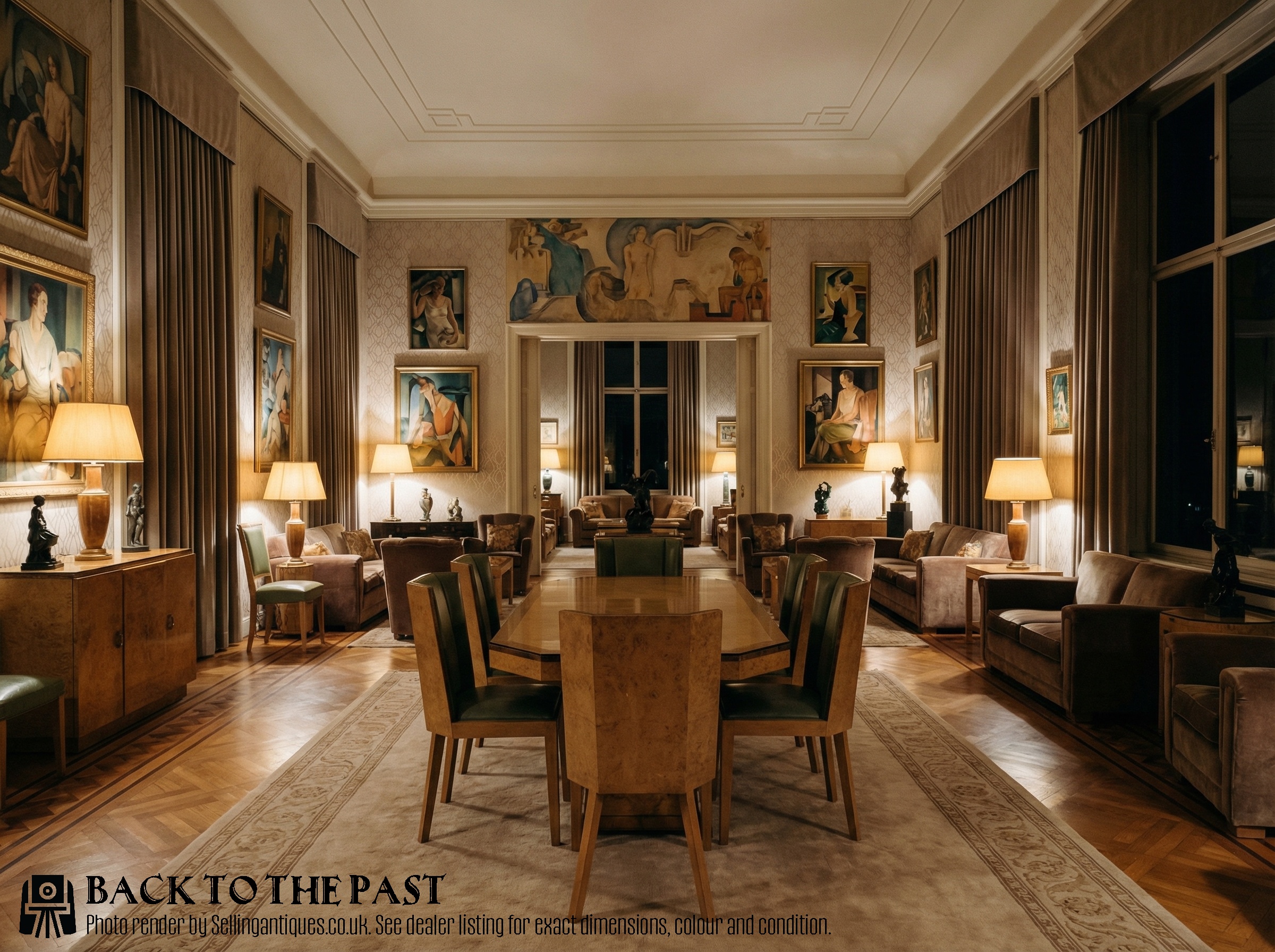
Vintage Green Leather Chairs
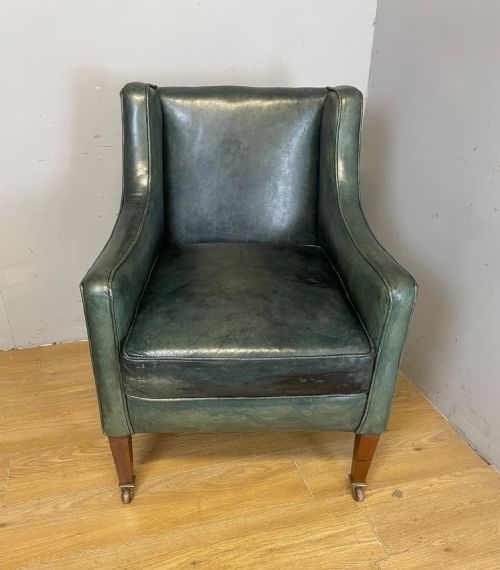
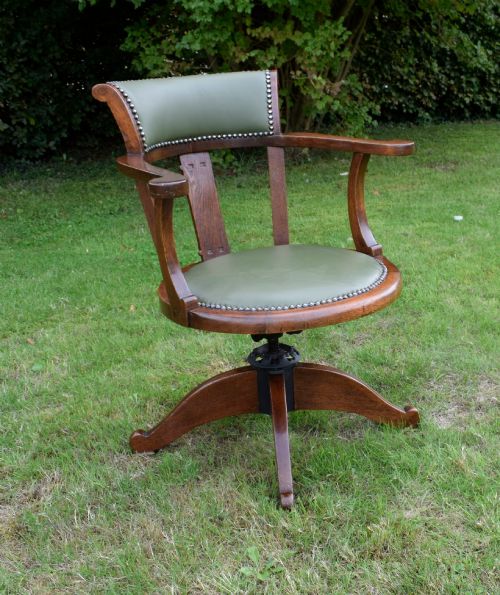
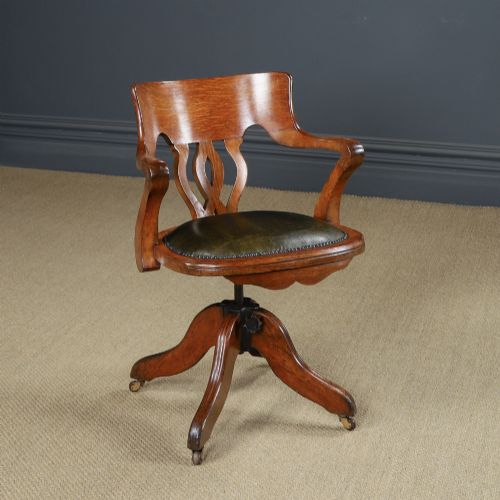
Vintage green leather chairs encompass a wide variety of seating forms designed for offices, libraries, and dining rooms across multiple historical periods. Buyers seeking this phrase encounter everything from swivel desk chairs and revolving armchairs to library armchairs and dining suites.
The selections span the nineteenth and early twentieth centuries, drawing on styles such as Victorian, Edwardian, Regency, and Art Deco. Oak, mahogany, and walnut frames predominate, carrying upholstery in distinct shades of green leather.
Working seating dominates the offerings, notably desk chairs fitted with casters, revolving mechanisms, or buttoned upholstery. Dining chairs and library armchairs appear as pairs, sets, or single statement pieces.
Materials and construction
Makers utilised solid hardwoods like oak, mahogany, walnut, and beech to build sturdy frames that support daily use. Wood is turned, carved, or left with a polished grain depending on the period and style.
Leather upholstery is fixed to the frames using brass tacks or studs, often finished with buttoning to create texture and tension. Swivel desk chairs integrate iron and brass mechanical components for revolving and tilting functions.
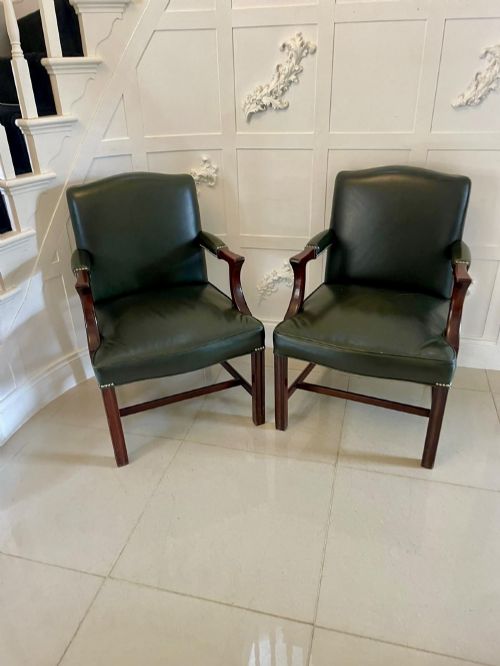
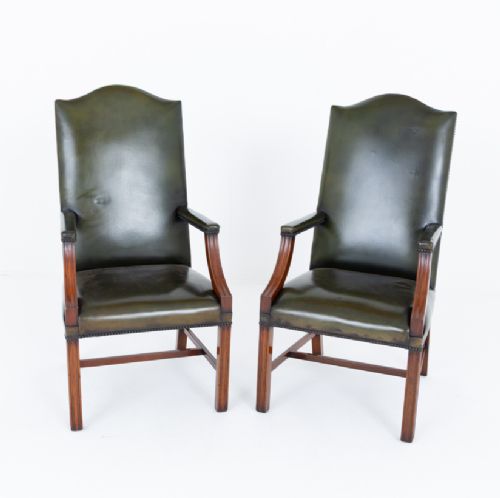
His and hers matching armchairs ensure nobody has to argue over the best reading spot in the library.
What separates the grades
The distinction between ordinary and superior pieces rests on the integrity of the timber frame and the depth of the leather hide. Substantial mahogany or oak frames with crisp carving and original brass hardware represent the upper tier of production.
Upholstery finish also dictates quality, particularly hand-dyed leather showing natural patination rather than uniform modern pigment. Maker attribution on specific armchairs elevates a piece well beyond standard workshop output.
Howard and Sons·Louis Philippe I
The Vintage Green Leather Chairs Glossary
- Carver chair
- An armchair designed with enclosed arms, typically placed at the head of a dining table. These match larger sets of dining chairs from the Victorian and Edwardian periods.
- Bergere
- An enclosed armchair with cane or upholstered sides and a loose cushion seat. Regency and later iterations frequently pair these with library settings.
- Gainsborough chair
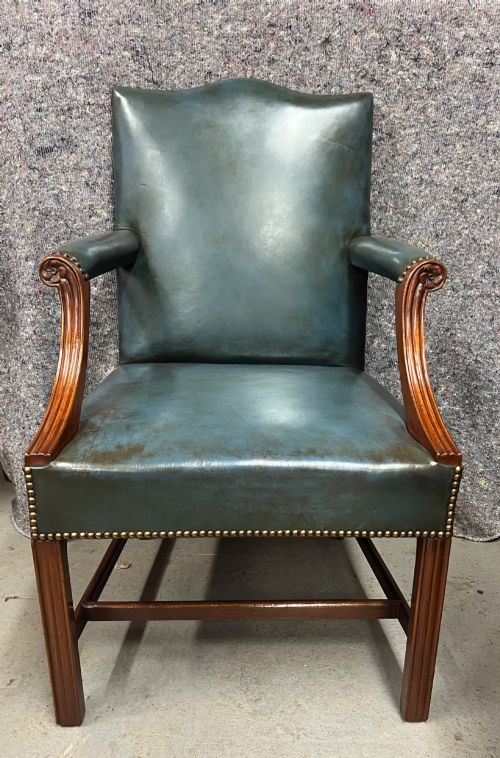
- A wide, high-backed armchair with open padded arms and upholstered seat and back. Eighteenth-century revival versions of this form appear frequently in desk settings.
- Smokers bow
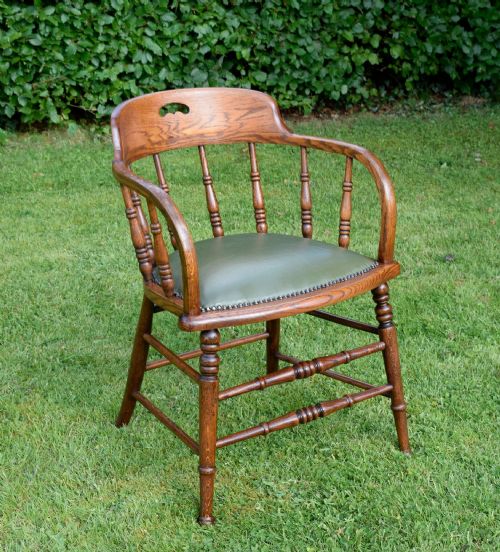
- A sturdy, low-backed wooden armchair with a curved rail, often adapted for office or desk use. They combine turned spindles with solid timber seats.
- Chesterfield
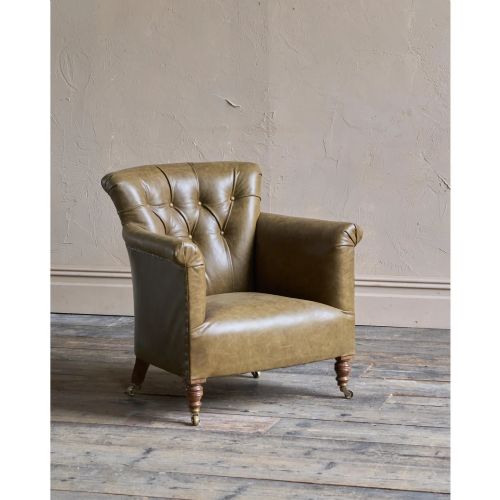
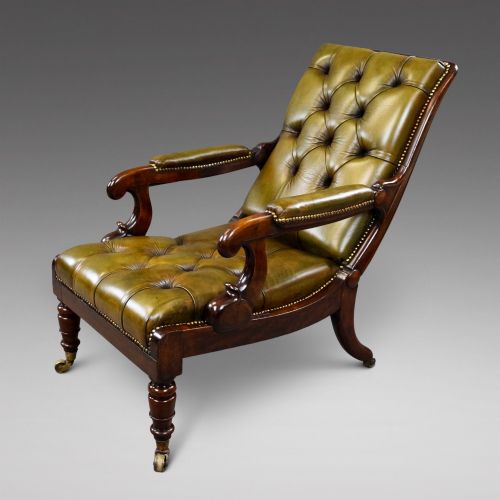
- A heavily padded upholstered seating style characterised by deep button tufting and rolled arms. These appear as armchairs, wing backs, and full sofa suites.
Vintage Green Leather Chairs: Frequently Asked Questions
Are these desk chairs comfortable for daily work?
Most desk chairs from this selection feature supportive padded backs, scroll arms, and ergonomic heights suited for a modern study. Many include revolving bases and swivel mechanisms designed for movement.
Heavier library chairs and buttoned armchairs provide deep cushioning for reading rather than desk tasks. Buyers should check seat heights and mechanism mobility to match their specific workspace.
How do I care for the green leather?
Leather upholstery benefits from regular dusting with a soft, dry cloth and occasional treatment with specialist leather balms. This prevents the hide from drying and preserves the deep green colour.
Keeping these chairs away from direct sunlight and heat sources protects the leather and timber frames from warping or fading. Minor scuffs often blend into the existing patina of older pieces.
How do I date a green leather chair?
Dating relies on identifying timber types, construction methods, and stylistic revival markers like Victorian scroll arms or Edwardian oak framing. Hardware such as brass casters and iron swivel screws also indicate specific decades.
Makers' marks or stamps beneath the seat or on brass mechanisms offer the most precise chronological evidence. Comparing frame shapes to documented period patterns helps narrow the era.
Can I buy these chairs in sets?
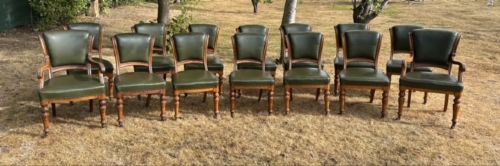
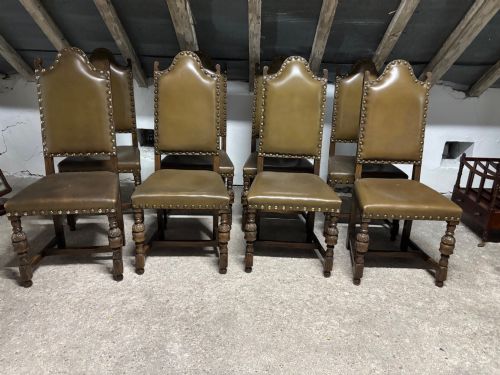
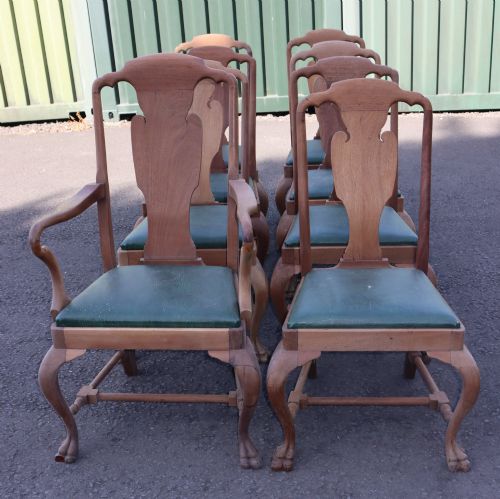
Dining chairs and certain office models appear as matching sets ranging from pairs up to fourteen pieces. These sets suit larger dining tables or conference rooms.
Single armchairs and pairs of library chairs are more common for desks or seating arrangements. Checking individual listings confirms whether chairs are sold together or separately.