




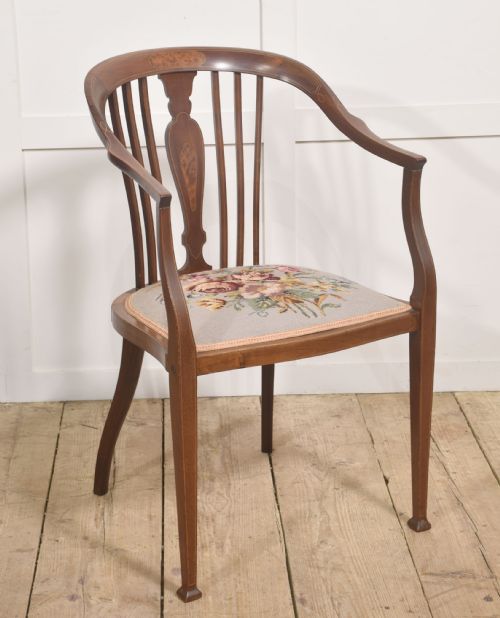


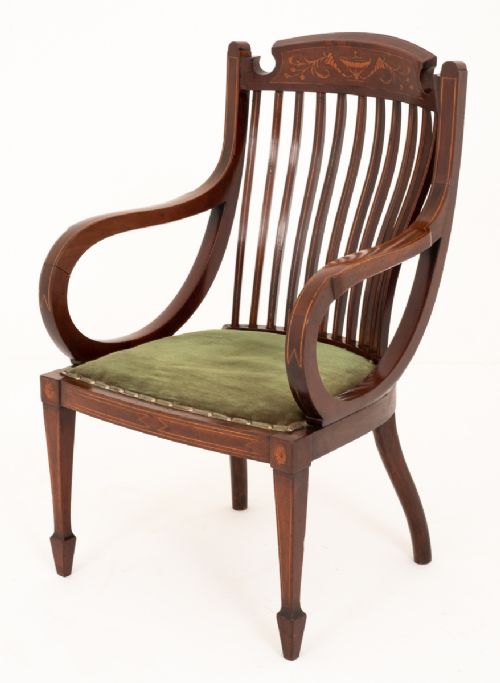


Vintage Satinwood Armchairs
These vintage satinwood armchairs bring refined timber and inlaid detail into sitting rooms and studies.
Vintage Satinwood Armchairs
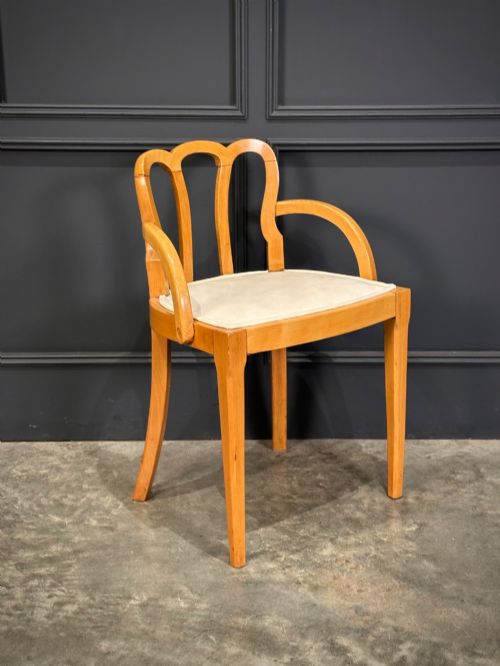
Vintage satinwood armchairs combine light-toned timber framing with seating forms ranging from occasional chairs to library armchairs and desk chairs. Buyers seeking vintage satinwood armchairs encounter pieces predominantly from the Edwardian period and the 1930s, alongside nineteenth-century examples.
Materials and construction
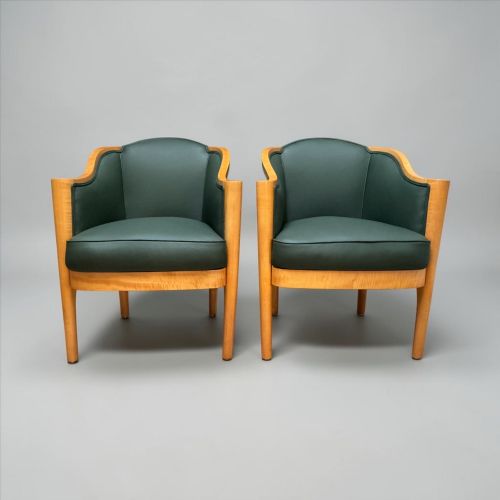
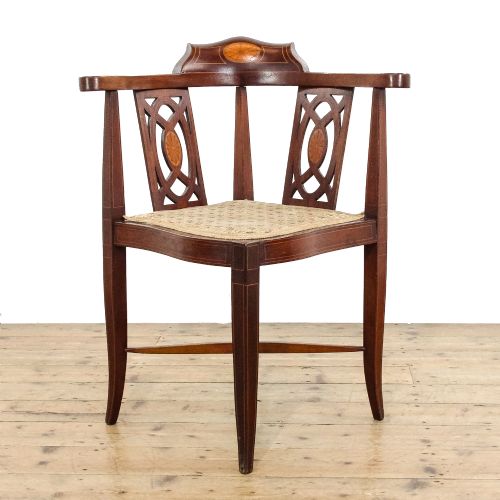
Construction relies on timber framing, primarily utilising satinwood and mahogany, shaped into elbow seats, tub chairs, and swivelling ships chairs. Woodwork often incorporates delicate string inlay to accentuate the grain and structural lines.
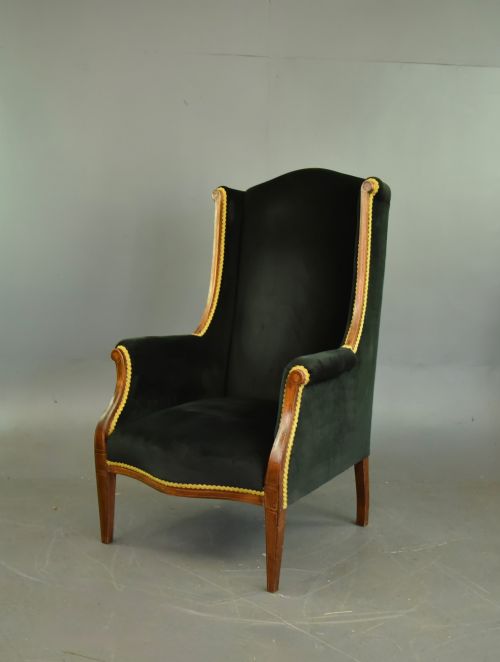
Upholstery materials include fabric, leather, and velvet, supporting various seating configurations from open hall chairs to upholstered wing armchairs and bergere library chairs with woven cane panels.
Vintage Satinwood Armchairs Retail Price Guide 2026
Typical asking prices for vintage satinwood armchairs among the pieces listed under this phrase on Sellingantiques today, from the lower quarter to the upper quarter. They describe what is for sale here now, not the wider market.
Listings feature Edwardian, 1930, and 19th Century periods alongside materials like satinwood, mahogany, leather, and velvet.
Assessing quality and craftsmanship
Quality separates across the precision of the timber inlay, the crispness of the carved or turned wooden elements, and the structural integrity of the frame. Finer examples display seamless integration of contrasting woods like mahogany and satinwood.
The choice of upholstery materials, such as supple leather or dense velvet, alongside the preservation of original bergere cane work, defines the finish of individual armchairs.
Maurice Adams·Hille·Shoolbred
The Vintage Satinwood Armchairs Glossary
- Satinwood
- A lustrous, yellowish-gold timber valued for its fine grain and decorative use in cabinetmaking. It forms the primary visual surface on many inlaid occasional and salon chairs.
- Bergere
- An enclosed upholstered armchair with a wooden frame and woven cane sides or back panels. This traditional French form appears frequently in nineteenth-century and Edwardian library seating.
- String inlay
- A narrow strip of contrasting wood embedded flush into the surface of a furniture piece to create linear decoration. It often outlines the panels and legs of Edwardian mahogany and satinwood frames.
- Elbow chair
- An armchair featuring low arms designed to support the elbows rather than enclose the sitter. These pieces function as versatile seating for desks, dressing tables, and morning rooms.
- Sheraton Revival
- A late nineteenth and early twentieth-century design style inspired by eighteenth-century neoclassical furniture. Pieces in this manner typically showcase balanced proportions, satinwood veneer, and delicate floral or linear inlay.
Vintage Satinwood Armchairs: Frequently Asked Questions
What periods do these armchairs come from?
The pieces span the Edwardian era, the 1930s, and the nineteenth century. These periods showcase styles from Sheraton Revival to Art Deco.
Craftsmanship reflects the prevailing design movements of each respective decade, utilising traditional timber framing and inlay techniques.
Where were these chairs used in the home?
They served multiple domestic functions as occasional chairs, desk chairs, library armchairs, and salon seating. Their compact forms suited bedrooms, halls, and morning rooms.
Elbow and tub chairs provided comfortable seating for writing desks and dressing tables without dominating smaller spaces.
How do I identify Sheraton Revival influence?
Sheraton Revival pieces display neoclassical symmetry, delicate string inlay, and light satinwood surfaces. The forms remain graceful and restrained.
Makers working in this style often paired mahogany frames with contrasting satinwood veneers and tapered legs.
What is a bergere armchair?
A bergere is a French-style upholstered armchair featuring exposed wooden framing and woven cane panels on the back or sides. They appear frequently in library and drawing room settings.
The cane work offers a lighter visual weight compared to fully upholstered padding while maintaining structural support.