





Satinwood Occasional Chairs
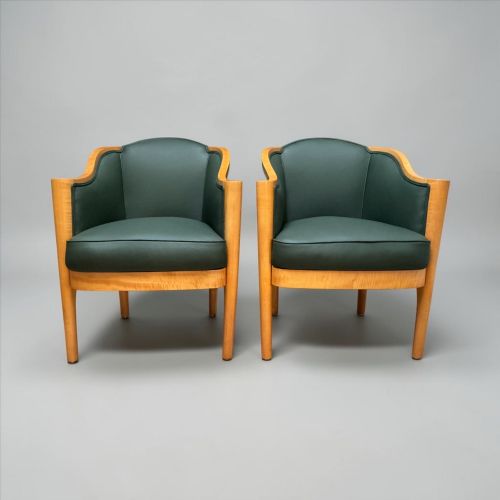
These satinwood occasional chairs bring light timber and refined period craft to sitting rooms, blending Edwardian and Art Deco tastes.
Satinwood Occasional Chairs
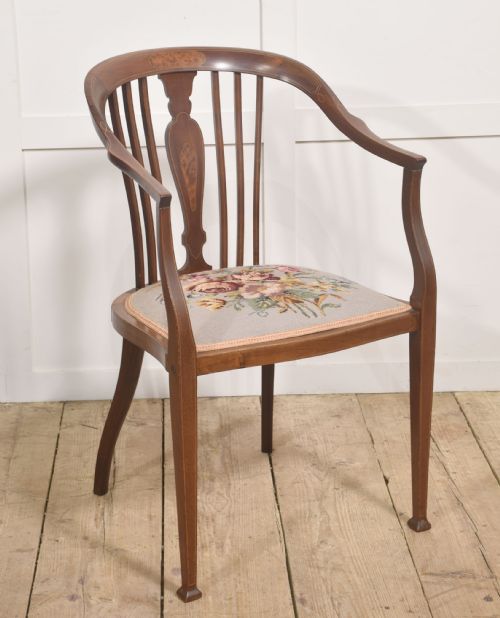
Satinwood occasional chairs encompass lightweight seating forms designed for flexible placement around the home, appearing frequently in Edwardian and nineteenth-century styles. The selection centres heavily on Edwardian mahogany and satinwood inlaid pieces, alongside Art Deco pairs and nineteenth-century examples.
Makers and workshops of the periods utilised diverse formats including armchairs, side chairs, salon chairs, and nursing chairs. Buyers encounter upholstered seats finished in fabric, leather, and needlepoint tapestry, alongside polished veneered wood surfaces.
The diverse origins range from British Edwardian parlours to continental Biedermeier interpretations and robust Art Deco workshops. Each variation offers a distinct proportion suited to domestic interiors, from corner chairs to elbow chairs.
How they were made
Cabinet makers constructed these frames using timber foundations of mahogany and walnut, overlaid with satinwood veneers. Artisans applied string inlay and hand-painted decorative motifs to enrich the smooth wooden surfaces.
Seating portions received traditional upholstery supported by fabric, leather, or needlepoint tapestry. Structural joinery relied on seasoned timber and precise joint work to ensure enduring stability for everyday domestic use.
Satinwood Occasional Chairs Retail Price Guide 2026
Typical asking prices for satinwood occasional chairs among the pieces listed under this phrase on Sellingantiques today, from the lower quarter to the upper quarter. They describe what is for sale here now, not the wider market.
Upholstery options recorded in the inventory include needlepoint tapestry, leather, and traditional woven fabric.
What varies in quality
Quality depends upon the crispness of the inlay work and the preservation of the satinwood veneer across the frame. Superior examples display balanced proportions and refined hand-painted details rather than plain commercial execution.
The integrity of the underlying timber frame and the quality of the chosen upholstery materials distinguish finer workshop productions. Pieces retaining intact original decorative surfaces command greater regard among collectors.
Maurice Adams·Hille·Heals
The Satinwood Occasional Chairs Glossary
- Satinwood
- A durable hardwood noted for its lustrous, golden sheen. It is frequently employed as a fine veneer on nineteenth-century and Edwardian furniture.
- Inlay
- A decorative technique where contrasting strips of timber are inserted into recesses within the primary wood surface. This method creates geometric patterns and delicate borders.
- Occasional chair
- A movable, decorative chair designed to be used in various rooms as needed. These pieces prioritise aesthetic lightness over heavy formal seating duties.
- Biedermeier
- A central European design style from the nineteenth century emphasising clean lines and utilitarian comfort. It often highlights the natural grain of timbers without excessive ornamentation.
Satinwood Occasional Chairs: Frequently Asked Questions
Where were satinwood occasional chairs placed?
These chairs were positioned in parlours, bedrooms, and reception rooms to provide flexible seating without cluttering the floor space. Their lighter frames allowed servants or residents to move them easily between rooms.
Today, they serve a similar purpose in modern homes, fitting neatly into corners, hallways, or dressing areas where heavy armchairs would overwhelm the room.
How do I identify an Edwardian piece?
Edwardian examples often feature satinwood string inlay set into mahogany frames, reflecting a revival of eighteenth-century neoclassical taste. They frequently appear as salon chairs, elbow chairs, or matched pairs.
Construction methods from this era combined machine-assisted precision with skilled hand-finishing, resulting in lighter proportions than heavier Victorian predecessors.
Can I use these chairs daily?
Most pieces handle normal daily sitting, provided the structural joinery and upholstery webbing remain sound. Lighter occasional forms are built for sitting rather than heavy lounging.
Checking the stability of the frame and the condition of the fabric ensures the chair withstands regular use in a modern living space.
What is the difference between salon and nursing chairs?
Salon chairs generally feature upright backs and open arms designed for formal sitting and entertaining guests. They maintain a lighter profile suited to decorative placement.
Nursing chairs traditionally possess lower seats and shorter legs, originally intended for comfort near nursery fireplaces. Both forms utilise inlaid timber frames across the periods represented.