




Vintage Globe Table Light
A vintage globe table light brings period character and focused illumination to a room, drawing the eye with sculptural bases and decorative shades.
Vintage Globe Table Light
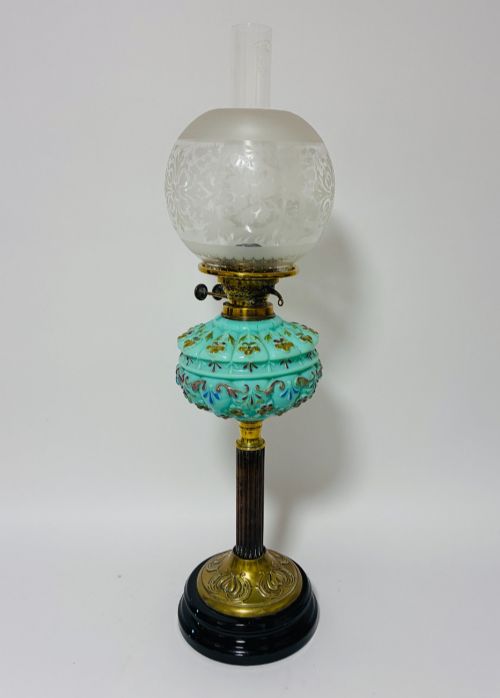
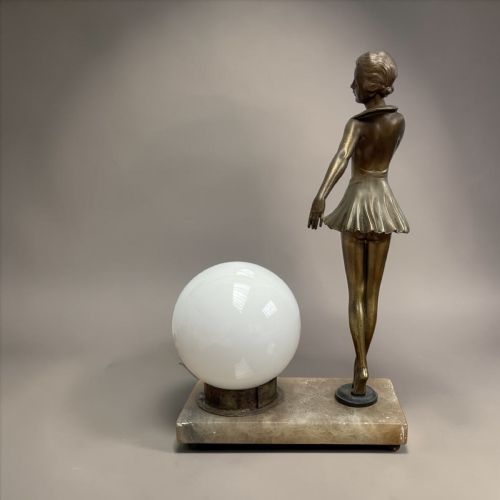
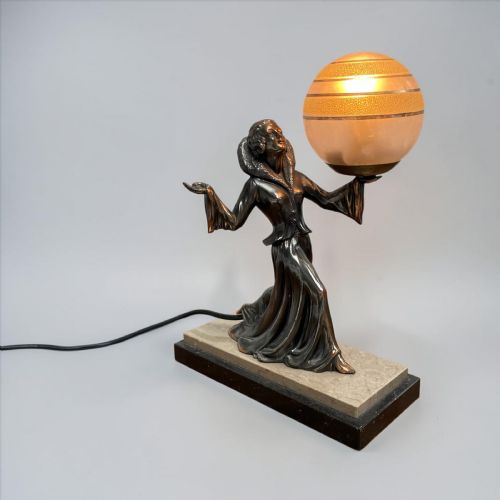
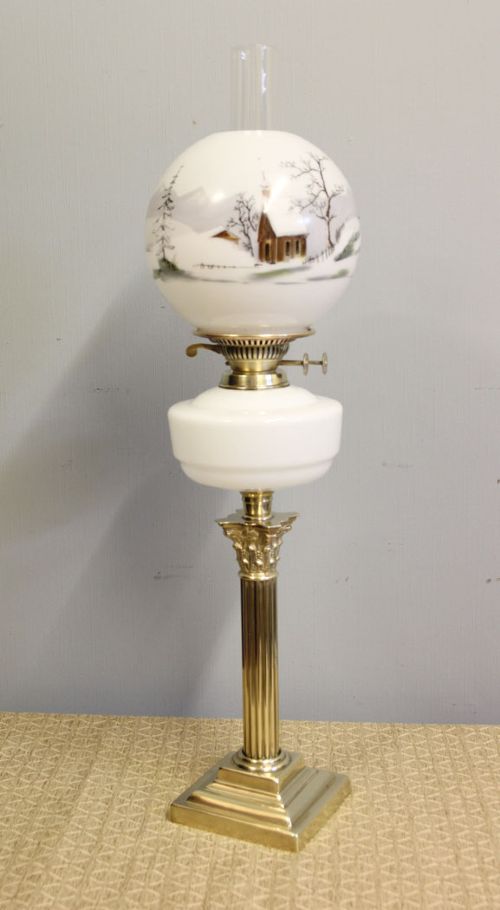
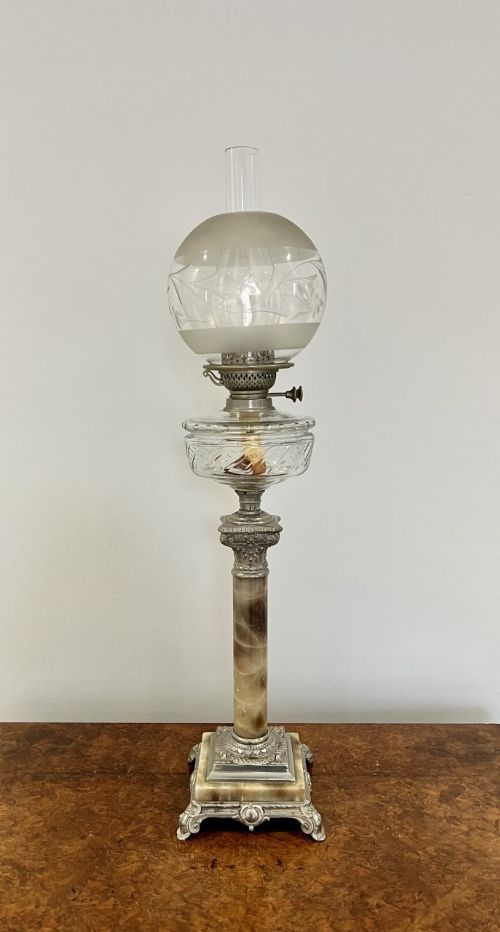
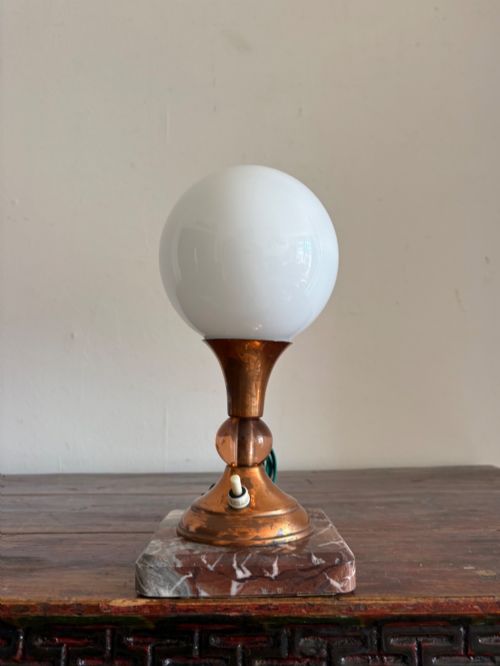
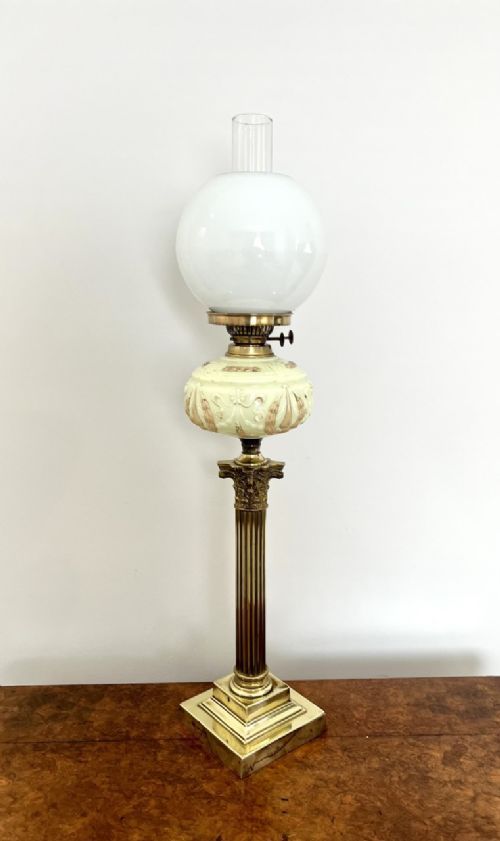
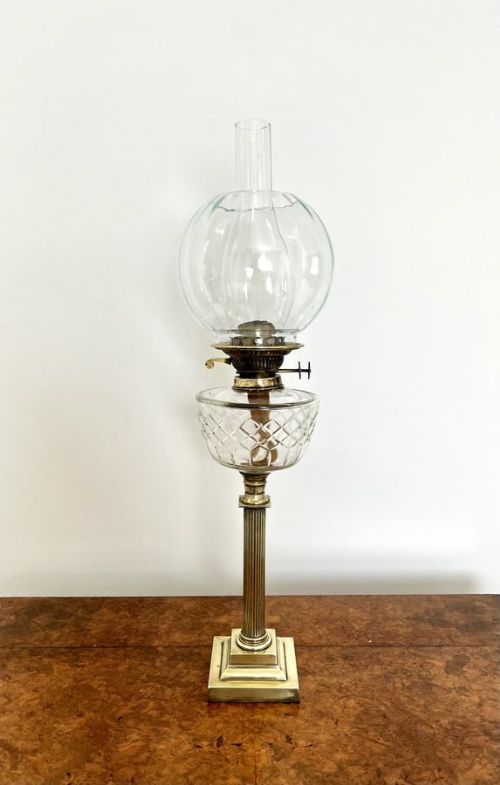
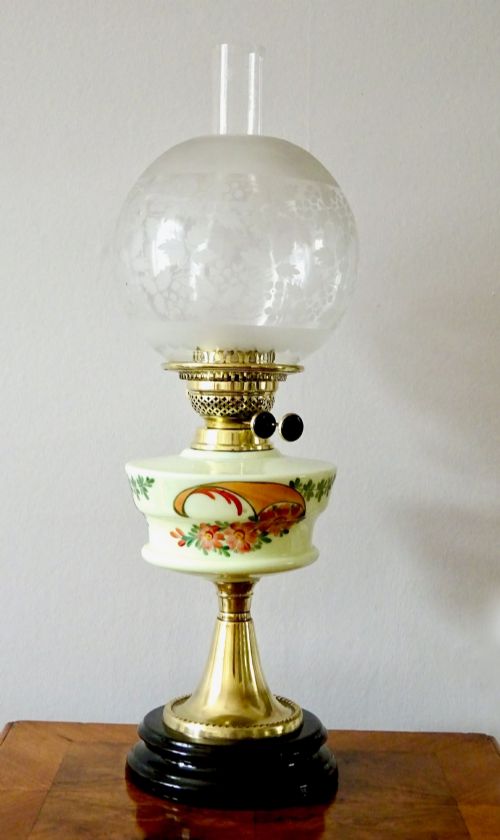
When you search for a vintage globe table light, you encounter a variety of period lighting forms spanning the Victorian era through the mid twentieth century. The selection ranges from converted oil lamps featuring brass columns and coloured glass fonts to Art Deco figural lamps with marble or onyx bases.
The most common versions on this page combine cast brass or spelter mountings with opaline glass shades or decorative glass globes. These pieces bridge the gap between functional desk lighting and decorative sculpture, reflecting the design priorities of the 1880s to the 1940s.
Materials and construction methods
Makers utilised heavy base materials such as marble, onyx, brass, and bronze to ensure stability for upright lighting fixtures. Cast metal components, including spelter and silver plate, frequently appeared on figural Art Deco pieces produced in the early twentieth century.
Shades and vessels relied on specialist glasswork, encompassing opaline glass, cranberry glass, and etched glass globes. Structural assemblies combined threaded brass fittings with ceramic fonts, reflecting the transition from oil combustion to electrical wiring.
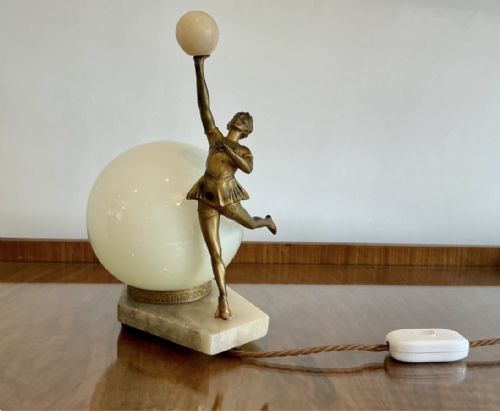
Athletes and nude figures balancing balls stand ready to illuminate your desk from the 1940s.
Distinctions in quality and execution
Quality rests in the weight and definition of the sculptural elements, from cast brass Corinthian columns to detailed spelter and alabaster figures. Superior examples employ substantial marble or onyx bases rather than lighter substitute materials, ensuring both balance and presence.
The sophistication of the glassware dictates the upper tier of the range, visible in hand-etched patterns, layered opaline glass, and rich coloured fonts. Maker signatures on metal mounts or burners further separate standard production from workshop pieces.
Hinks of Birmingham·Messengers·Harrods
The Vintage Globe Table Light Glossary
- Opaline glass
- A milky, semi-translucent glass popular in nineteenth and twentieth-century lighting shades. It diffuses light evenly while retaining a soft pastel body.
- Spelter
- An alloy of zinc and lead utilised as a cost-effective alternative to bronze for decorative figures. It accepts patination and metallic plating effectively.
- Font
- The oil reservoir section of a lamp situated beneath the burner and above the base. In electrified conversions, this component often remains as coloured glass or ceramic decoration.
- Cranberry glass
- A rich pink or red transparent glass produced by adding gold chloride to the molten batch. It frequently occurs in Victorian oil lamp vessels.
Vintage Globe Table Light: Frequently Asked Questions
What periods do these lights cover?
The pieces span from the Victorian era through the Edwardian period and into the Art Deco style of the 1920s, 1930s, and 1940s.
Early examples lean towards heavy brass columns and ceramic fonts, whilst later designs introduce streamlined chrome, bakelite, and figural spelter sculptures.
Were these originally oil lamps?
Many of the earlier pieces began life as oil or paraffin lamps before receiving later electrical conversions.
Victorian and Edwardian models frequently retain their original brass burners and glass fonts, adapted safely for modern table use.
What materials are most common?
Brass and glass dominate the listings, supported by marble, onyx, bronze, and ceramic components.
Spelter and silver plate appear frequently on figural bases from the interwar period.