


1930s Figural Table Lamp
A 1930s figural table lamp brings striking sculptural presence and period character to a room.
1930s Figural Table Lamp
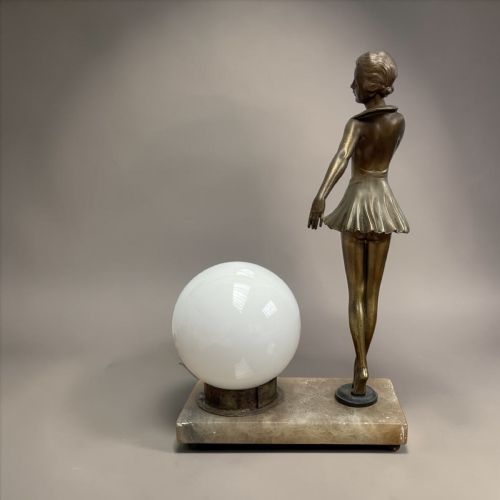
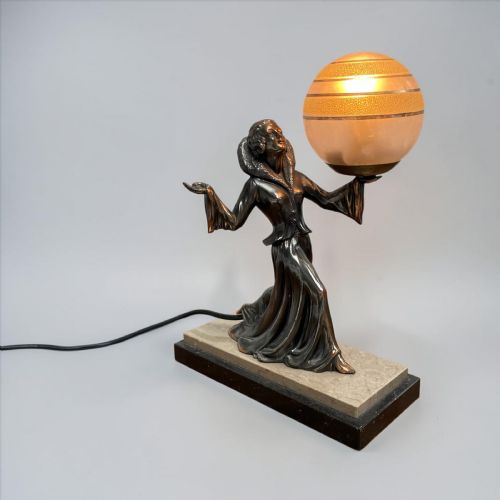
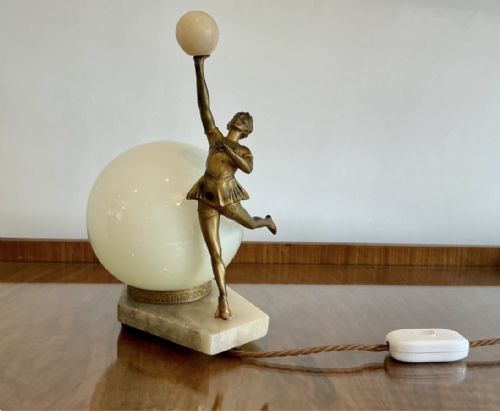
A 1930s figural table lamp typically depicts human figures, dancers, and athletic forms standing as the central pillar of the piece. These items embody the dominant Art Deco style of the era, drawing heavily on sculptural aesthetics from France and England.
The most common iterations on this page feature female figures, nudes, and tennis players rendered in metallic or glass compositions. Makers frequently incorporated bases made of marble or chrome to anchor the upright figural sculpture.
Materials and construction
Makers utilised cast spelter, bronze, and brass for the primary figural components, often applying a patinated metal finish to enhance surface detail. Chrome plating provided a bright, reflective sheen favoured in contemporary industrial design.
Glass elements, particularly frosted and peach glass associated with makers like Walther and Sohne, were moulded to diffuse light effectively. Heavy marble bases were selected to counterbalance the height and weight of the standing figures.
Materials utilised across the current selection include marble, chrome, frosted glass, and fabric.
Factors influencing quality
The choice of materials also dictates the standard of the piece, with genuine marble and substantial bronze or chrome castings holding greater structural integrity. Integrated glass shades that retain their original frosted or tinted treatments elevate the overall execution.
P.Sega·Walther and Sohne
The 1930s Figural Table Lamp Glossary
- Spelter
- A zinc alloy commonly used as a cost-effective substitute for bronze in decorative metalwork. It accepts various patinations and metal finishes readily.
- Patinated metal
- Metal treated with chemical solutions to produce a coloured surface layer or antique finish. This process highlights sculptural contours and recesses.
- Frosted glass
- Glass treated by acid-etching or sandblasting to create a diffusing, translucent surface. It softens the light emitted from the bulb within.
- Art Deco
- The prevailing design style of the 1920s and 1930s characterised by sleek geometric lines and stylized representations. It influences the streamlined posture of the figures found on these lamps.
1930s Figural Table Lamp: Frequently Asked Questions
What materials make up these lamps?
These lamps incorporate a mixture of metals including chrome, brass, bronze, and spelter. Glass and marble also feature prominently in the construction.
Foundations often rely on heavy marble to support the metal or glass figures standing above.
Where were these lamps manufactured?
Origin points span across Europe, with specific pieces linked to workshops in France and England. Continental design heavily influenced the aesthetic of the period.
Different regional foundries produced distinct variations in both figural styling and material finishes.
How do I style a figural lamp?
Place the lamp on a sturdy desk, side table, or credenza where the sculptural form can act as a focal point. Ensure the surrounding decor complements the metallic or glass finishes.
Keep the immediate area uncluttered so the silhouette of the figure remains clearly visible.
What periods do these lamps represent?
The listings predominantly reflect the Art Deco design movement spanning the 1920s through to the 1940s. Most examples date specifically from the 1930s.
Stylistic cues remain consistent with interwar decorative arts.