




Bronze Figural Desk Lamp
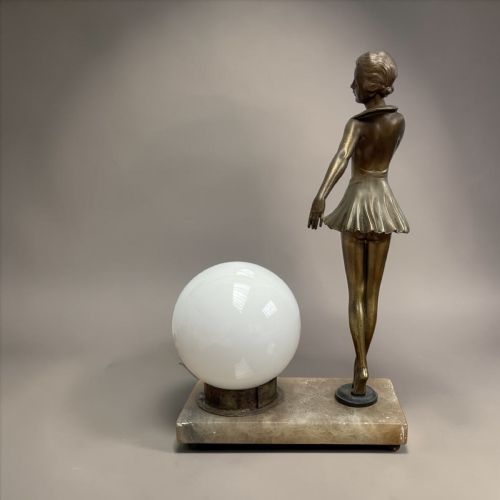
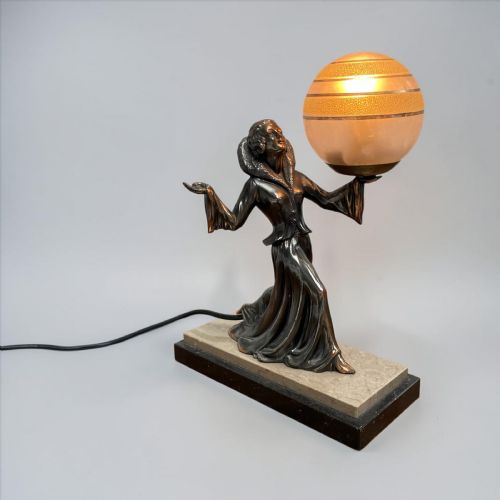
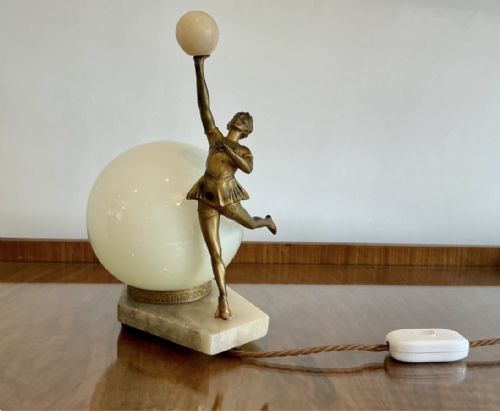
A bronze figural desk lamp brings character and illumination to a room, casting light from classical figures or Art Deco ladies.
Bronze Figural Desk Lamp
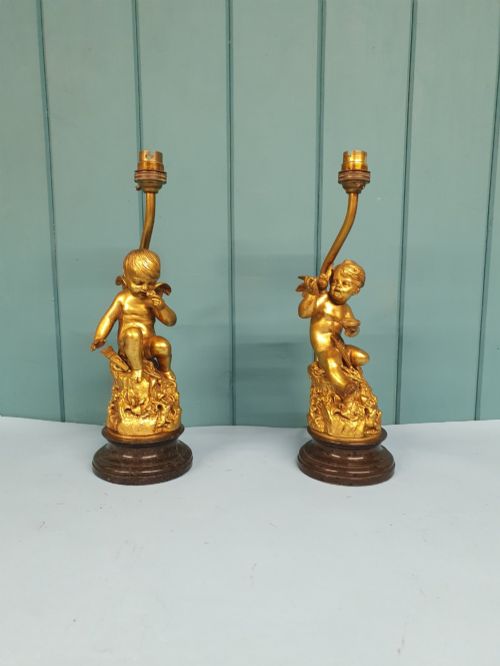
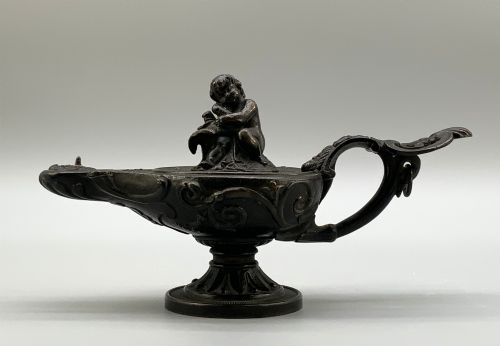
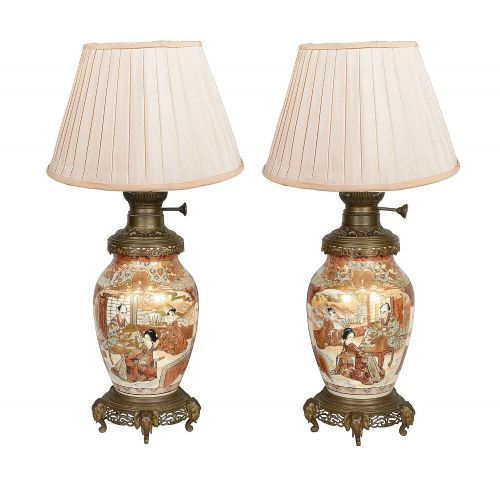
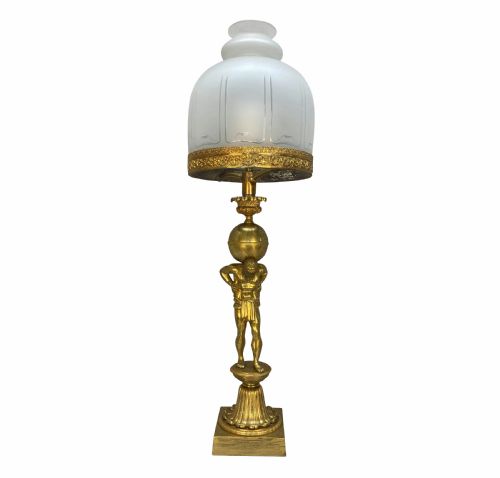
A bronze figural desk lamp combines sculpture with practical lighting, featuring human figures, cherubs, or mythological subjects cast in metal. When you search for a bronze figural desk lamp, you encounter pieces that range from early nineteenth-century Grand Tour oil lamps to sleek Art Deco table lamps.
The selection on this page leans heavily towards twentieth-century modernism and nineteenth-century revivalism. Art Deco lady lamps and French spelter figures adapted for electricity appear frequently alongside classical bronze cherubs and mythological deities mounted on marble plinths.
Origins span across England and France, drawing upon periods such as Regency, Victorian, Art Nouveau, and Art Deco. Buyers find single desk pieces as well as matched pairs designed to sit upon heavy mahogany partners desks.
How they were made
Foundries utilised traditional lost-wax casting and sand-casting methods to shape bronze, brass, and spelter into intricate figures. Artisans then finished the metal surfaces with patination, cold-painted polychrome details, or fire-gilding.
Heavier bases often incorporate contrasting materials such as veined marble, slate, or polished wood to anchor the weight of the metal figures. Electrical fittings, fabric shades, and frosted glass components were frequently added later to adapt oil lamps and night lights for domestic use.
Listings feature periods spanning from the Regency era through to Art Deco, executed in bronze, spelter, marble, and glass.
What varies in quality
The integrity of the mountings and the quality of the base material separate standard production pieces from masterworks. Solid cast bronze and heavy ormolu mounted on genuine marble plinths command greater presence than lightweight plated alternatives.
L & F Moreau·Emile Picault·Ivan Zaiec·Aug. Moreau·Bruno Zach·P.Sega·Adrien Gaudez
The Bronze Figural Desk Lamp Glossary
- Spelter
- A zinc alloy commonly used as a less costly substitute for bronze in nineteenth and twentieth-century figures. It takes patination well but lacks the heavy density of true bronze.
- Patination
- The natural or artificial surface oxidation on metal. It gives bronze its deep, aged coloration.
- Ormolu
- Gilded bronze produced by applying a mercury-gold amalgam to metal. This French technique yields a bright golden finish seen on classical revival pieces.
- Grand Tour
- The nineteenth-century practice of wealthy travellers collecting classical antiquities and bronzes across Europe. These souvenirs often formed the basis for later figural lamps.
Bronze Figural Desk Lamp: Frequently Asked Questions
Are these lamps converted from oil?
Many nineteenth-century examples began life as oil lamps or bronze vases before conversion to electricity. Later twentieth-century pieces were manufactured specifically as electric desk and table lamps.
Conversion methods vary, but skilled rewiring ensures the pieces meet modern safety standards while retaining their original aesthetic.
How do I date a figural lamp?
Dating relies upon the stylistic markers of the figure, such as the geometric lines of Art Deco or the flowing motifs of Art Nouveau. The casting material and the nature of the base also offer clues to the period of manufacture.
Signatures or foundry marks stamped into the bronze help identify the specific artist and active decade.
What is the difference between bronze and spelter?
Bronze is a durable copper alloy that takes fine detail and develops a rich patina over time. It forms heavy, valuable sculptures and lamp bases.
Spelter is a softer, lighter zinc-based metal that mimics bronze visually. It was widely utilised for decorative table lamps during the early twentieth century.