



Art Deco Pedestal Lamp
An art deco pedestal lamp brings distinct geometric clarity and warm illumination to a room, combining practical lighting with sculptural presence.
Art Deco Pedestal Lamp
When you search for an art deco pedestal lamp, you encounter lighting fixtures and combined lamp tables dating principally from the 1920s and 1930s. The selection on this page bridges the gap between dedicated floor lamps, table lamps, and elevated lamp tables designed to hold a light source.
The forms span upright torcheres, twin figure lamps, and versatile occasional furniture incorporating stands for illumination. Most pieces originate from the early decades of the twentieth century, carrying the characteristic streamlined geometry of the interwar period.
Alongside British and French examples, you find American variations and Amsterdam School pieces that utilise similar architectural silhouettes. These objects serve double duty as functional lighting and as structural focal points within a room scheme.
Materials and construction
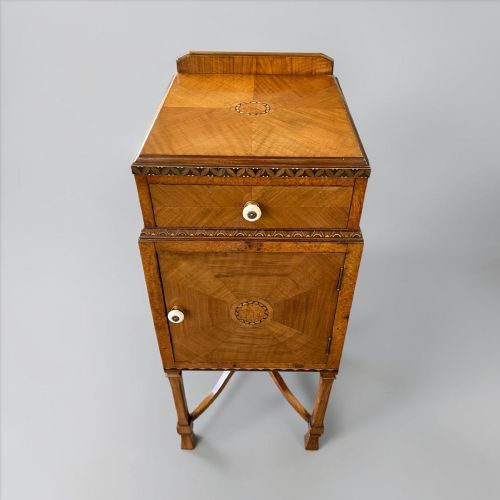
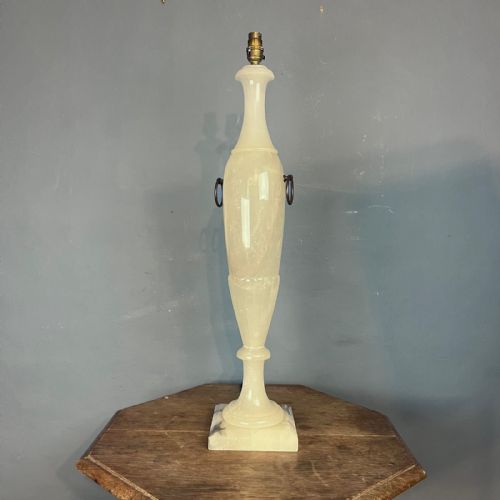
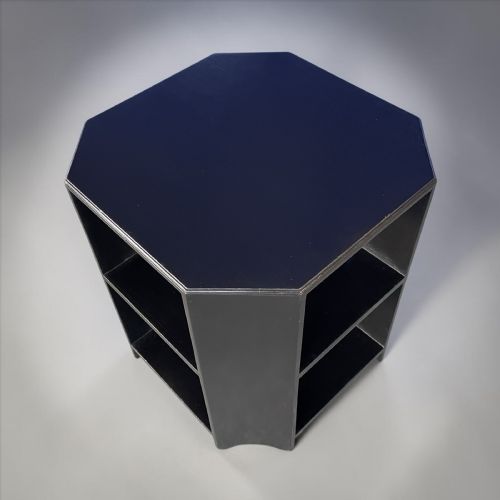
Makers of the period combined polished metals such as chrome, brass, and silver plating with rich hardwoods like walnut, burr elm, and ebonised timber. Bases often incorporate heavy elements like marble or alabaster to ensure stability for upright standards and tall table fittings.
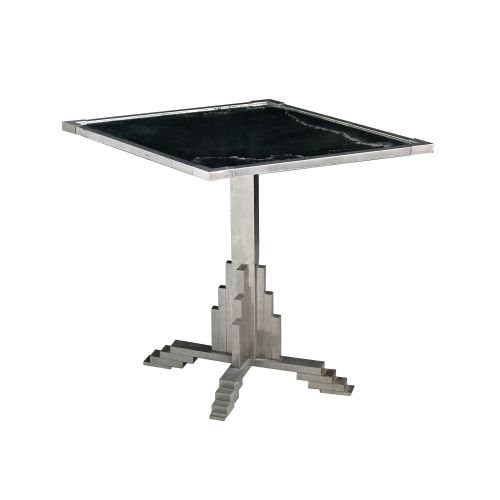
Surface treatments rely on contrasting veneers, mirrored glass tops, and parchment leather details rather than heavy carving. Construction focuses on clean vertical lines, stepped profiles, and geometric planes that define the aesthetic of the era.
Assessing craftsmanship and finish
Quality in these pieces shows in the precision of the metalwork, the selection of figured wood veneers, and the stability of the combined table and pedestal structures. Superior examples maintain crisp geometric angles and integrated fittings that feel resolved rather than assembled from disparate parts.
The integration of materials also dictates the standard of the piece, particularly where marble bases meet plated metal standards or where mirrored glass is neatly bevelled into wooden surrounds.
The Art Deco Pedestal Lamp Glossary
- Torchiere
- An upright floor lamp designed to direct light upwards towards the ceiling. These standards often feature slender shafts rising from heavy weighted bases.
- Veneer
- A thin slice of figured wood applied over a secondary timber core to create decorative grain patterns. Walnut and burr elm are frequently treated this way.
- Alabaster
- A fine-grained mineral used for carved lamp bases and shades. It diffuses light with a soft, milky glow.
- Amsterdam School
- An early twentieth-century architectural and design style originating in the Netherlands. It emphasises expressionist forms, brickwork patterns, and elaborate metal details.
- Occasional table
- A small, movable table designed for specific, intermittent uses such as holding a lamp or a book.
Art Deco Pedestal Lamp: Frequently Asked Questions
How do I use a pedestal lamp in a room?
Place a taller torchere in an empty corner to bounce ambient light off the ceiling, or position a lamp table beside seating for combined surface space and direct illumination.
Keep the surrounding furniture simple so the geometric lines of the metal and wood stand out clearly.
What materials were commonly used?
Makers relied heavily on chrome, brass, and silver-plated metals paired with contrasting walnut, ebony, and oak timbers. Heavy stone elements like marble and alabaster provided a solid foundation for taller vertical stands.
Mirrored glass and parchment leather also appear as inset details on the accompanying table surfaces.
How do I date an art deco lamp?
Look to the combination of materials, such as tubular chrome paired with stepped walnut bases, which point directly to the interwar period of the 1920s and 1930s. Heavier brass and marble combinations can occasionally point slightly earlier towards the turn of the century.
Construction methods and wiring channels also offer clues to the manufacturing decade.
Are these pieces strictly decorative?
While they possess strong sculptural qualities, most pieces serve an active daily function as lights, side tables, or plant stands. The combination designs were created specifically to maximise space in smaller interwar interiors.
They integrate easily into modern rooms while retaining their original period utility.