

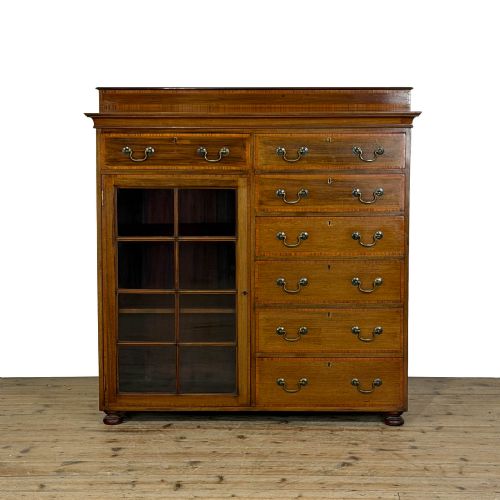
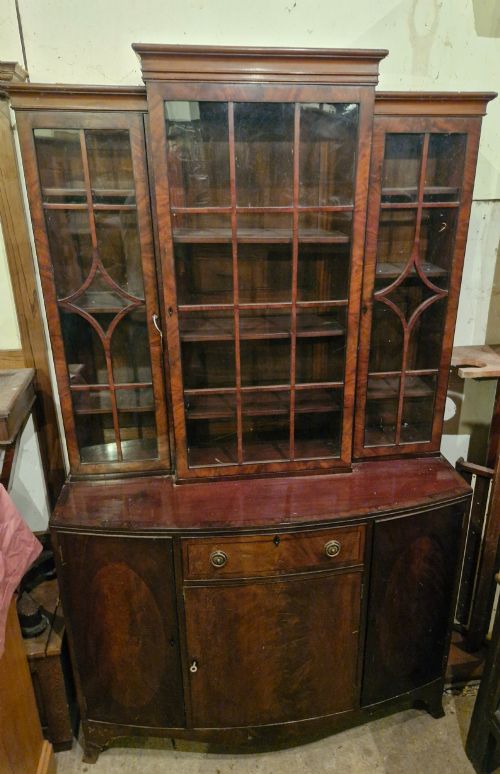
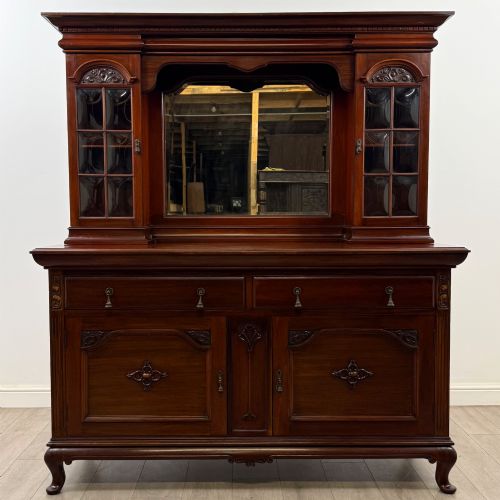

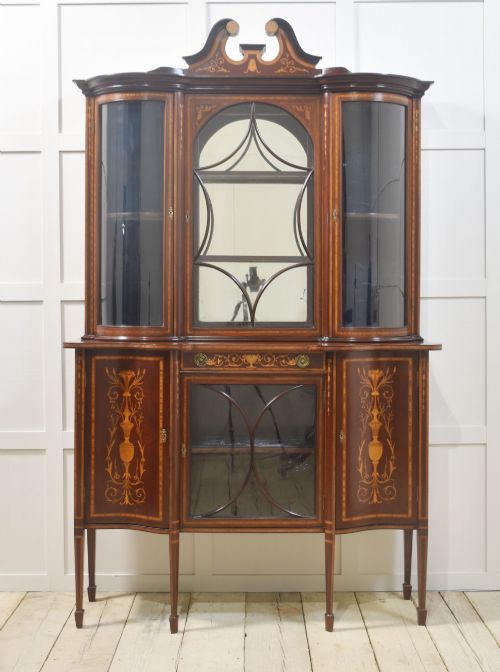

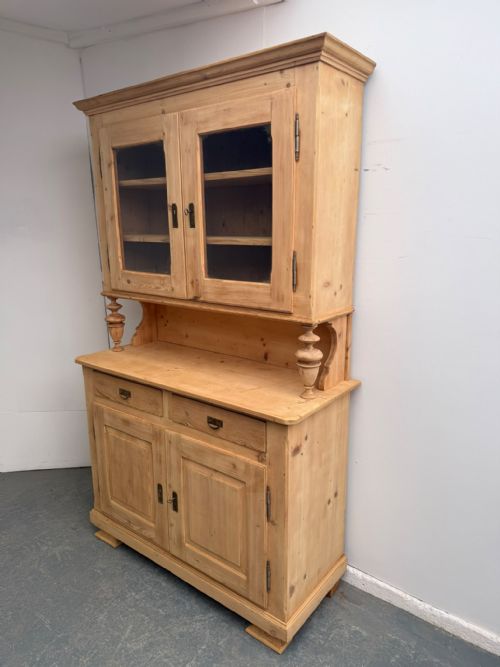

Vintage Glazed Sideboard
A vintage glazed sideboard brings glass-fronted storage and character to a room, spanning styles from Victorian revival to Art Deco.
Vintage Glazed Sideboard
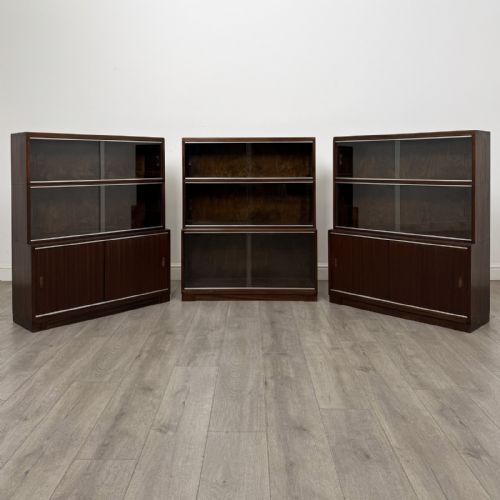
A vintage glazed sideboard combines the storage of a base cupboard with upper display shelving behind glass doors, originating across periods from the nineteenth century through to the nineteen-thirties.
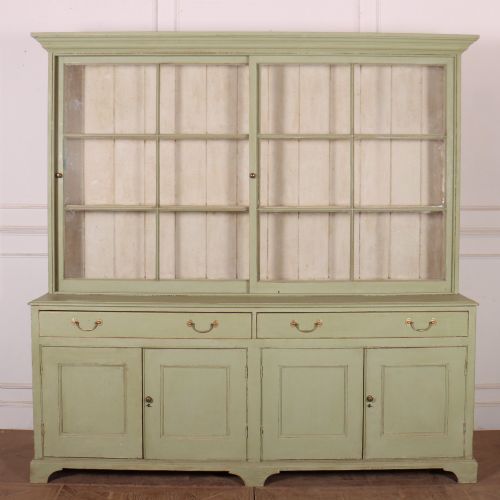
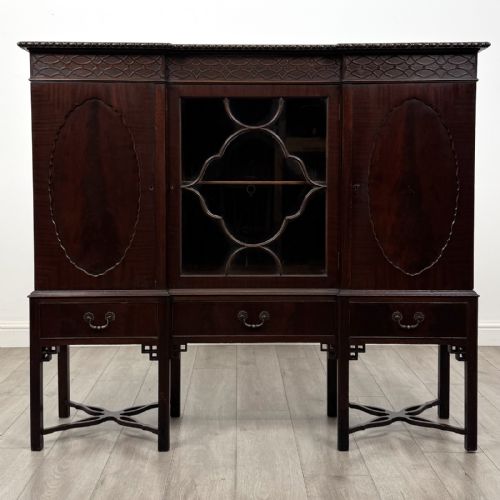
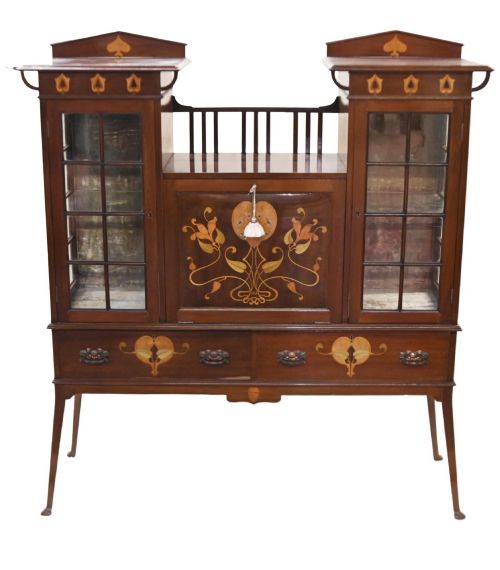
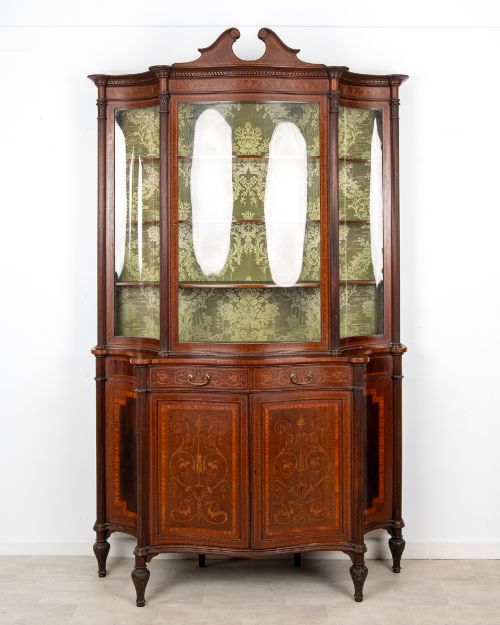
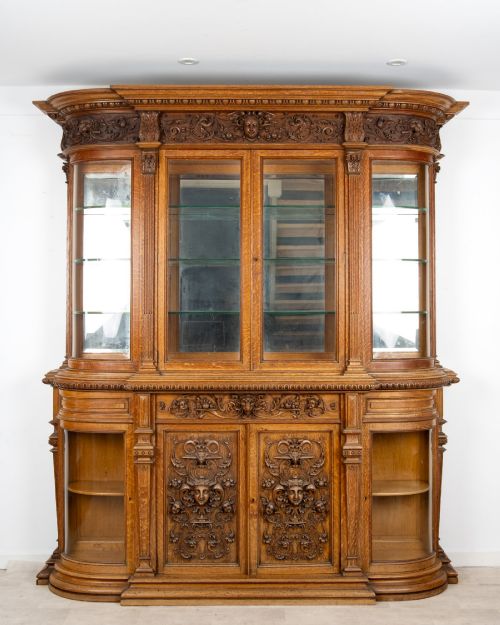
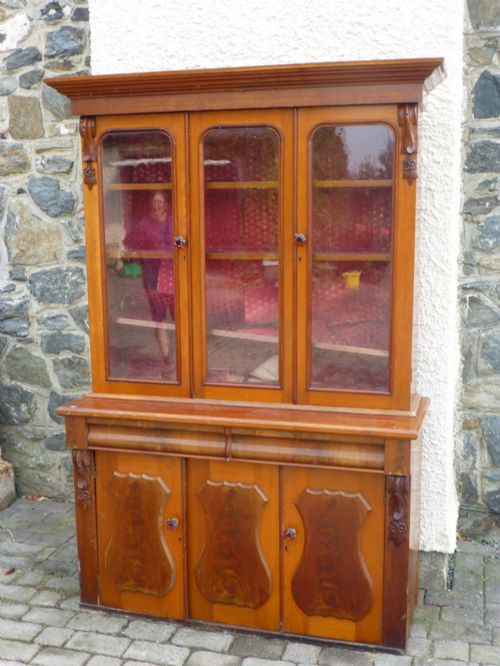
Buyers looking for a vintage glazed sideboard encounter pieces ranging from Arts and Crafts oak cabinets to Edwardian inlaid mahogany display units and painted kitchen dressers.
These items serve practical storage and display functions in domestic spaces, utilising timber structures paired with glazed panels for visibility.
How they were made
Construction relies on solid timbers and veneers such as mahogany, oak, walnut, pine and rosewood, shaped into carcasses and fitted with internal shelving.
Glazing methods incorporate glass panes set into timber frames or leaded sections, accompanied by brass hardware, mirrors and occasional ormolu mounts.
Surface finishes include polish, wax or paint applications, complemented by marquetry, inlay and carved detailing characteristic of specific revival styles.
Vintage Glazed Sideboard Retail Price Guide 2026
Typical asking prices for vintage glazed sideboard among the pieces listed under this phrase on Sellingantiques today, from the lower quarter to the upper quarter. They describe what is for sale here now, not the wider market.
Listings span the nineteenth century through to nineteen-thirty, incorporating oak, mahogany, walnut, pine and rosewood.
What varies in quality
The choice of timber selection and the precision of veneer work determine the visual depth of a piece, with figured walnut and detailed mahogany standing apart from utility pine.
Execution of decorative elements such as marquetry inlay, brass mountings and carved mouldings separates standard production from exhibition quality examples.
Structural integrity depends on timber seasoning, joint construction and the original condition of the glass and internal fittings.
Edwards and Roberts
The Vintage Glazed Sideboard Glossary
- Credenza
- A sideboard or display cabinet, often featuring mirrored backs and fine timber veneers. These pieces frequently date to the nineteenth century.
- Marquetry
- Decorative patterns formed by fitting together thin slices of wood veneer on a carcass surface. This technique appears on Edwardian and Victorian cabinets.
- Serpentine
- A gently curved front line that undulates outward and inward. This shape indicates higher-tier cabinet work.
Vintage Glazed Sideboard: Frequently Asked Questions
How do I style a glazed sideboard?
Position the cabinet against a main wall where natural light catches the glass panels and highlights the timber grain.
Balance enclosed storage in the base with curated items on shelves behind the glass to maintain visual order.
Are these cabinets suitable for books?
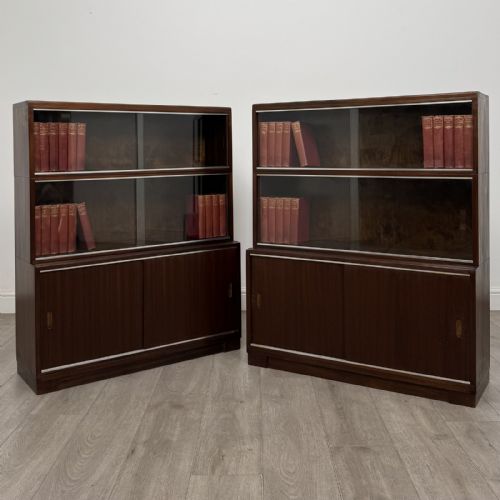
Many variants function effectively as bookcase cabinets or display units with adjustable wooden shelving.
Check shelf depth and weight tolerance before loading heavier volumes into older units.
What is the difference between a dresser and a credenza?
Dressers typically combine kitchen utility storage with open plate racks or enclosed upper cupboards.
Credenzas lean toward formal reception rooms, frequently incorporating mirrors and decorative marquetry.
How do I identify Edwardian pieces?
Edwardian examples often display Sheraton or Chippendale revival motifs with light wood inlay on mahogany or satinwood.
Construction methods reflect early twentieth-century workshop standards alongside traditional joinery.