


Vintage Glass Wine Vessel
A vintage glass wine vessel brings historic craftsmanship to the table, offering practical service and decorative presence through centuries of moulded and blown forms.
Vintage Glass Wine Vessel
A vintage glass wine vessel encompasses decanters, carafes, ewers, and carboys originating from periods spanning the eighteenth century to the mid-twentieth century. Buyers seek these pieces for their utility in decanting and serving wine, as well as their aesthetic contribution to a dining setting.
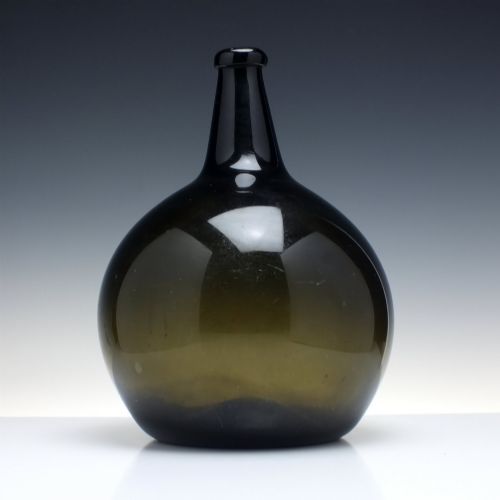
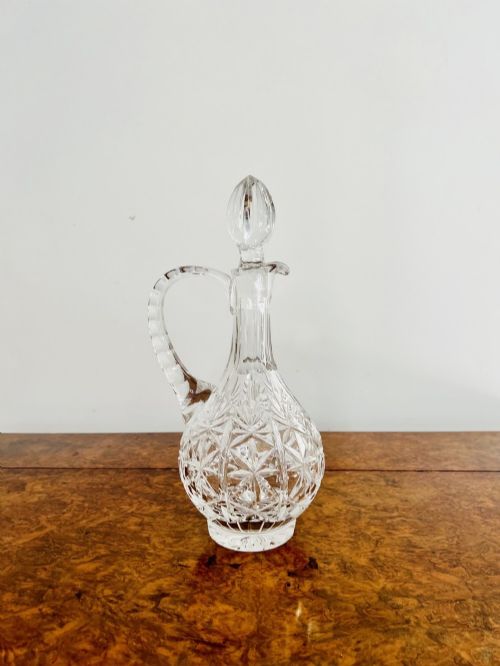
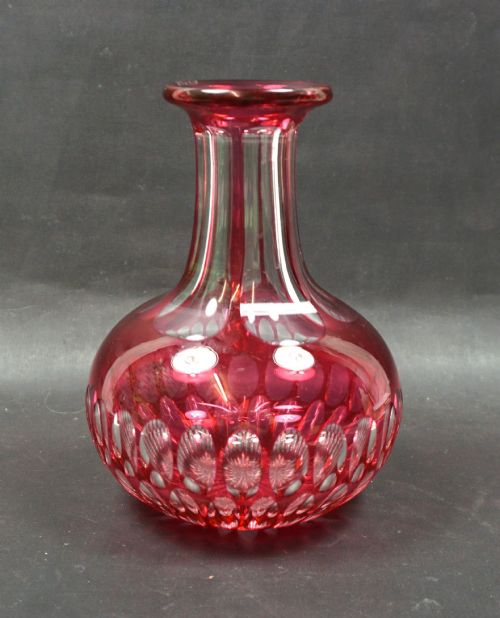
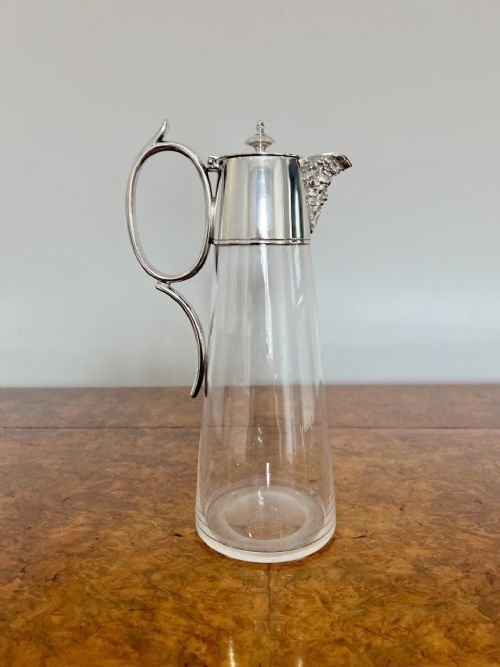
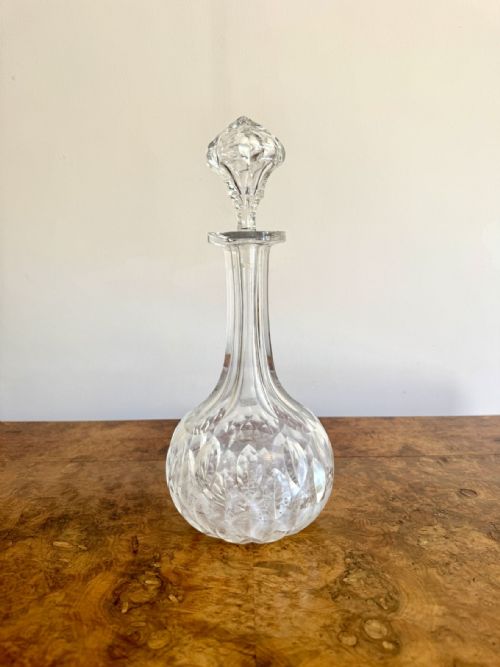
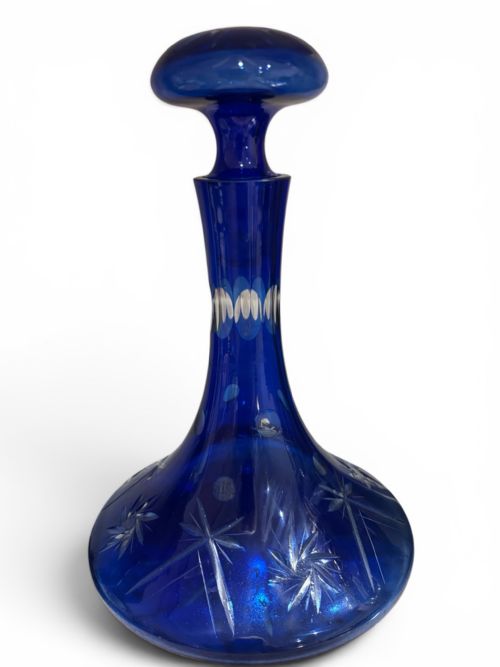
The most common examples on this page are Edwardian and Victorian cut glass decanters, alongside Georgian lead glass bottles and French demijohns. These items range from simple blown liquid jars to silver-mounted claret jugs and coloured crystal carafes.
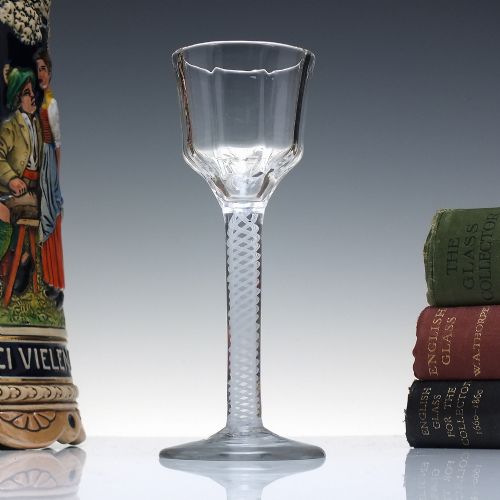
Objects vary from tall cylindrical bottles and bell-shaped decanters to handled ewers and wine glasses with opaque twist stems. Origins stretch across English, French, and Bohemian workshops, reflecting distinct regional design traditions.
Materials and construction
Pieces are primarily fashioned from glass, crystal, lead glass, and lead crystal, shaped through hand-blowing and moulding techniques. Artisans achieved clarity and weight by incorporating lead oxide into the molten material, allowing for deep faceted cutting.
Surface decoration relies on wheel-engraving, etching, and overlay techniques, exemplified by cranberry glass over clear crystal or green glass painted in the Mary Gregory style. Metal elements such as silver plating and silver mounts are frequently integrated into jugs and decanters.
Early examples like eighteenth-century Alloa bottles and cylinder wine bottles display the characteristic pontil marks and bubbles associated with hand-blown production. Later Edwardian and Victorian items often feature precise geometric cutting and silver-plated hardware.
Listings span Georgian, Victorian, Edwardian, and Art Deco periods, encompassing both English lead crystal and French carboys.
Markers of distinction
Quality rests upon the clarity of the material and the crispness of the wheel-cut facets or engraved motifs. Heavier lead crystal vessels exhibit a sharper refraction of light and a more resonant ring when struck compared to standard lime glass.
The integration of secondary materials defines the upper tier of pieces, where hallmarked silver mounts, fitted stoppers, and original iron baskets or silver-plated ice buckets remain intact. Artisanal skill is further evidenced by fluid, balanced proportions in hand-blown forms such as carboys and ewers.
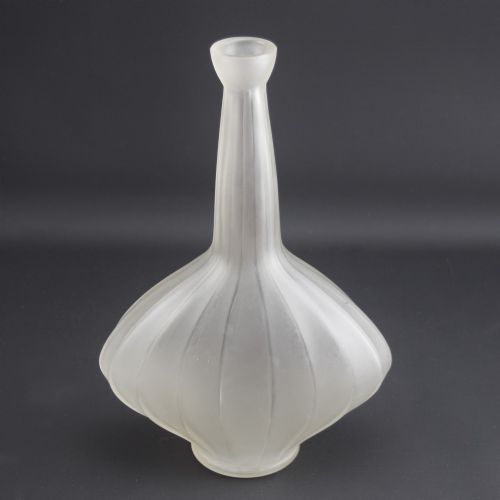
Rene Lalique·Stevens and Williams
The Vintage Glass Wine Vessel Glossary
- Decanter
- A glass vessel designed for holding and serving wine, typically fitted with a stopper. These objects allow sediment to settle and expose the liquid to oxygen.
- Claret jug
- A pouring vessel specifically intended for red wine, usually featuring a handle and a hinged metal mount or lid. Many Victorian examples combine crystal bodies with silver-plated hardware.
- Carboy
- A large, rigid glass bottle used for transporting or storing liquids, often protected by an iron basket or wicker frame. French examples from the nineteenth and twentieth centuries are particularly prominent.
- Lead crystal
- Glass containing a significant proportion of lead oxide, which increases weight, brilliance, and workability for cutting. This material is standard in better decanters and wine glasses.
- Opaque twist
- A type of decorative stem found in eighteenth-century wine glasses, created by enclosing white or coloured enamel threads within the clear glass stem.
Vintage Glass Wine Vessel: Frequently Asked Questions
Can I use these vessels for daily wine service?
Most antique glass decanters and carafes function perfectly well for serving contemporary wines. Lead glass vessels should not be used for long-term storage of acidic liquids, but immediate decanting is entirely safe.
Hand washing is essential for all antique glassware to preserve surface engravings and metal mounts. Avoid modern dishwashers, which cause clouding and thermal shock.
What is the difference between a decanter and a carafe?
A decanter traditionally includes a fitted glass stopper designed to seal the contents and reduce oxidation. They frequently feature heavy cut glass bodies and ringed necks intended for a secure grip.
A carafe generally has an open neck without a stopper, meant for immediate service at the table. Carafes often display simpler blown profiles compared to heavily faceted decanters.
How do I distinguish Georgian glass from Victorian pieces?
Georgian glass often exhibits simpler, thicker blown forms with pontil scars on the base, alongside characteristic lead glass properties like a dark greyish tint. Eighteenth-century examples include mallet decanters and facet-stemmed wine glasses.
Victorian and Edwardian pieces tend to show sharper mechanical cutting, brighter metal mounts, and a wider variety of coloured glass applications. Etched floral motifs and overlaid colours become much more common in the nineteenth century.