

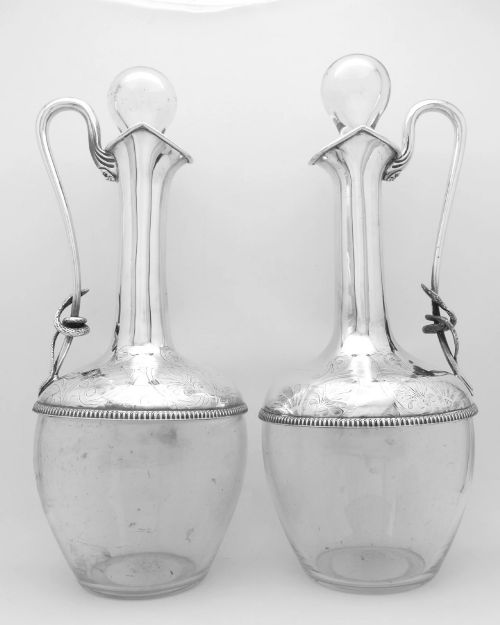


Handled Wine Decanter
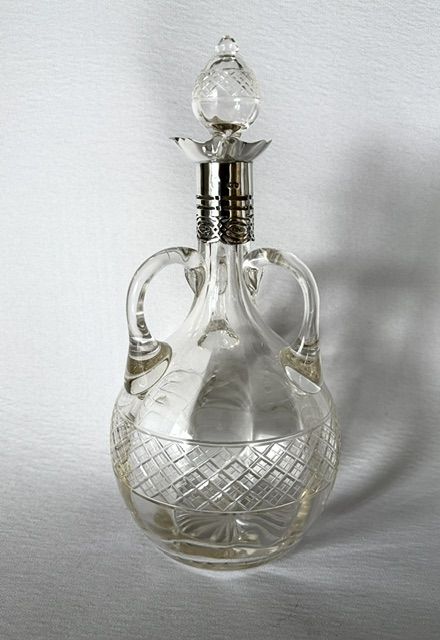
A handled wine decanter brings poured hospitality to the table, combining cut crystal or rich cranberry glass with silver mounts.
Handled Wine Decanter
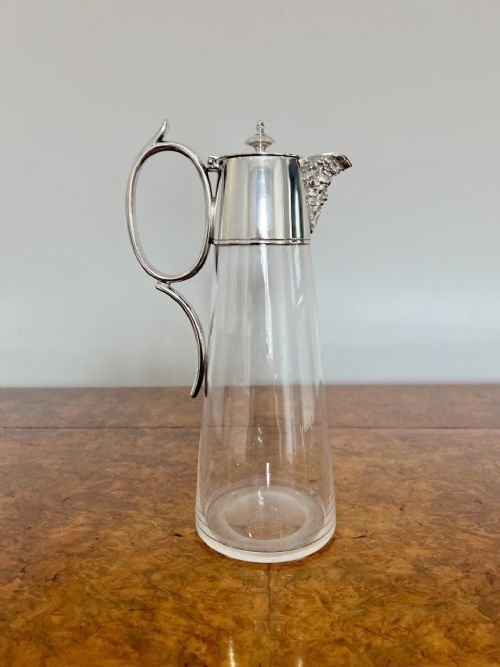
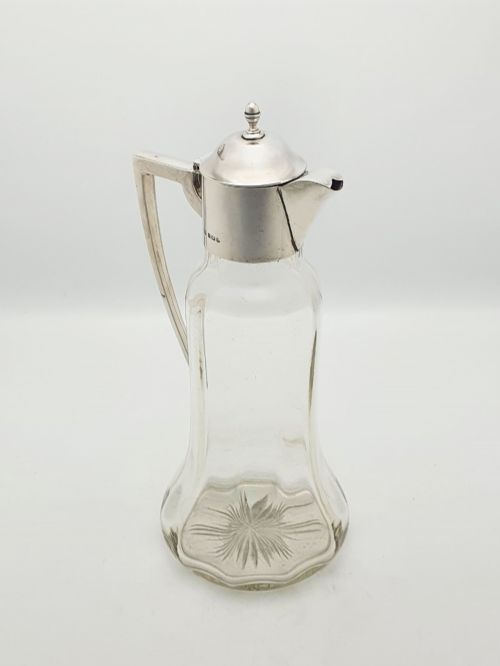
A handled wine decanter spans fluid glass vessels designed for serving, most frequently appearing as Victorian or Edwardian silver-mounted claret jugs.
The selection ranges across distinct forms, including tall crystal ewers, vibrant cranberry glass decanters, and occasional mahogany bottle carriers or cellarettes from the eighteenth and nineteenth centuries.
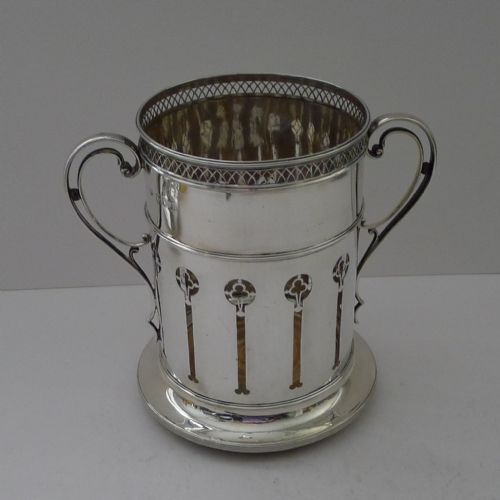
Buyers seeking this phrase encounter pieces dressed in styles from Georgian simplicity through Art Nouveau curves to Art Deco geometry.
Materials and construction
Makers shaped vessels from clear cut glass, crystal, and deep cranberry glass, often incorporating latticinio decoration within the material itself.
Mounts, handles, and collars utilise sterling silver, silver plate, or brass, fastened securely around glass necks and bodies.
Cabinetmakers constructed wooden carriers and cellarettes from solid mahogany, integrating brass handles and partitions.
Listings span periods from the eighteenth century through the Art Deco era, utilising glass, silver plate, sterling silver, and solid mahogany.
Distinctions in craftsmanship
Quality rests in the crispness of the glass cutting and the weight of the metal mounts, where heavier silver and thicker crystal command greater attention.
The integration between handle and vessel reveals the maker's hand, particularly in serpent handles or complex silverwork designed by noted firms.
Proportion and decorative harmony separate standard production items from pieces bearing distinctive artistic direction or unusual forms.
Hukin and Heath·Dr Christopher Dresser
The Handled Wine Decanter Glossary
- Claret jug
- A specialised container with a handle and pourer specifically shaped for serving red wine. These vessels pair glass bodies with metal mounts.
- Cranberry glass
- A rich red-pink transparent glass created by adding gold chloride to the molten batch. It appears frequently in nineteenth-century serving pieces.
- Cellarette
- A lockable container or cabinet built to hold multiple wine bottles securely. They keep fine vintages protected and close to the dining table.
- Latticinio
- A decorative glass technique featuring fine white or coloured threads embedded within clear glass. It adds delicate linear pattern to the body.
- Silver plate
- A layer of silver fused or electroplated onto a base metal such as copper or Britannia metal. It offers the appearance of solid silver at a different scale.
Handled Wine Decanter: Frequently Asked Questions
How do I clean an antique decanter?
Gentle hand washing with warm water and soft bottle brushes preserves both the glass and any interior residue without damaging fragile rims. Avoid harsh detergents and extreme temperature changes that can crack historical material.
Silver mounts require separate care using appropriate polish applied sparingly with a cloth, keeping cleaning agents away from direct contact with the glass surface.
Can I use these decanters for everyday dining?
Most glass jugs and decanters function well for serving wine at modern tables, provided the interior is thoroughly cleaned before use. Careful handling protects antique silver plate and delicate glass handles during pouring.
Wooden carriers and cellarettes serve well as decorative bottle holders or side table storage for current collections.
How do I date a silver mounted jug?
Hallmarks stamped on silver collars and mounts provide the most reliable guide to age, recording assay office marks, date letters, and maker symbols. Style indicators such as Art Nouveau whiplash lines or Edwardian proportions offer secondary clues.
Glass cutting styles and manufacturing techniques further narrow the period of production when silver marks are absent or worn.