
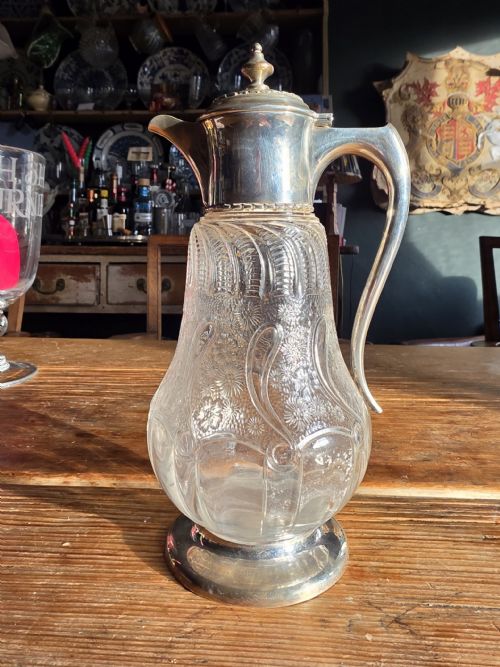
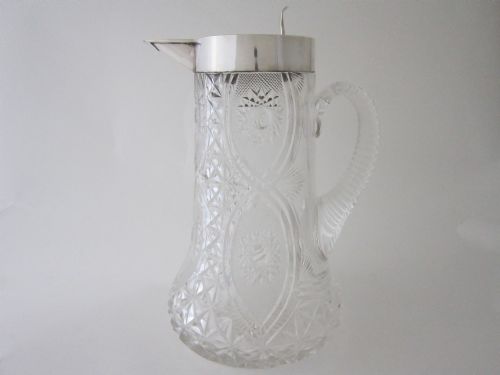
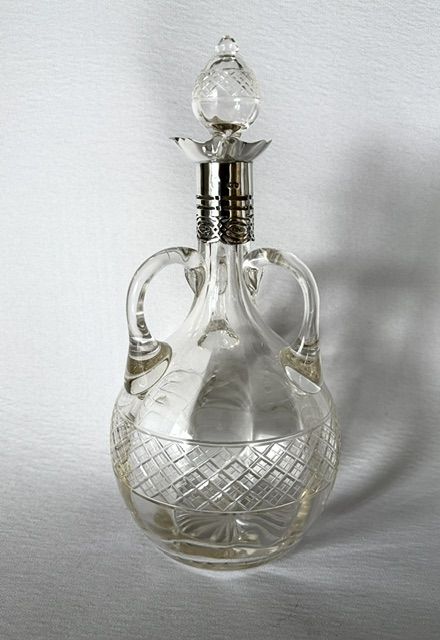
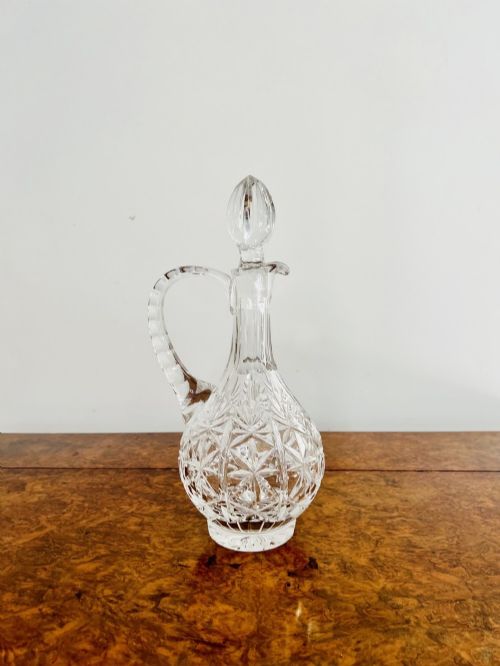
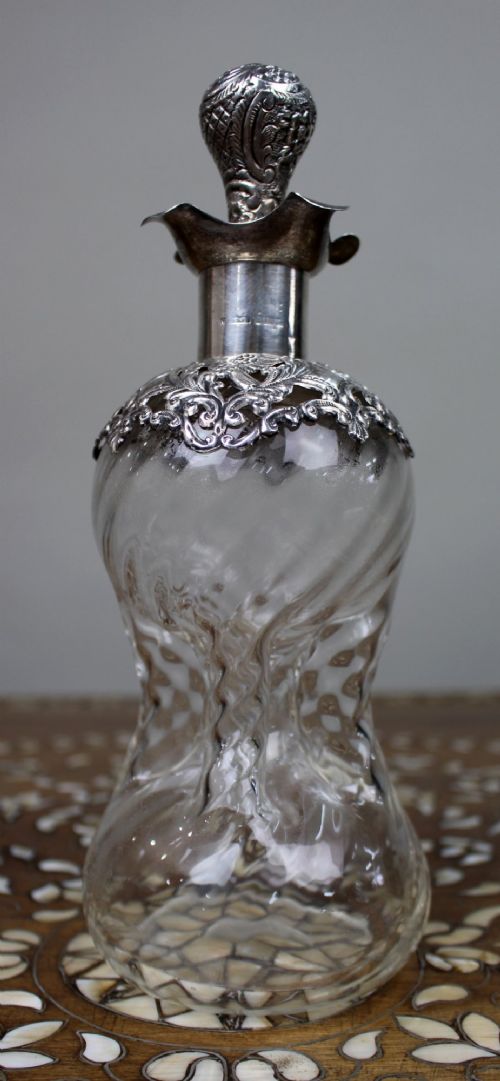
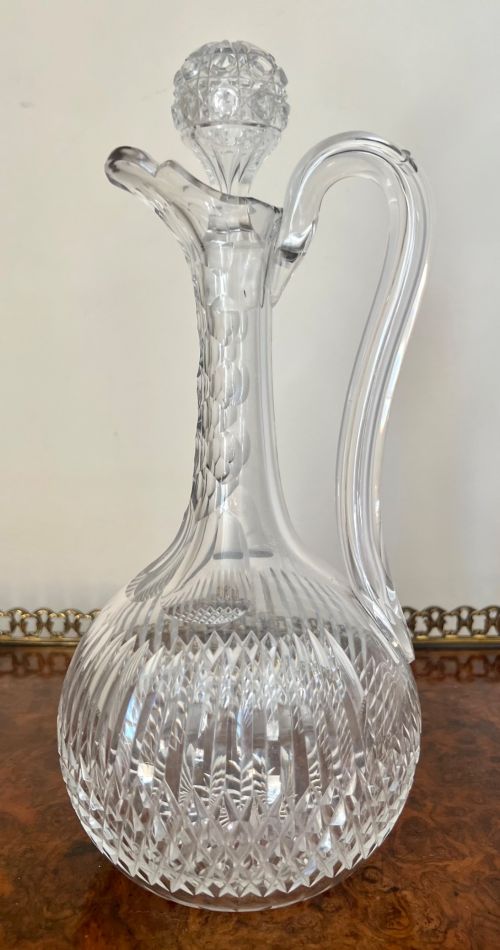
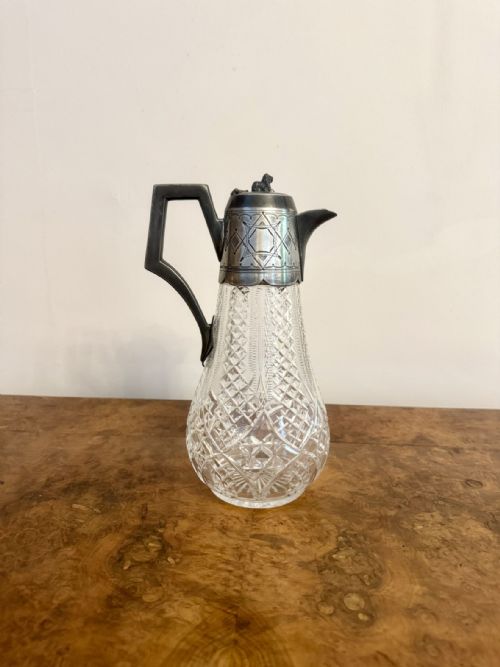
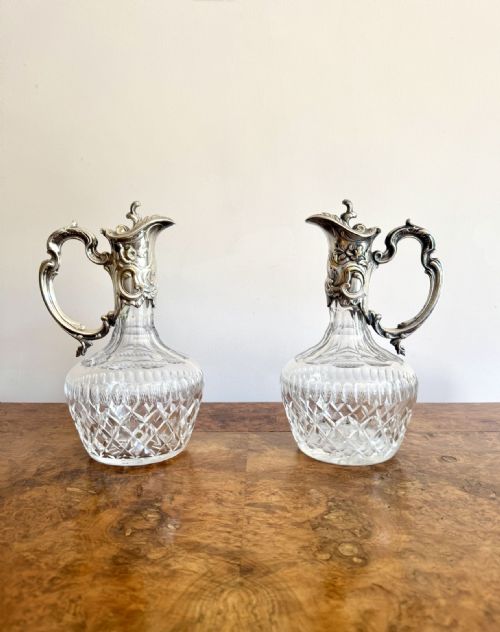


Edwardian Crystal Claret Jug
An Edwardian crystal claret jug brings table service from the early twentieth century into your home with heavy cut glass and bright metal mounts.
Edwardian Crystal Claret Jug
When you search for an edwardian crystal claret jug, you encounter formal serving vessels intended for wine at the dining table. These items typically combine a generous glass body with a hinged metal cover and handle.
The selections on this page span the Edwardian period alongside late Victorian, George V, and Arts & Crafts examples. The forms include dedicated claret jugs, ewers, decanters, and water jugs.
Most pieces date from around 1900 to 1920, though some extend back into the nineteenth century. You will frequently find versions featuring cut glass or crystal paired with either silver plate or sterling silver.
How they were made
Makers shaped the vessels from glass, lead crystal, or cut crystal, often applying deep geometric or floral cutting across the body. This cutting creates the weight and refraction characteristic of the period.
The metal mounts, comprising silver plate and sterling silver, were cast or worked to form collars, spouts, and hinged lids. These mounts secure tightly around the neck of the glass body to allow pouring.
Listings here feature materials including sterling silver, silver plate, cut crystal, and lead crystal across multiple decades.
What varies in quality
The crispness of the glass cutting distinguishes finer examples from simpler production. Deep, sharp facets catch the light more effectively than shallow or smoothed patterns.
The choice of metal mount also shapes the character of the piece. Sterling silver mounts and substantial silver plate display different levels of finish and weight compared to lighter alternatives.
William Comyns
The Edwardian Crystal Claret Jug Glossary
- Claret Jug
- A specialised pouring vessel designed specifically for serving red wine at the table. These often feature a decorative handle and a hinged lid.
- Cut Glass
- Glass decorated by grinding facets or patterns into the surface using a rotating wheel. This technique enhances both weight and brilliance.
- Silver Plate
- A base metal coated with a thin layer of pure silver. It provided a bright finish for dining wares at a lower cost than solid silver.
- Sterling Silver
- An alloy consisting of pure silver and other metals, standardised for durability. Pieces made from this material carry official hallmarks.
- Ewer
- A large jug with a wide spout and a curved handle, often used for water or wine. The form derives from classical vessels.
Edwardian Crystal Claret Jug: Frequently Asked Questions
What is an edwardian crystal claret jug?
An edwardian crystal claret jug is a decorative pouring vessel made of cut glass or crystal with a metal handle and hinged lid.
These pieces were produced around the early twentieth century for serving wine during formal meals.
How do you use a claret jug?
These vessels serve wine at the dining table after it has been decanted from the bottle. The hinged lid keeps the contents covered between pours.
They also function as decorative display items on sideboards or drinks cabinets when not in active use.
How do you clean an antique claret jug?
Wash the glass body gently in warm soapy water using a bottle brush to reach the interior. Avoid submerging silver-plated mounts for extended periods to protect the finish.
Dry the metal components promptly after washing to prevent water spots and tarnishing.
How can you tell Edwardian glass apart from Victorian glass?
Edwardian glass often reflects lighter, more restrained cutting styles compared to the heavier ornamentation sometimes seen in earlier Victorian pieces. However, stylistic overlap between the periods remains common.
Examining any accompanying silver mounts and hallmarks often provides a more precise indication of the date.