




Vintage Glass Water Pitcher
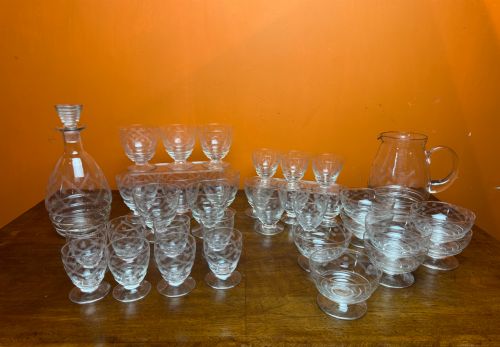
These vintage glass water pitcher pieces range from heavy Victorian cut crystal to sleek Art Deco forms, designed for serving water at the table.
Vintage Glass Water Pitcher
A vintage glass water pitcher serves liquids at the table, drawing on forms produced across the Victorian, Edwardian, and mid-century periods. These vessels appear in styles from Victorian Rococo Revival and Regency to Art Deco, often designed with integrated handles and pouring spouts.
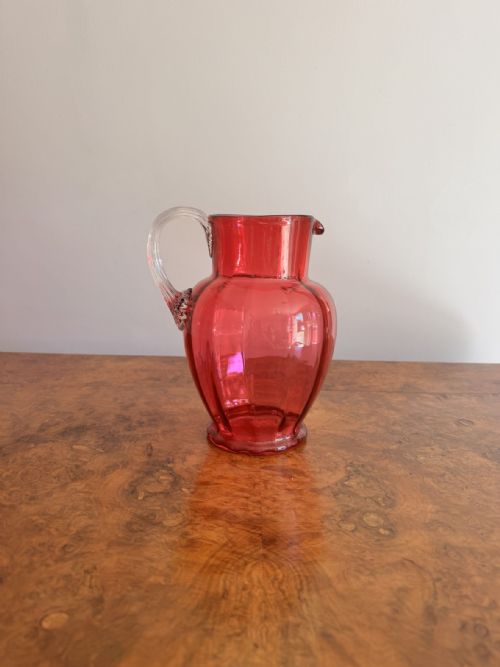
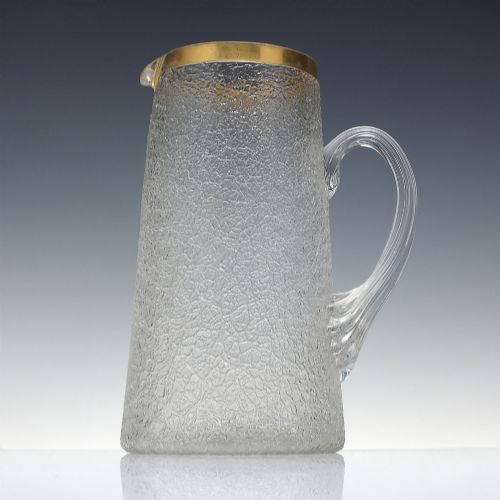
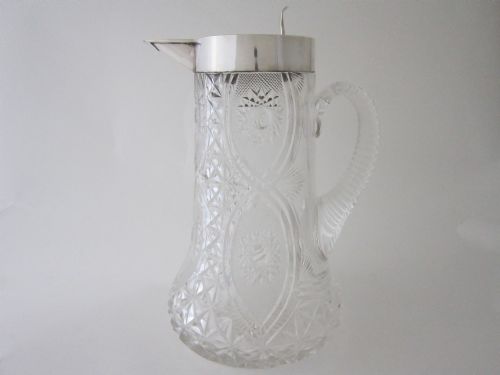
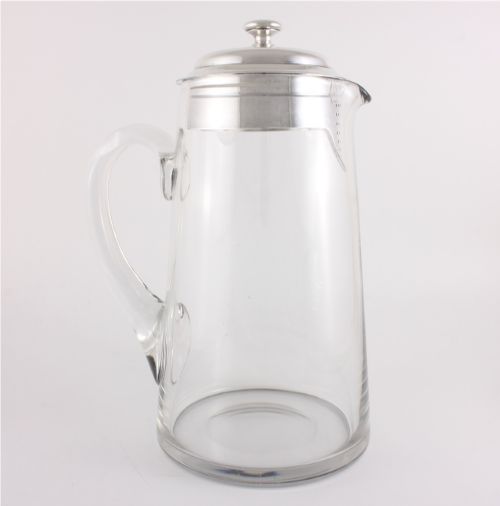
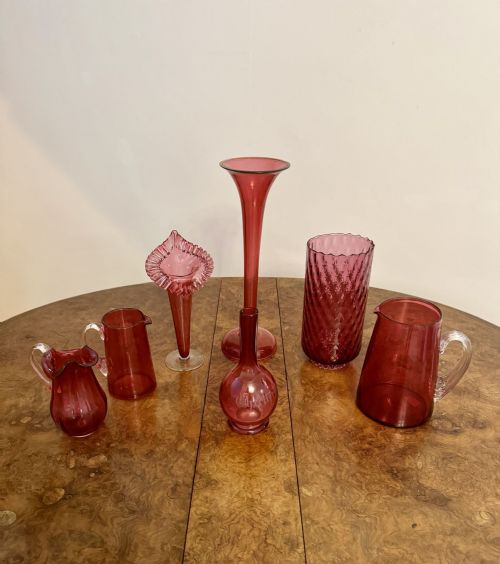
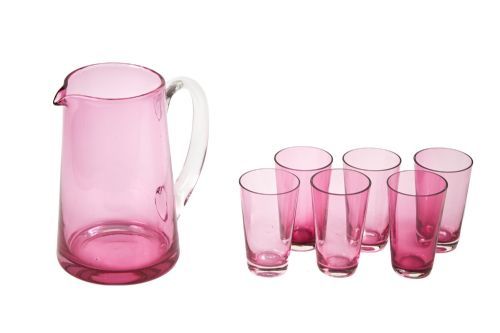
The selection on this page relies heavily on nineteenth-century and early twentieth-century examples, including clear cut glass, coloured cranberry glass, and vessels mounted in silver plate or sterling silver.
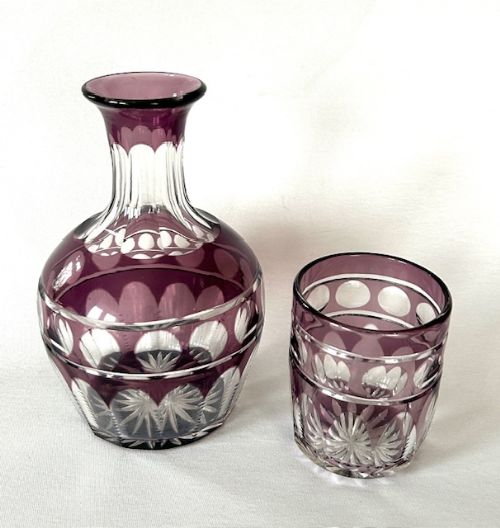
Forms extend beyond standard jugs to encompass ewers, claret jugs, and carafes, showing how dining and drinking customs shaped household glass production across different decades.
How they were made
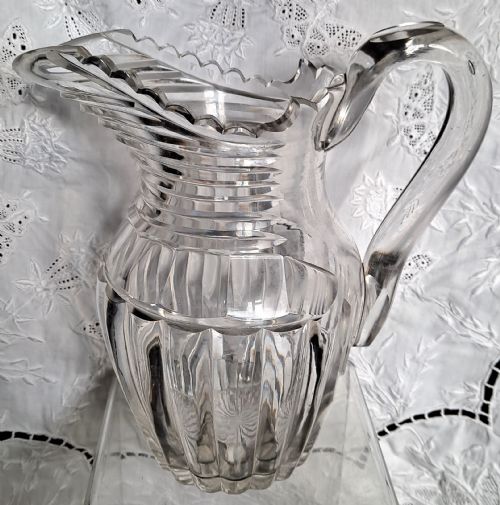
Makers shaped these objects using free-blowing, mould-blowing, and heavy cutting techniques, often finishing lead crystal and clear glass with deep prismatic facets.
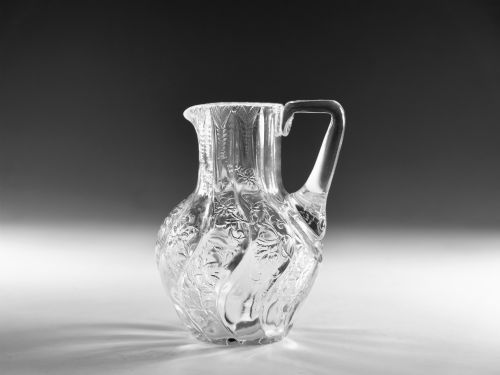
Coloured pieces achieved their hues through mineral additions in the molten batch, seen in rich cranberry and green tones, occasionally enhanced with enamel painting, gilding, or intaglio engraving.
Many glass bodies received metal components, combining glass with silver plate, sterling silver mounts, hinged lids, or internal ice tubes.
Several jugs feature painted Mary Gregory children roaming across green and cranberry glass surfaces.
What varies in quality
Excellence in a vintage glass water pitcher is judged by the crispness of the cutting, the weight and clarity of the metal or crystal, and the balance of the handle to the body.
Superior examples display hand-engraved motifs, such as dolphins or grapevines, executed with precision rather than simple acid-etching or mould-pressed patterns.
The integration of metal elements, whether a silver-plated mount or a sterling silver collar, dictates the refinement of the finished piece.
Stevens and Williams·Christofle·Mappin and Webb·Webb Corbett·Richardsons·Tiffany·Valenti·Lobmeyr
The Vintage Glass Water Pitcher Glossary
- Cranberry glass
- A rich red-pink glass coloured with gold chloride during production. It is typical of Victorian tableware and decorative sets.
- Cut glass
- Glass decorated by grinding facets and patterns into the surface on a wheel. Deeper cuts indicate greater skill and thicker initial walls.
- Ewer
- A large jug with a wide spout and an ornate handle. These pieces often serve decorative as well as functional roles.
- Intaglio
- A design carved into the surface of the glass so that the motif sits below the outer plane. This technique requires considerable control by the glass cutter.
- Lead crystal
- Glass containing a high proportion of lead oxide, increasing weight, brilliance, and refractive index. It rings when struck gently.
Vintage Glass Water Pitcher: Frequently Asked Questions
How do I clean a vintage glass water pitcher?
Wash these vessels by hand in warm soapy water using a soft cloth, avoiding harsh abrasives that might scratch the surface or wear down gilding.
Dry them immediately with a lint-free cloth to prevent water spots, particularly on pieces with cut facets or silver mounts.
Can I use these pitchers for daily dining?
Most sturdy nineteenth-century and twentieth-century glass jugs remain entirely functional for serving water, lemonade, or wine at the table.
Take care with thermal shock by avoiding boiling liquids or sudden temperature changes, especially with older lead crystal.
How do I tell Victorian glass from Edwardian glass?
Victorian pieces often lean towards heavier ornamentation, rich cranberry colours, and Rococo Revival or etched floral motifs.
Edwardian items frequently display crisper cut glass patterns, lighter silver mounts, and geometric influences that anticipate later modernist styles.
What is the purpose of an ice tube?
An ice tube is a metal cylinder attached to the lid or rim that descends into the pitcher body to chill the liquid without diluting it.
This feature appears on fine lemonade jugs and claret jugs from the late nineteenth century.