



Antique Blue Glass Jug
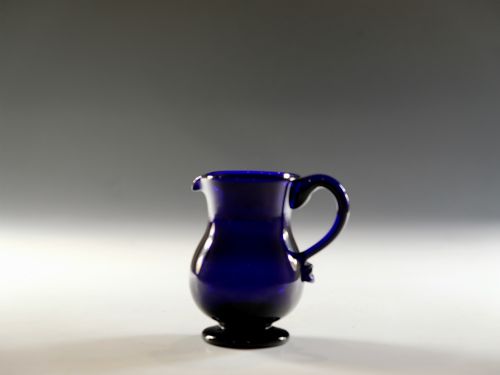
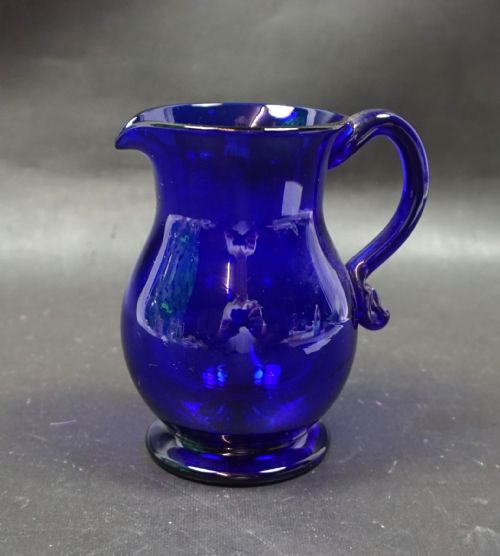
These antique blue glass jugs bring deep cobalt and teal colour to a table, combining hand-blown forms with rich historical character.
Antique Blue Glass Jug
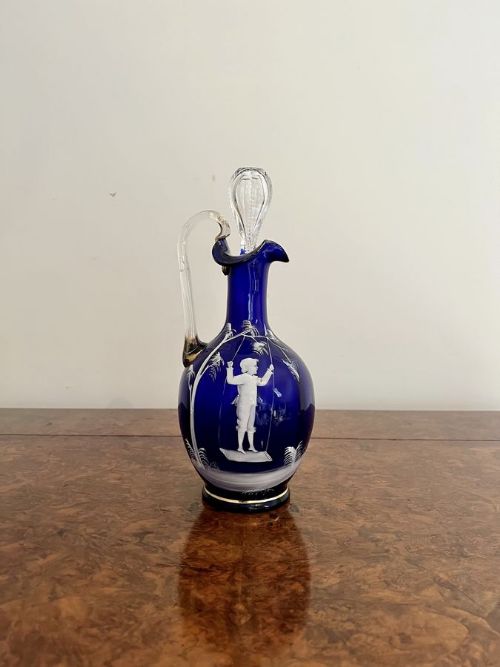
When you search for an antique blue glass jug, you are looking at small creamers, wine decanters, and table jugs spanning the Georgian, Victorian, and Art Deco periods. The selection on this page leans heavily towards English cream jugs from the early nineteenth century alongside continental carafes and ewers.
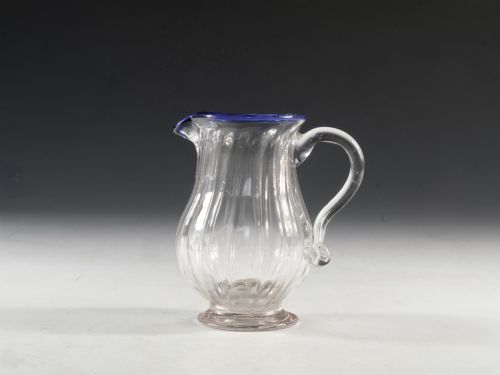
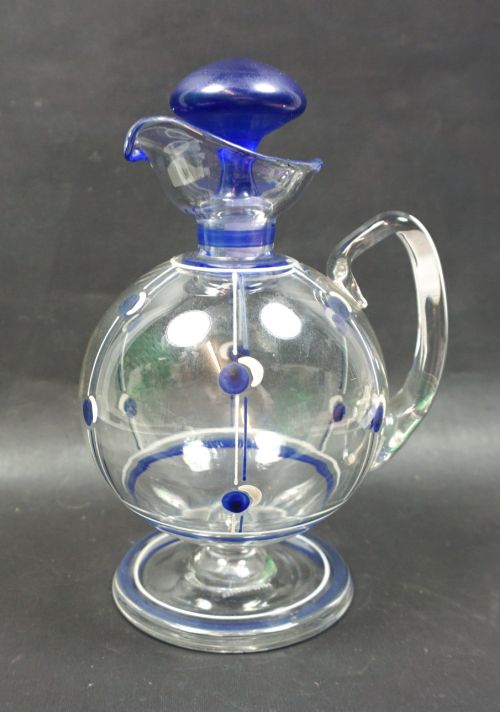
Forms range from small cream jugs with simple blue rims to wrythen-moulded vessels and elaborate Venetian or Islamic revival pieces complete with matching stands. You will find hand-blown glass, lead crystal, and pieces accented with silver plate or enamel decoration.
How they were made
The majority of these vessels are hand-blown from rich cobalt or Bristol blue glass, often shaped with wrythen optical twists or paired with applied enamel and gold leaf decoration. Makers utilised lead glass and crystal for clarity, occasionally combining the blown body with Old Sheffield plate mounts, sterling silver, or silver plate.
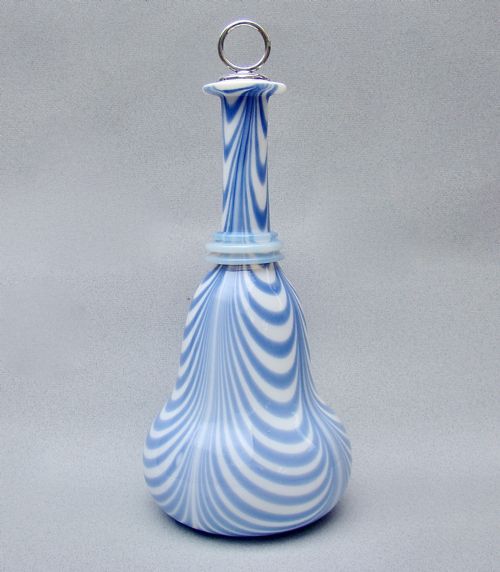
Surface details include hand-painted motifs, delicate engraving, and contrasting rims or handles, while specific regional techniques appear in Nailsea glass patterns and Venetian latticino work.
Materials span standard glass, crystal, cobalt glass, and enamelled surfaces, often paired with silver plate and gold leaf.
What varies in quality
Quality rests upon the depth of the glass colour, the crispness of the hand-blown form, and the finesse of any surface painting or enamel work. Finer vessels show a balanced weight, smooth pontil marks, and precise execution in decorative applications like gold leaf or engraving.
The integration of metal elements, whether a silver plate collar or a matched stand, also distinguishes standard tableware from more ambitious decorative items.
Lobmeyr
The Antique Blue Glass Jug Glossary
- Bristol blue
- A deep cobalt glass traditionally associated with Bristol glasshouses of the eighteenth and nineteenth centuries. It was frequently used for small cream jugs and decanters.
- Wrythen
- A spiral moulded pattern created by twisting the glass while hot. This technique gives the body of the jug a subtle optical ribbing.
- Nailsea glass
- A style of glasswork originating from Somerset, often featuring looped or splashed opaque white designs within the coloured body.
- Latticino
- A Venetian glass technique using fine white glass threads embedded within clear or coloured glass to form delicate net patterns.
- Pontil mark
- The rough scar left on the base of a hand-blown vessel where the pontil rod was snapped off after shaping.
Antique Blue Glass Jug: Frequently Asked Questions
How do I clean an antique blue glass jug?
Wash these pieces gently by hand in lukewarm water using a mild soap. Avoid soaking them or using abrasive scourers that might damage old enamel or silver mounts.
Dry them immediately with a soft cloth to prevent water spots on the glass surface.
Were these jugs used for wine or cream?
Their usage depends entirely on the scale and form. Small pieces with spouts served as cream jugs or milk pitchers on the tea table.
Larger vessels with stoppers or matching stands functioned as wine decanters, claret jugs, or water ewers.
How do I tell Georgian blue glass from Victorian pieces?
Georgian examples often display simple hand-blown forms with wrythen ribbing or basic blue rims intended for daily tea service. Victorian pieces frequently incorporate more complex decoration, such as Mary Gregory enamel scenes or heavier silver plate mounts.
Examining the pontil mark and overall weight helps place the piece within its proper nineteenth-century period.
Can I use an antique jug for daily dining?
Many of these jugs remain robust enough for occasional table use, particularly heavier crystal or glass pieces. However, fragile enamel decoration or delicate handles require careful handling.
Most collectors prefer to display them or restrict their use to serving cold liquids on special occasions.