
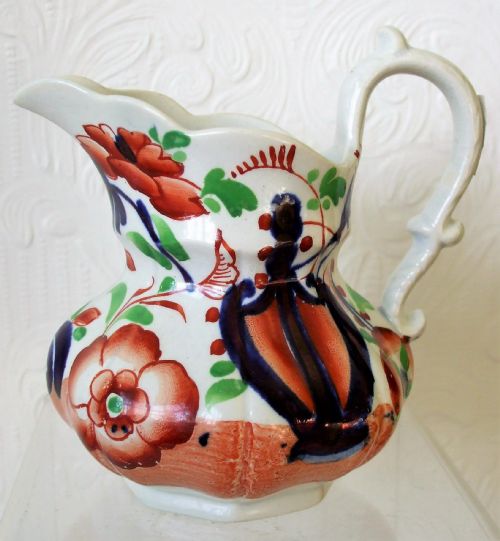


Blue Victorian Water Pitcher
A blue victorian water pitcher brings nineteenth-century ceramic art and utility together, offering a practical vessel that doubles as a striking decorative centrepiece.
Blue Victorian Water Pitcher
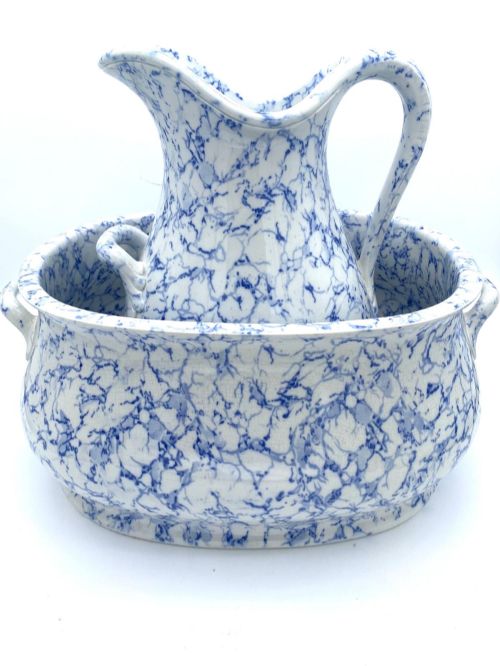
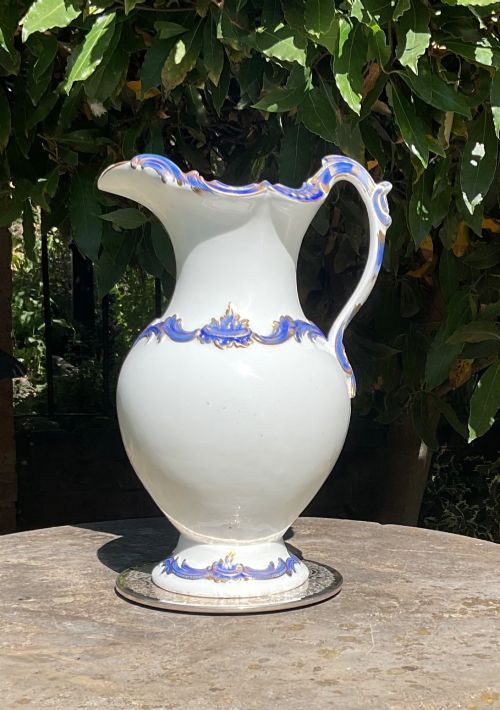
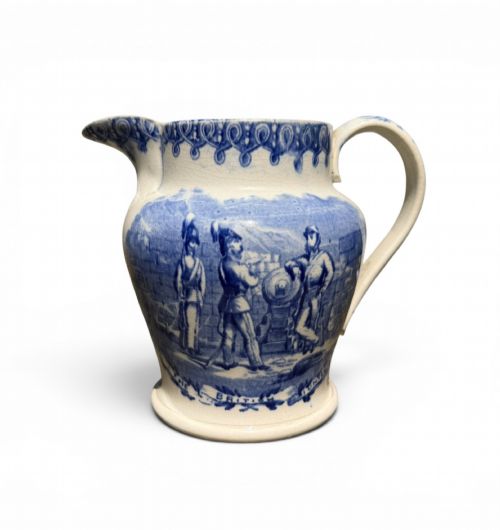
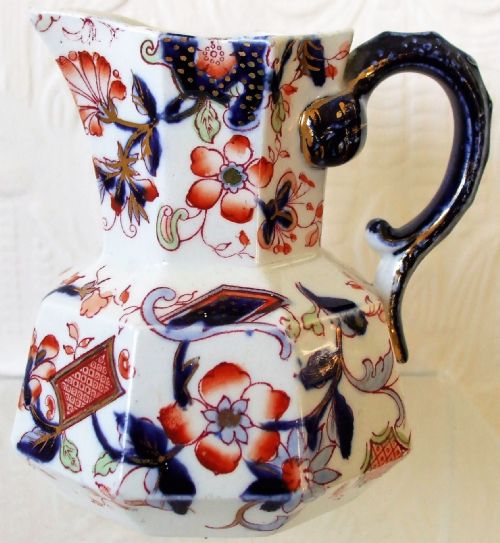
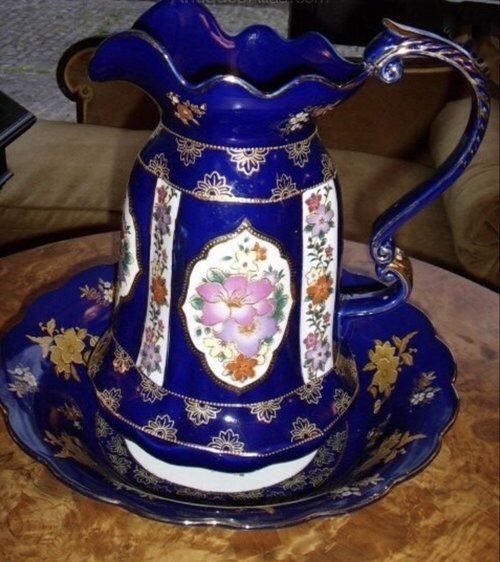
When searching for a blue victorian water pitcher, you encounter a variety of nineteenth-century ceramic forms ranging from washstand jugs and ewers to large pottery vessels. These items emerge primarily from the nineteenth century, including specific decades such as the 1870s and 1880s, alongside pieces reflecting later twentieth-century revivals.
The most common versions on this page include earthenware and porcelain jugs featuring blue glazes, transfer-printed patterns, and salt-glazed finishes. Many function as part of larger wash sets or stand alone as decorative ewers and jugs.
Originating largely from English potteries, these pieces display distinct regional styles spanning from classic Victorian decorative motifs to Arts and Crafts designs.
Materials and manufacture
Potters constructed these pitchers using earthenware, stoneware, and porcelain, frequently applying rich cobalt blue glazes or transfer printing to the surface. Salt-glazing and enamel decoration also appear on durable stoneware bodies.
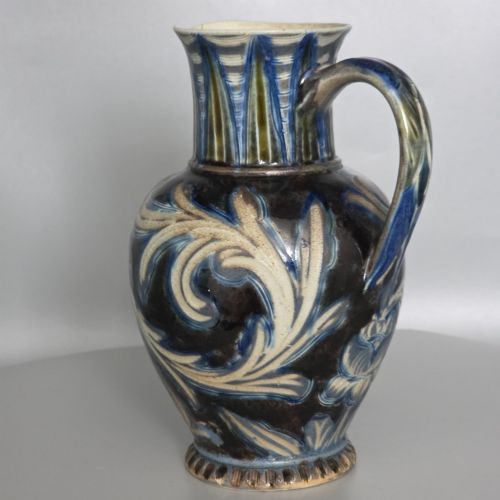
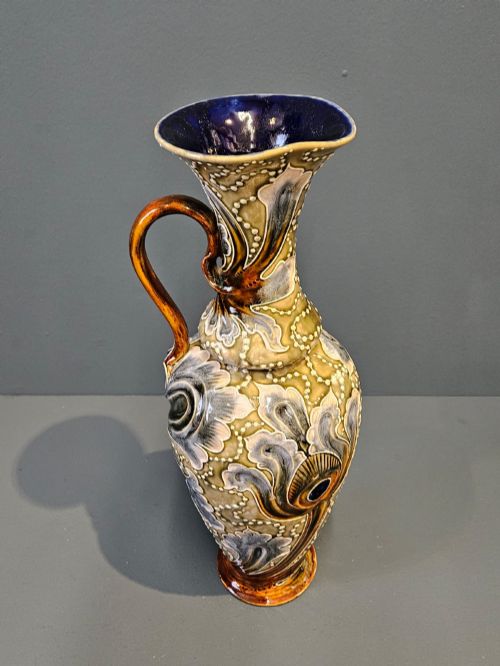
Specialised techniques such as incised art pottery, Parian ware moulding, and gilt highlights demonstrate the high level of craftsmanship employed by period factories.
Styles range from traditional Victorian and Gothic revivals to distinct Arts and Crafts expressions.
Judging quality and execution
Superior examples distinguish themselves through crisp modelling, intricate hand-incised decoration, and well-defined transfer patterns that sit evenly beneath a clear glaze. Lesser pieces often display blurred surface details and simpler, mass-produced moulding.
The sophistication of the ceramic body and the precision of the potter's mark or factory attribution elevate an ordinary utility vessel into a piece of fine art pottery.
Minton·Doulton Lambeth·Keeling and Co·Emma Shute·Ridgway and Sons·Davenport·Mason·Dr Christopher Dresser·Coalport
The Blue Victorian Water Pitcher Glossary
- Earthenware
- A porous pottery type fired at relatively low temperatures, requiring a glaze to achieve impermeability. It forms the base for many traditional jugs.
- Ewer
- A large jug with a wide spout and handled shape, traditionally used for holding water. These often served both practical and decorative functions.
- Parian ware
- A fine-grained bisquefine porcelain resembling carved marble, named after Parian marble from Greece. Makers utilised it for sculptural drinks jugs.
- Salt glaze
- A vitreous coating formed by throwing common salt into the kiln during high-temperature firing. This creates a distinctive textured surface on stoneware.
- Flow blue
- A nineteenth-century transfer-printing technique where the cobalt blue pigment intentionally blurred slightly during firing. This produced a soft, hazy aesthetic across the ceramic surface.
Blue Victorian Water Pitcher: Frequently Asked Questions
How were these pitchers originally used?
These vessels served everyday domestic needs on washstands and dining tables, holding water for washing or serving drinks. Their sturdy ceramic bodies made them practical for daily household tasks.
Over time, many larger ewers transitioned into decorative items displayed in hallways and living spaces rather than utilitarian chambers.
Can I use an antique pitcher for water today?
While these pitchers retain their original capacity, using them for daily consumption requires caution due to historical glaze compositions and potential hairline fractures. Hand washing helps preserve the delicate blue glazes and gilt details.
Most collectors prefer to display them or utilise them for dry floral arrangements to protect the antique ceramic surface.
How do I identify a Doulton Lambeth piece?
Doulton Lambeth items often feature distinct incised ornamentation, salt-glazed finishes, and specific factory stamps impressed into the stoneware body. These markers help distinguish them from general earthenware products.
Collaborating artists occasionally left monograms or signatures alongside the primary factory marks.
What defines Gaudy Welsh pottery?
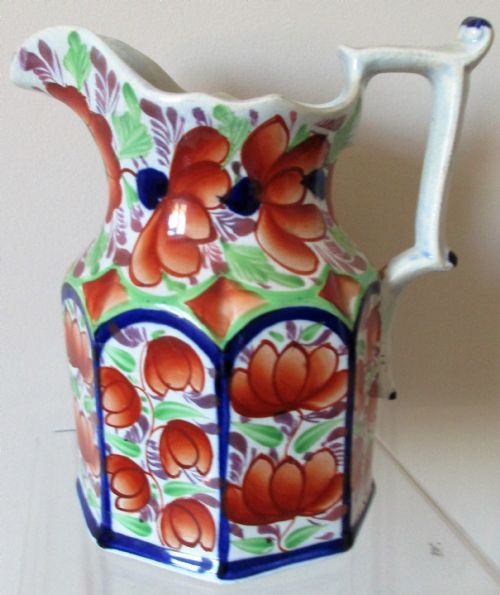
Gaudy Welsh ceramics feature bold, hand-painted cobalt blue, iron red, and copper lustre decoration applied over transfer-printed outlines. This vibrant aesthetic became popular in nineteenth-century households.
Named patterns like Gwent, Harlech, and Pagoda appear frequently on these distinct earthenware jugs.