



Vintage Glass Top Coffee Table
A vintage glass top coffee table brings a clear surface and architectural line to a room without crowding the floor space.
Vintage Glass Top Coffee Table
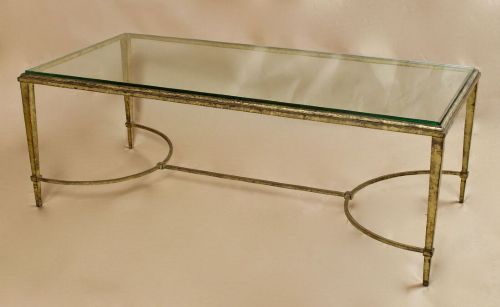
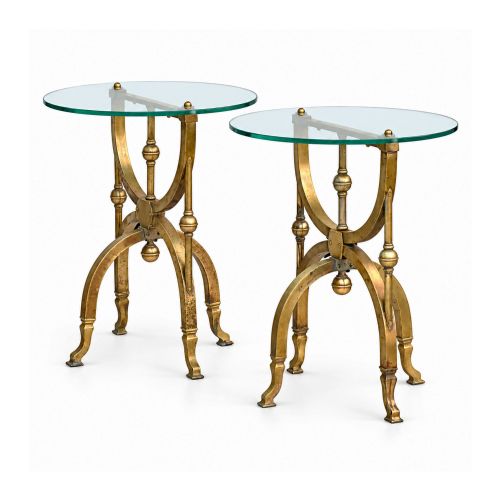
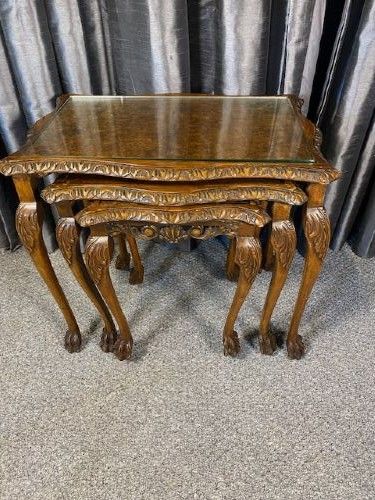
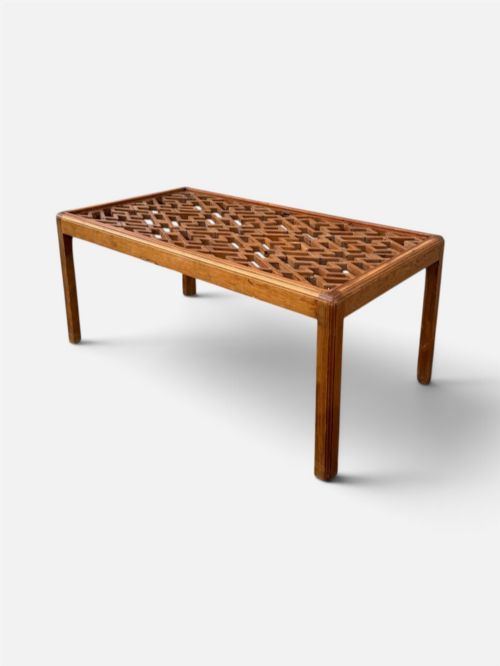
A vintage glass top coffee table serves as a central surface in a reception room, combining a transparent top with a sturdy structural base. The selection draws on forms ranging from low occasional tables and nests to framed panels set onto traditional timbers.
The versions most commonly met on this page span the early decades of the twentieth century, particularly the nineteen-thirties, alongside nineteenth-century examples. They appear in styles that include Art Deco, Hollywood Regency, and Chinoiserie.
Makers and workshops of the period utilised various formats, from multi-part nests of tables to two-tier square designs and low occasional pieces. The underlying frames provide a sturdy contrast to the smooth, reflective glass surfaces above.
How they were made
The frames rely on traditional cabinet timbers such as walnut, mahogany, elm, and burr walnut, alongside bleached pine and teak. Artisans shaped these woods through carving, joinery, and occasionally applied gilt finishes in gold and silver.
Metalwork forms an equally important component in many pieces, utilising wrought iron, brass, and chrome to create durable structural supports. Original glass inserts sit within these timber or metal structures, often paired with decorative elements like Chinese fretwork panels or carved motifs.
Vintage Glass Top Coffee Table Retail Price Guide 2026
Typical asking prices for vintage glass top coffee table among the pieces listed under this phrase on Sellingantiques today, from the lower quarter to the upper quarter. They describe what is for sale here now, not the wider market.
Some tables incorporate carved wooden elephants into their frames, bringing an unexpected touch of wildlife to the Art Deco living room.
What varies in quality
Quality rests in the harmony between the upper glass panel and the supporting frame, where refined joinery and careful timber selection elevate the piece. Tables featuring complex structural elements like multi-part nests or intricate carved details show a higher standard of workshop execution.
The choice of materials dictates the character of the piece, from the rich figuring of burr walnut to the clean metallic sheen of Art Deco chrome. Superior examples display thoughtful integration of decorative panels, such as antique fretwork or gilt work, balanced against the transparency of the glass.
Harry and Lou Epstein
The Vintage Glass Top Coffee Table Glossary
- Art Deco
- A design style spanning the nineteen-twenties and nineteen-thirties characterised by geometric forms, stylised motifs, and modern industrial materials like chrome. It often manifests in streamlined coffee tables and compact nests.
- Burr walnut
- A highly figured timber veneer taken from the growth excrescences of walnut trees, prized for its swirling patterns. It provides a rich, decorative surface texture on table tops and frames.
- Chinoiserie
- European interpretations of Chinese and East Asian artistic traditions, often featuring elaborate carving, painted details, or fretwork panels. This aesthetic appears on occasional tables and nesting sets.
- Fretwork
- Openwork timber carving arranged in geometric or interlaced patterns, sometimes integrated beneath glass panels. It adds texture and visual depth to the under-tier of a table.
- Nest of tables
- A set of graduated tables designed to slide neatly underneath one another when not in use. They offer flexible surface space in smaller rooms.
Vintage Glass Top Coffee Table: Frequently Asked Questions
How do I clean a vintage glass top?
Use a mild glass cleaner and a soft, lint-free cloth to avoid scratching the surface or damaging the surrounding frame.
Take care to prevent liquid from seeping beneath the glass edge into the wooden or metal joints.
Are these glass tops original?
Many listings feature their original glass tops, though some pieces from earlier centuries may have replacement panels fitted to match the historic frame.
Check the individual descriptions to confirm whether the glass is period-authentic or a later replacement.
How do I style a glass coffee table?
Keep the styling minimal to let the transparency of the glass and the detail of the base remain visible.
Balance books or small decorative objects on the surface without cluttering the entire viewing area.
Can I use a nest of tables as a coffee table?
Nesting sets can be arranged together to form a larger surface area or separated around the room as occasional tables when needed.
This modular approach provides versatile placement options in compact or multifunctional living spaces.