


Vintage Glass Inkwell
A vintage glass inkwell brings tactile weight to a desk, holding ink in moulded or cut vessels fitted with hinged metal lids.
Vintage Glass Inkwell
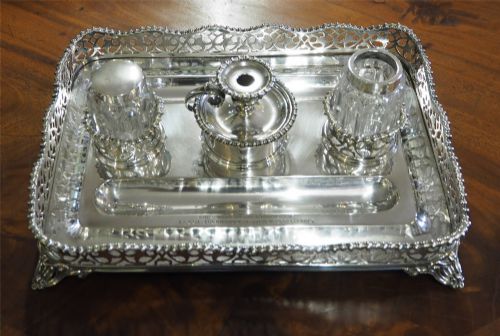
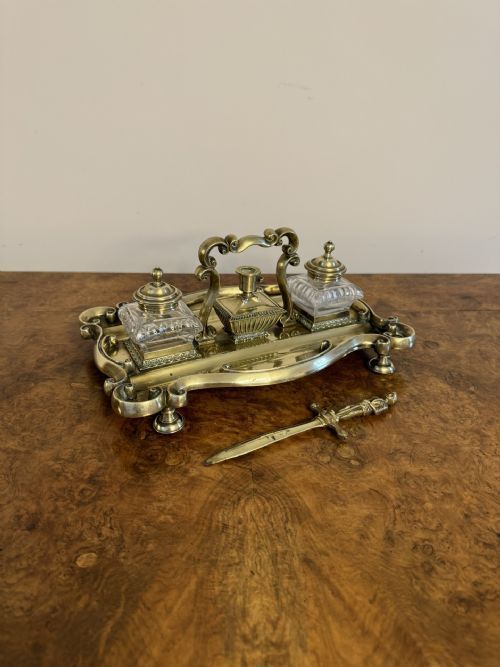
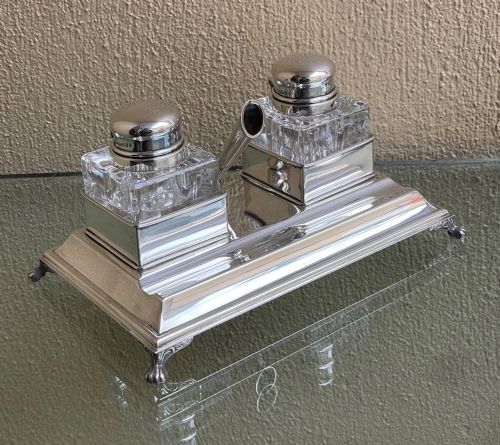
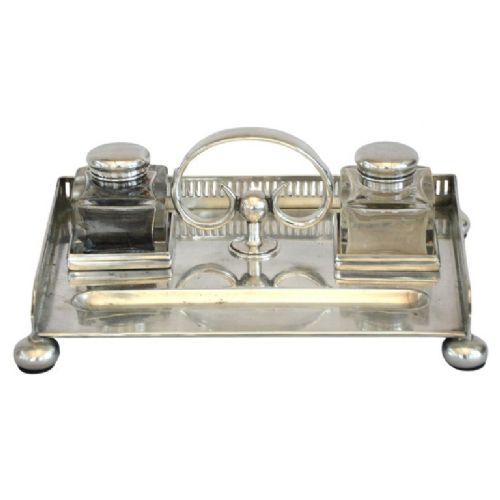
A vintage glass inkwell serves as a desk accessory designed to hold writing fluid safely near a pen. You will find these vessels housed in metal stands, mounted in wooden trays, or fitted with hinged lids made of brass, silver, or pewter.
The selections span the Victorian, Edwardian, and Art Deco periods, stretching from the nineteenth century into the nineteen-thirties. Many appear alongside pen stands, stationery boxes, and double-inkstand configurations.
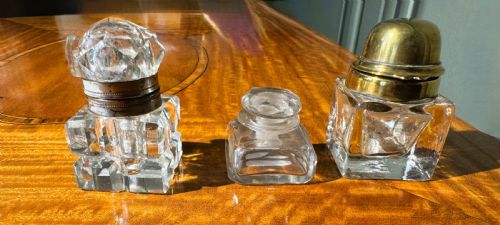
Glass containers often take the form of heavy cut crystal, moulded reservoirs, or iridescent Art Nouveau creations. They sit independently on blotters or anchor larger desk sets furnished by makers like Elkington, Walker and Hall, and Tiffany.
Materials and construction
Makers shaped glass through cutting, moulding, and blowing to create reservoirs capable of withstanding daily dipping. Metal mounts in brass, silver plate, and solid silver were secured to the glass rims with threaded collars or hinged pins.
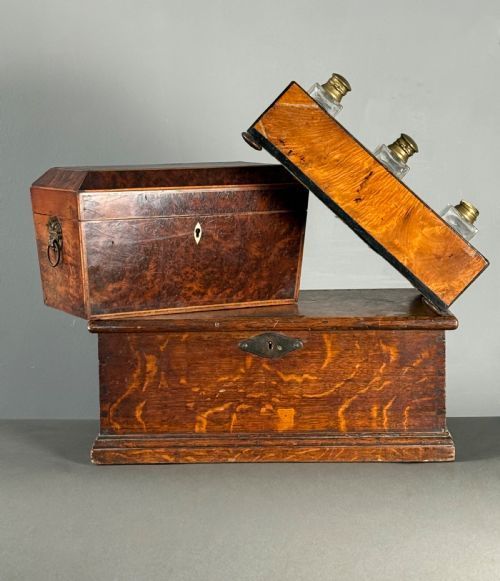
Desk stands incorporate timber bases in oak, mahogany, walnut, coramandel, and rosewood, frequently accented with brass mountings, mother-of-pearl, and guilloche enamel. Liners and lids require precise assembly to maintain a seal around the glass insert.
Desk accessories occasionally took the form of a jockey cap or a horn of plenty to amuse nineteenth-century writers.
Evaluating craftsmanship
Quality rests on the depth of the glass cutting and the structural integrity of the metal fittings. Heavier crystal bases with sharp facet cuts and substantial hinged lids indicate superior manufacturing standards.
The integration of materials dictates distinction, such as silver mounts bearing clear hallmarks paired with thick glass bodies. Stands retaining original ink bottles and matching fitments demonstrate greater completeness.
Elkington·Walker And Hall·Tiffany & Co·Kralik·Loetz·James Cartland & Sons
The Vintage Glass Inkwell Glossary
- Inkstand
- A fitted tray or stand holding one or more inkwells alongside space for pens and sealing wax. These desk sets anchor the writing apparatus in one stationary location.
- Guilloche
- A decorative engine-turning technique producing precise, intricate geometric patterns beneath a translucent layer of enamel. It frequently appears on silver-lidded desk pieces.
- Cut glass
- Glass decorated by grinding facets or patterns into the surface with a wheel. This method adds weight and refractive brilliance to inkwell reservoirs.
- Silver plate
- A base metal, such as copper or Britannia metal, coated with a thin layer of silver. Many Victorian and Edwardian desk accessories utilise this technique for decorative sheen.
Vintage Glass Inkwell: Frequently Asked Questions
How do I clean a vintage glass inkwell?
Warm water and a soft brush clear dried ink residue from the glass interior without damaging aged surfaces. Avoid harsh chemical cleaners on metal collars and hinged lids.
Dry the components thoroughly before reassembly to prevent moisture retention against the glass and metal mounts.
Are original glass liners common?
Many surviving stands retain their original glass inserts, though replacements occur due to accidental breakage over decades of use. Matching glass weight and collar dimensions helps verify original pairing.
Inspect the rim of the glass and the inner collar of the metal mount for signs of consistent wear matching the rest of the piece.
How do I date an inkwell?
Hallmarks on silver lids provide exact assay office years, while metal casting styles and glass cutting patterns indicate nineteenth or early twentieth-century periods. Wood types and hinge designs also point to specific decades.
Art Nouveau pieces display organic flowing motifs typical around nineteen-hundred, whereas heavy oak and brass stands often align with late Victorian production.
Can I use these inkwells for writing?
These vessels function adequately for modern dip pens provided the glass reservoirs remain free from internal fractures. Check that the hinged lid closes securely to reduce dust settling in the ink.
Wash out water-based inks regularly to prevent permanent staining in older glass and metal corners.