
Vintage Glass Door Cabinet
A vintage glass door cabinet organises collections and books behind clear panes, bringing period character to a room.
Vintage Glass Door Cabinet
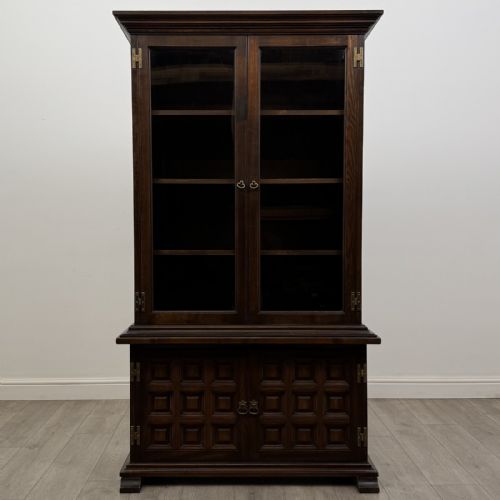
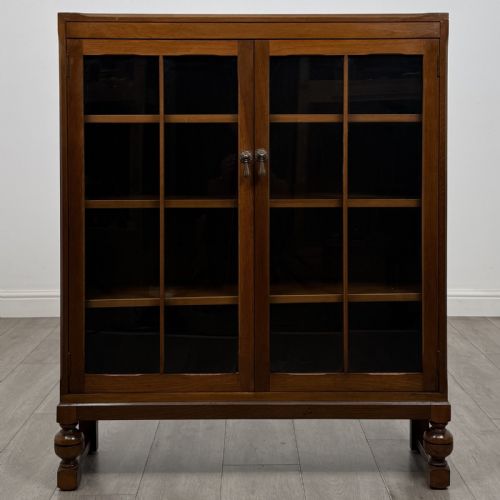
A vintage glass door cabinet brings together storage and display across several distinct eras, functioning as a bookcase, vitrine, or kitchen cupboard. When searching for a vintage glass door cabinet, buyers encounter forms ranging from heavy Victorian mahogany bookcases to lighter Edwardian display pieces in oak and walnut.
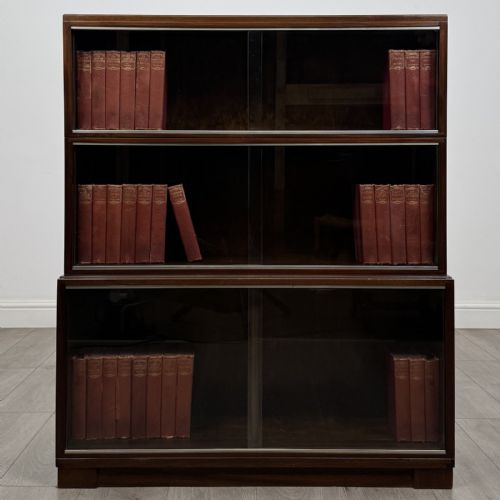
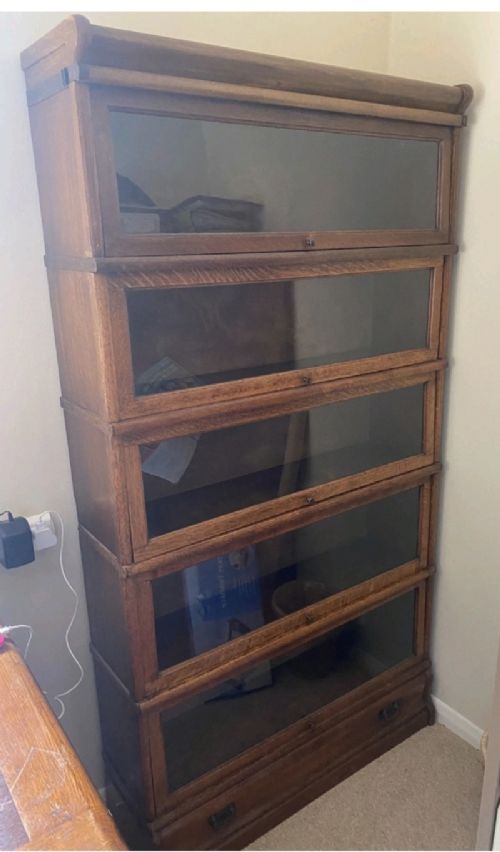
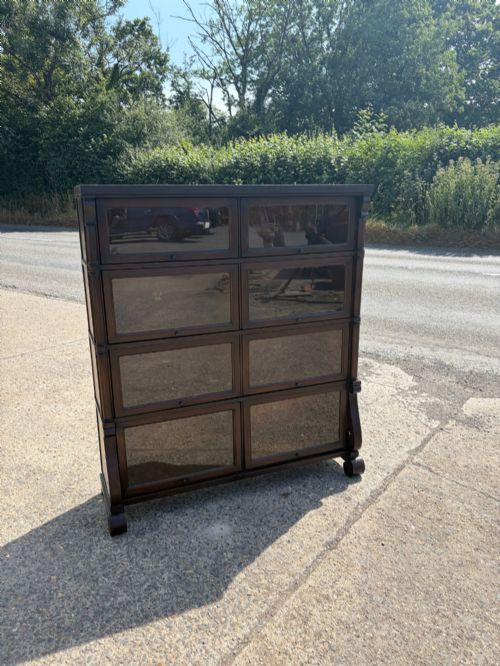
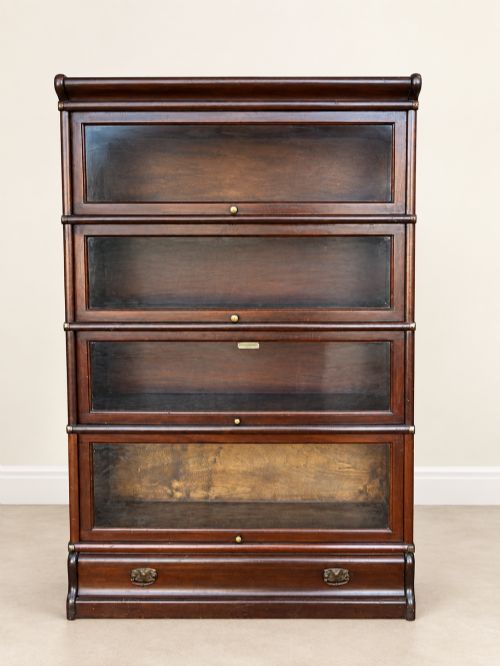
The selection spans periods from the nineteenth century through the Edwardian years and into the 1920s and 1930s. Common formats include stacking barrister bookcases, narrow pier cabinets, and large double or triple door cupboards designed for books or china.
How they were made
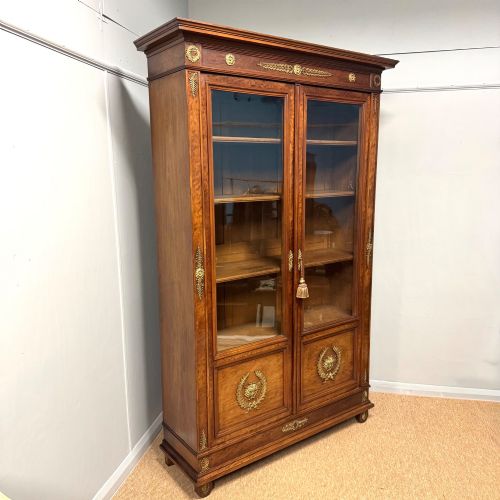
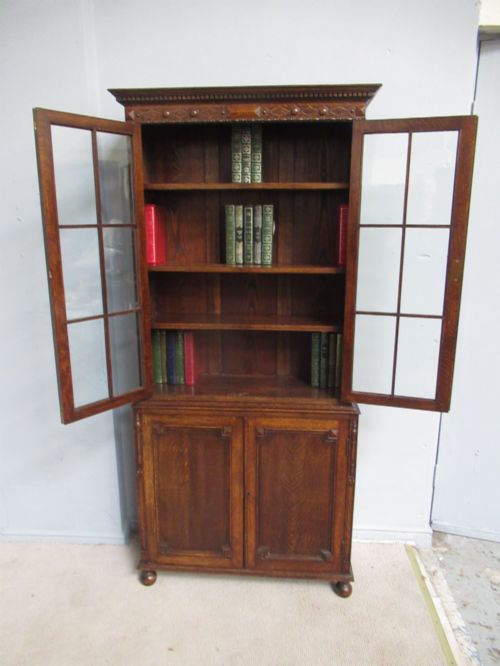
Construction relies heavily on traditional timber framing using solid mahogany, oak, and walnut, frequently enhanced by burr walnut veneers or delicate satinwood inlay. Glass panes are set into wooden doors, sometimes secured with lead cording or brass fittings.
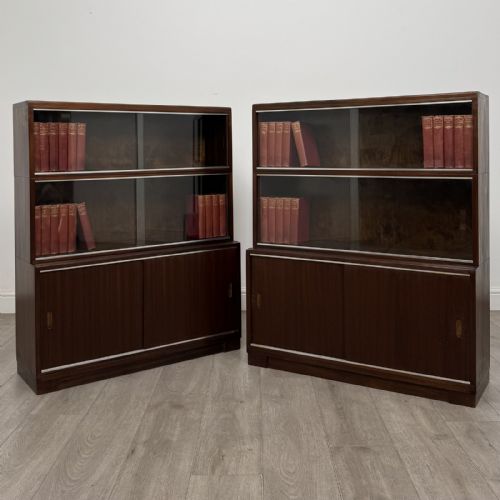
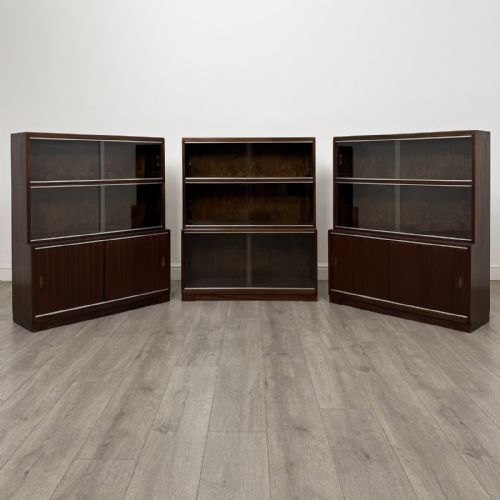
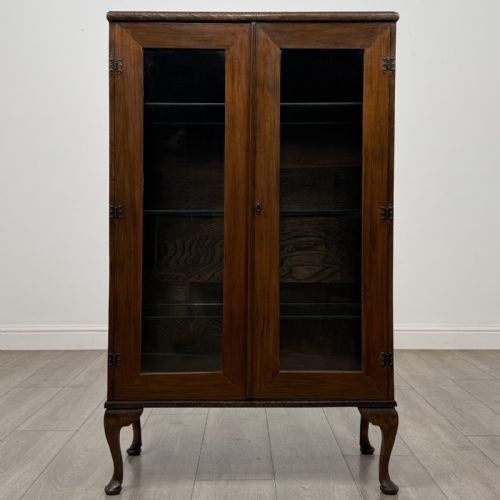
Interiors often incorporate adjustable wooden or glass shelving, while specific stacking designs utilise sectional modular boxes that separate for transport.
Listings feature oak, mahogany, walnut, and satinwood across Victorian, Edwardian, and 1930s periods.
What varies in quality
The calibre of a piece depends largely on the choice of timber figures, such as burr walnut or figured mahogany, and the precision of inlaid details. Superior examples exhibit refined carving, seamless door alignment, and original glass panes without distortion.
Structural integrity also separates standard utility items from finer workshop productions, seen in the thickness of the timber, the quality of internal fittings like adjustable shelf racks, and the condition of original brass or metal hardware.
Wylie and Lochhead·Brady of Edmonton·Lebus
The Vintage Glass Door Cabinet Glossary
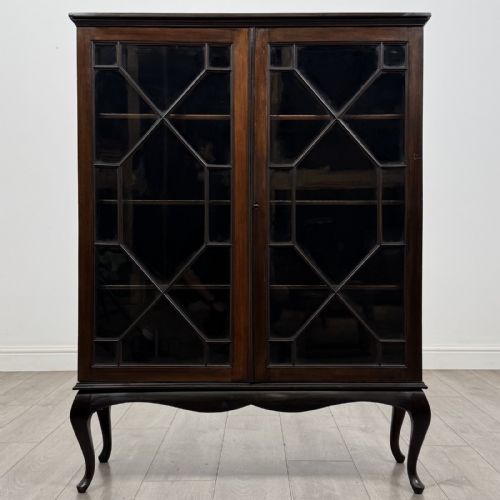
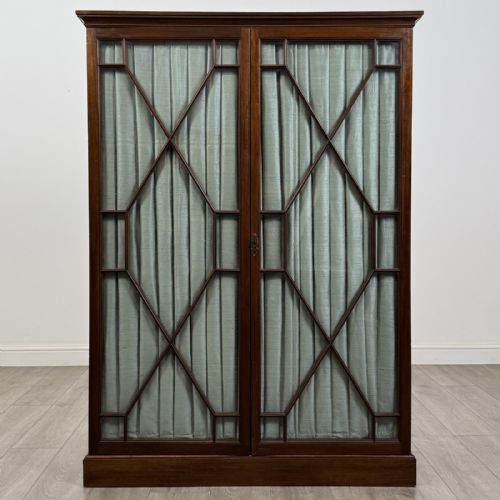
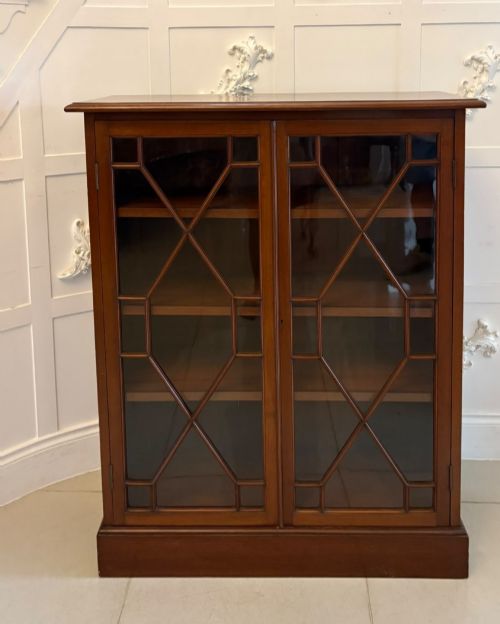
- Astral glazing
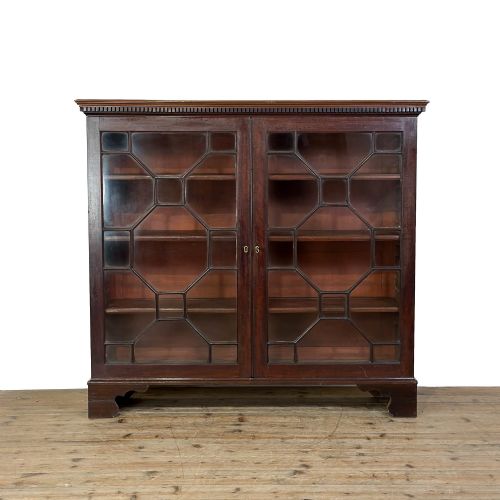
- A method of dividing glass panes within a door using thin timber bars to create geometric patterns.
- Vitrine
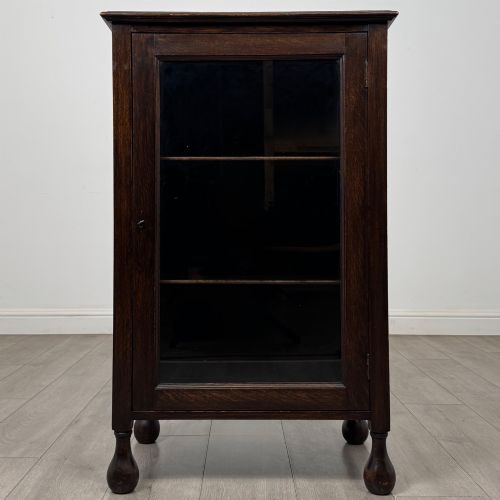
- A glass-fronted cabinet specifically designed for displaying porcelain, curiosities, or decorative objects.
- Barrister bookcase
- A stacking sectional bookcase featuring glass-fronted tiers that swing upwards and inwards to open.
- Pier cabinet
- A narrow cabinet traditionally built to fit the wall space between windows.
- Secretaire
- A cabinet incorporating a pull-down writing drawer with an fitted interior of small drawers and pigeonholes.
Vintage Glass Door Cabinet: Frequently Asked Questions
How do I clean the glass safely?
Use a soft microfibre cloth and a mild glass cleaner sprayed onto the cloth rather than directly onto the wood. This prevents moisture from damaging antique timber frames and older finishes.
Take care around leaded or old float glass panes, applying gentle pressure to avoid loosening fragile framing bars.
Can I adjust the shelves?
Many cabinets feature adjustable wooden shelving supported by brass rack strips or wooden pegs. Others have fixed shelves depending on the specific period and original function.
Check the interior supports to see if the shelf height can be modified for larger books or displays.
Are stacking bookcases stable?
Sectional stacking bookcases rely on gravity and interlocking sections rather than permanent fixings. They remain stable when assembled on level flooring.
Avoid overloading individual tiers to maintain proper balance across the whole stack.
What is satinwood inlay?
Satinwood inlay involves contrasting pale timber veneers set flush into a darker wood surface like mahogany. It creates decorative borders and floral motifs popular during the Edwardian period.
Inspect the edges of the inlay to ensure the veneer remains securely attached to the surrounding timber.