



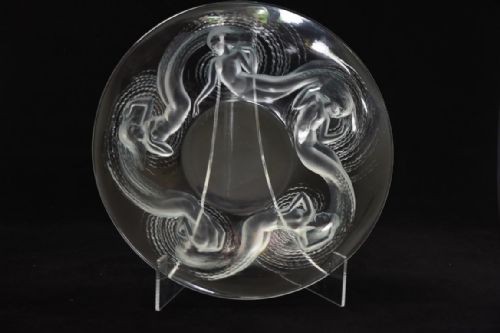

Vintage Glass Charger
These vintage glass charger pieces bring striking texture and form to a table, combining moulded detail with delicate opalescence.
Vintage Glass Charger
A vintage glass charger serves as a large decorative plate or serving dish, often displayed on surfaces rather than used for dining. The selection on this page leans heavily towards twentieth-century French production, showcasing works from the Art Nouveau and Art Deco periods alongside Edwardian examples.
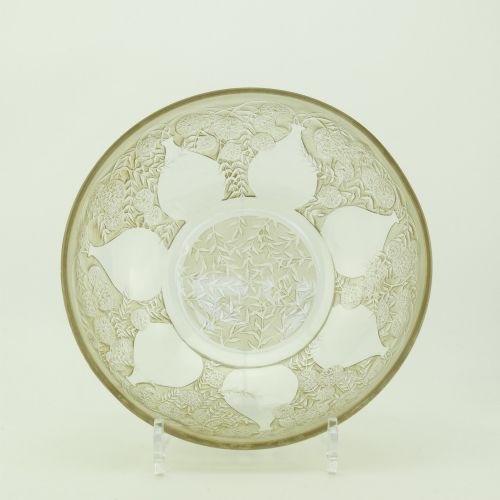
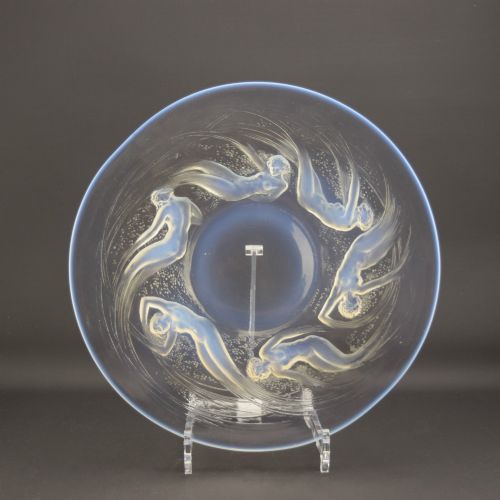
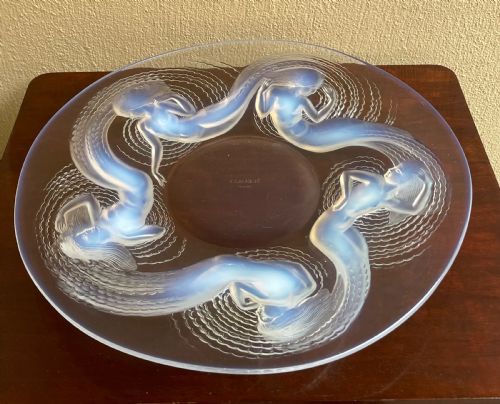
Most pieces encountered here take the form of decorative plates, bowls, or salvers created in moulded glass. Collectors searching for a vintage glass charger will find substantial plates featuring raised aquatic motifs, floral patterns, and animal designs.
The origins stretch from the late nineteenth century through to the nineteen-thirties, capturing the shift from ornate Edwardian cut glass toward stylised Art Deco symmetry and opalescent finishes.
Materials and technique
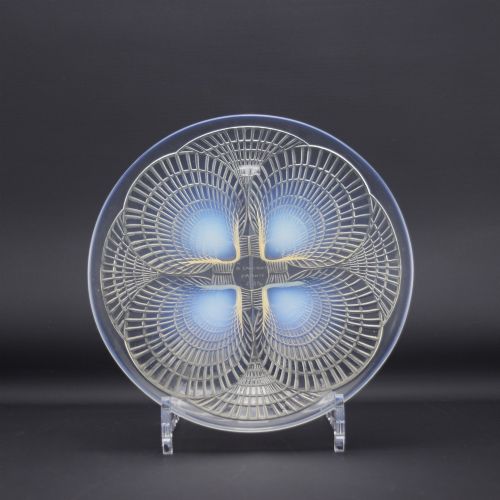
Makers utilised pressed and moulded techniques to achieve high-relief designs across the surface of each vintage glass charger. Molten material was forced into metal moulds, capturing intricate details of fish, shells, and botanical subjects.
Opalescent glass plays a central role in these pieces, scattering light to reveal milky blues and amber highlights across the contours. Artisans also employed clear glass, frosted surfaces, and selective sepia staining to emphasise the depth of the moulded patterns.
Several pieces feature swimming fish and scampering hounds frozen mid-chase beneath the glass.
Distinguishing quality
The success of a vintage glass charger rests on the crispness of the moulding and the subtlety of the opalescent effect within the glass. Stronger pieces display deep, well-defined relief where motifs like fish or foliage stand out sharply from the background.
Makers who mastered chemical composition achieved superior play of light across the surface, turning simple tableware into sculptural art. The handling of contrast, particularly in sepia-stained or frosted passages, defines the finest examples.
Rene Lalique·Sabino
The Vintage Glass Charger Glossary
- Opalescent Glass
- Glass that diffuses light to display milky, translucent blue or orange tones across raised areas. This effect was particularly favored by French makers during the Art Deco era.
- Moulded Glass
- Glass shaped by pressing molten material into a metal form rather than blowing it by hand. This technique allowed for consistent repetition of complex decorative motifs.
- Charger
- A large decorative plate traditionally placed beneath other courses or displayed on its own. In this context, it functions primarily as an ornamental centrepiece.
- Sepia Stain
- A brownish pigment applied to recesses in the glass to create shadow and contrast. It highlights the intricate details carved into the original metal moulds.
Vintage Glass Charger: Frequently Asked Questions
What is a vintage glass charger used for?
These pieces serve primarily as decorative plates or centrepieces on a sideboard, table, or wall display rather than for daily dining.
Their substantial size and sculptural relief make them visual focal points within a room.
How do I identify Art Deco pieces?
Art Deco examples often feature stylised symmetry, geometric borders, and stylised representations of flora and fauna.
Look for crisp moulding and characteristic opalescent finishes typical of the nineteen-twenties and thirties.
Are these pieces made of lead crystal?
Some items utilise lead crystal or heavy cut glass, particularly Edwardian pieces from the late nineteenth and early twentieth centuries.
Most twentieth-century decorative chargers rely on moulded opalescent or frosted glass instead.
How should I display my charger?
Display these plates on sturdy stands that support their full weight and allow light to pass through the glass.
Positioning them near natural light sources enhances the opalescent qualities and highlights the moulded details.