


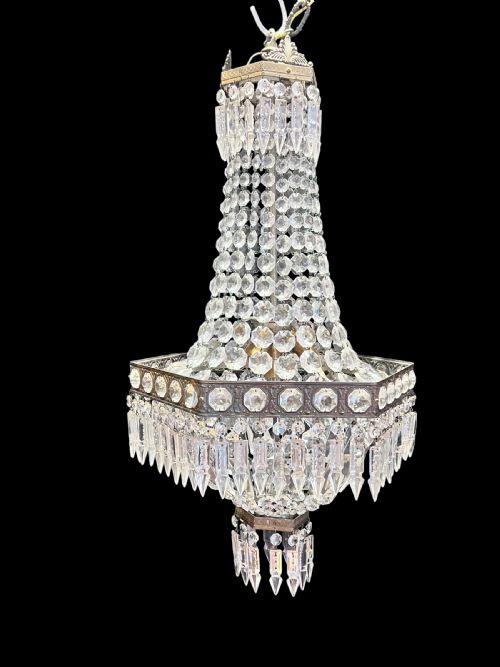
Vintage Glass Ceiling Pendant
A vintage glass ceiling pendant brings focused downward illumination and period character to hallways and smaller rooms.
Vintage Glass Ceiling Pendant
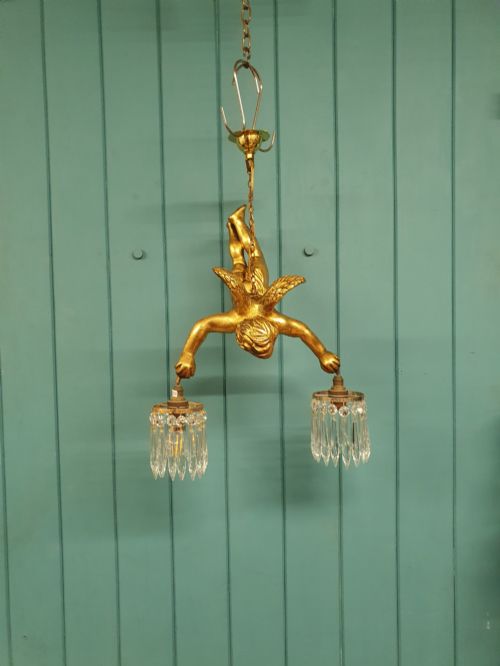
When searching for a vintage glass ceiling pendant, buyers encounter hanging fixtures designed to illuminate interior spaces from above. These range from simple globes and frill lampshades to more elaborate lanterns and drop lights.
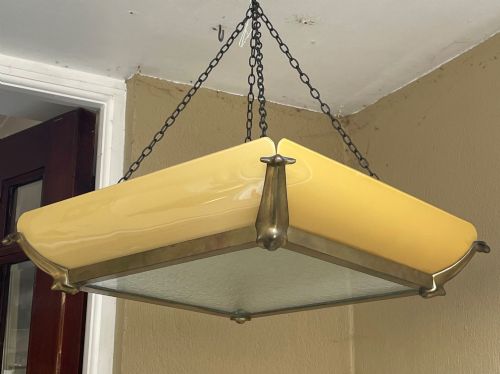
The selections span multiple periods, drawing heavily from the Edwardian era, the 1920s, and the 1930s. Styles stretch from clean-lined Art Deco and Arts & Crafts designs to ornate French chateau, empire, and neoclassical motifs.
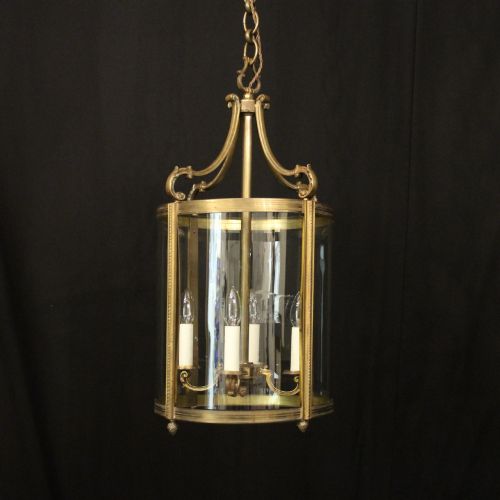
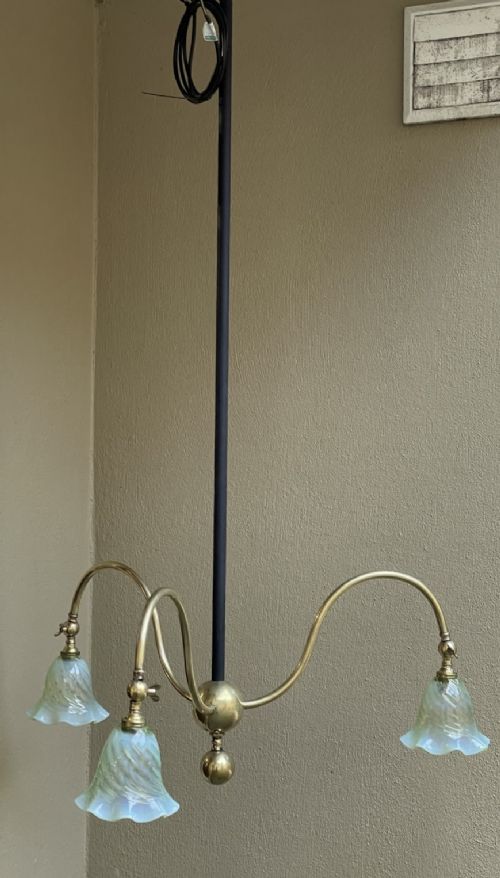
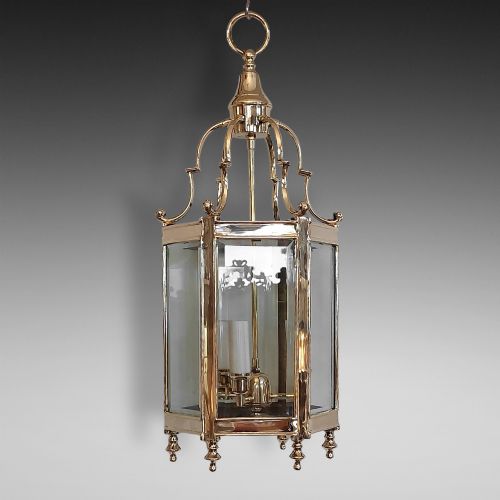
Most examples combine glass elements with metal structures, appearing in forms such as hall lanterns, single-light drops, and plafonniers. Origin points lean towards British and French workshops, utilising brass, copper, and bronze frames.
Materials and construction methods
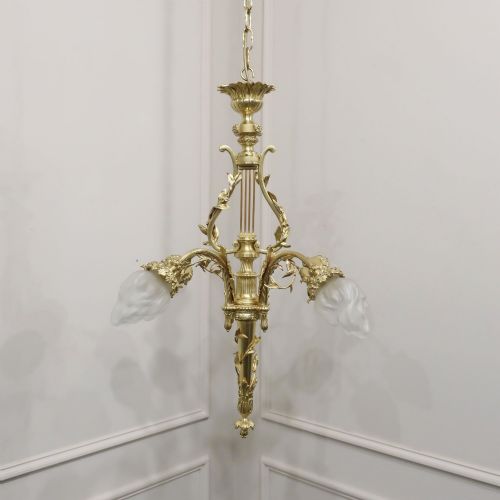
Frames rely predominantly on metals like brass, gilded bronze, copper, and gilt metal to provide structural support for the glass elements. These metals are often cast, beaten, or framed into geometric and floral configurations.
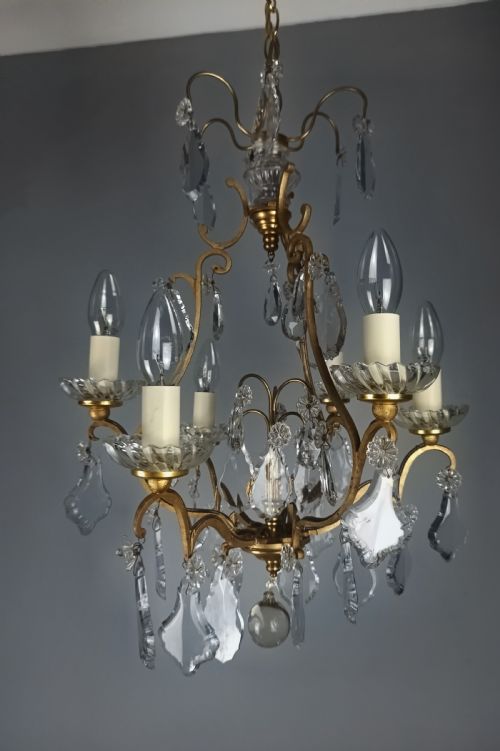
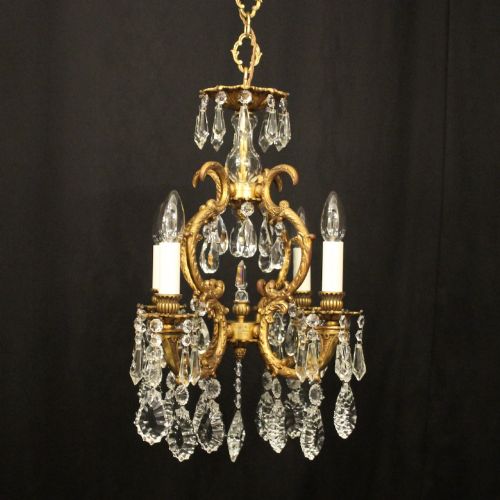
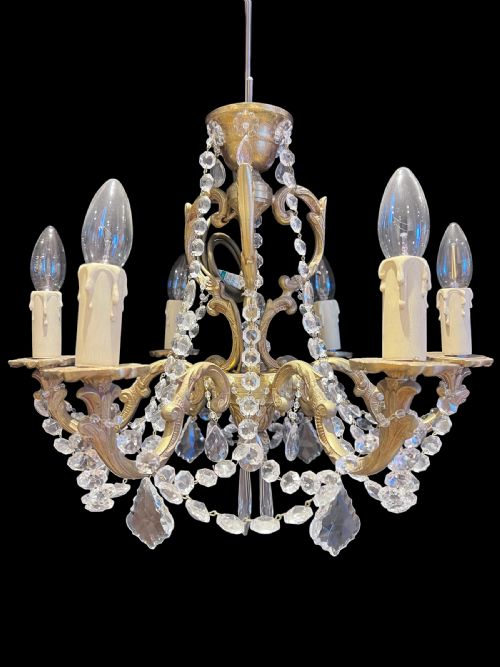
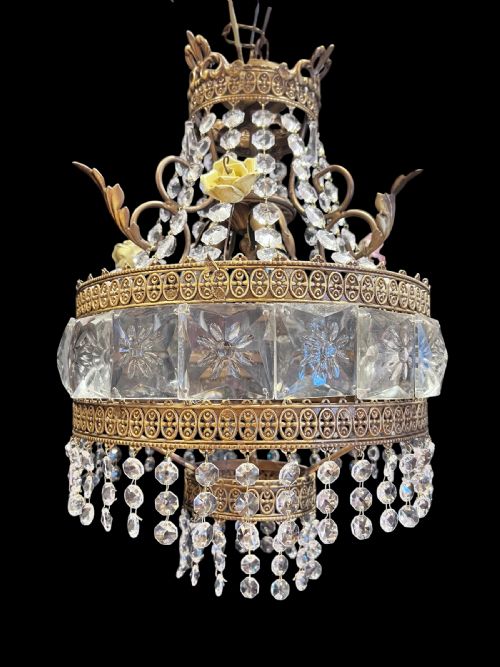
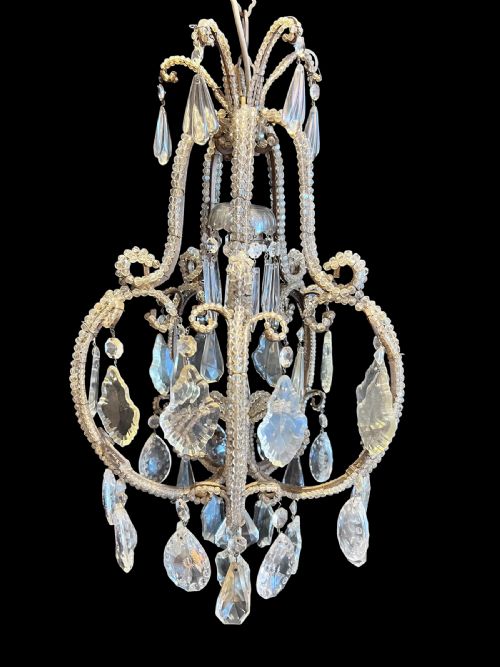
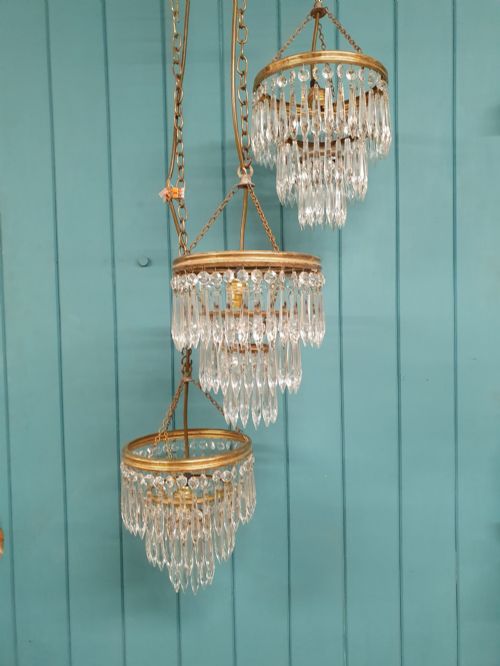
Glass components take several forms, including clear cut glass, frosted panels, opalescent shades, and moulded slip shades. Crystal lustres, beads, and bevelled panes are frequently incorporated to refract and multiply the light output.
One Moravian star lantern brings celestial geometry indoors.
Distinctions in craftsmanship and materials
Quality separates fixtures by the precision of the metalwork and the clarity or weight of the glass components. Hand-cut crystal and heavy cast bronze frames indicate superior manufacturing standards compared to pressed glass and thin sheet metal.
The integrity of the design integration also determines value, visible in how cleanly the glass sits within its brass or copper armature. Finer pieces maintain balanced proportions between metal framework and glass panels.
Émile-Jacques Ruhlmann
The Vintage Glass Ceiling Pendant Glossary
- Lustre
- A cut glass pendant drop or prism hung from a chandelier or lantern. These elements catch and scatter light across the room.
- Slip shade
- A moulded piece of glass that slides into a metal frame, commonly found in Art Deco ceiling lights. They distribute light evenly while concealing the bulb.
- Hall lantern
- An enclosed hanging light designed specifically for entryways and corridors. They frequently utilise bevelled or frosted glass panels set within a brass frame.
- Tent and waterfall
- A chandelier configuration where strings of crystal beads form an upper tent shape above a cascading arrangement of drops.
Vintage Glass Ceiling Pendant: Frequently Asked Questions
Where should I hang a glass ceiling pendant?
These pendants suit spaces requiring direct or ambient illumination from above, such as entryways, corridors, and compact rooms. Hall lanterns and single-light drops fit narrow ceiling heights effectively.
Larger rooms or high ceilings accommodate multi-light fixtures and crystal-hung designs. Matching the scale of the pendant to the floor area ensures proper visual proportion.
How do I identify an Art Deco pendant?
Art Deco pendants feature geometric lines, stylised motifs, and characteristic materials from the interwar period. Slip shades and frosted glass globes are typical indicators of this style.
They often appear alongside streamlined brass or chromed metal frameworks. The aesthetic prioritises functional simplicity combined with decorative modernity.
What is the difference between a lantern and a chandelier?
Lanterns feature an enclosed housing with glass panels sides protecting the light source, making them ideal for draughty hallways. Chandeliers are open branched structures designed to hold multiple exposed or shaded bulbs.
Lanterns rely on frames of brass or copper, whereas chandeliers frequently incorporate crystal drops, lustres, and central stems.
Can these vintage lights use modern bulbs?
Most vintage pendants accommodate standard modern electrical fittings with appropriate wiring updates. Consulting a professional electrician ensures safe installation and compatibility with current standards.
LED bulbs that mimic the warmth of older carbon filament lamps work well inside clear, frosted, or opalescent glass shades.