
French Style Light Fitting
These French style light fitting examples bring nineteenth-century and early twentieth-century decorative metalwork into rooms needing striking illumination.
French Style Light Fitting
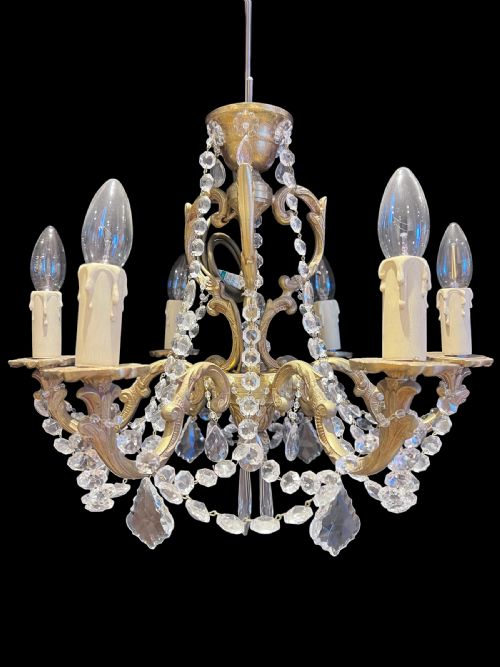
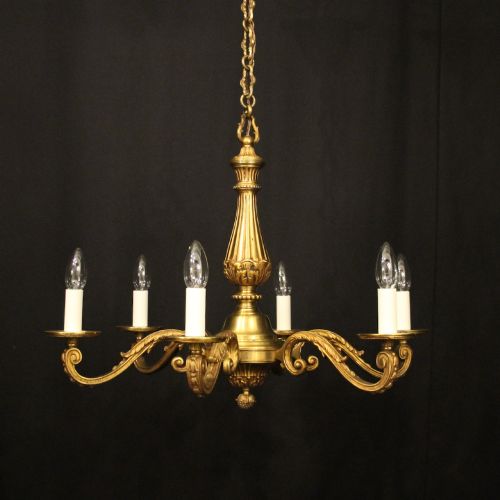
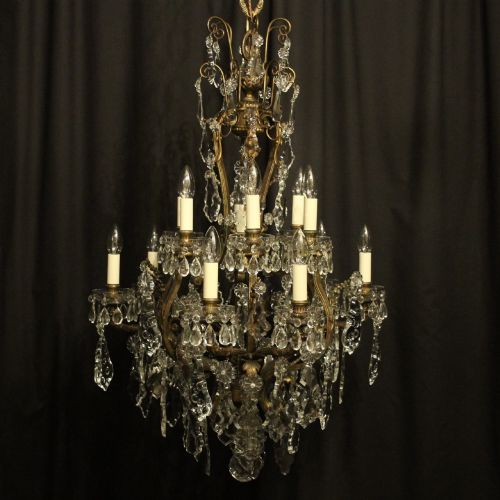
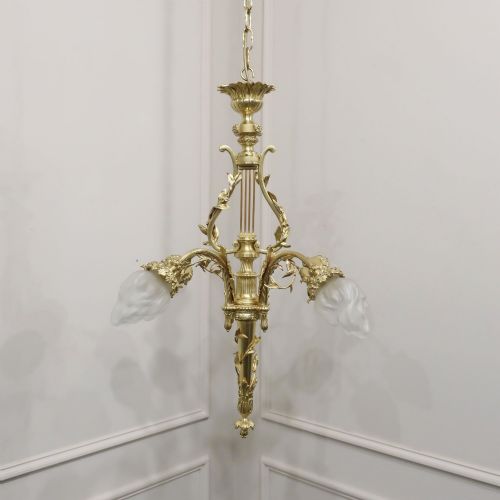
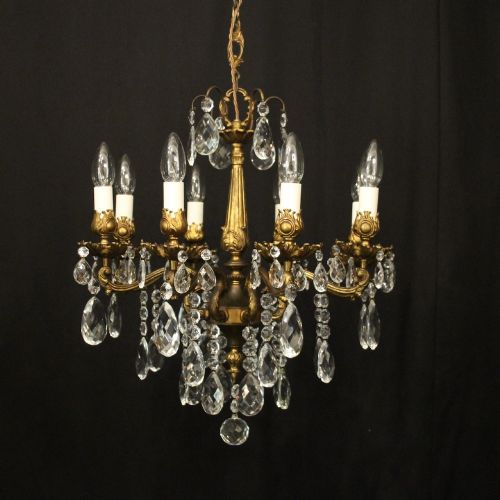
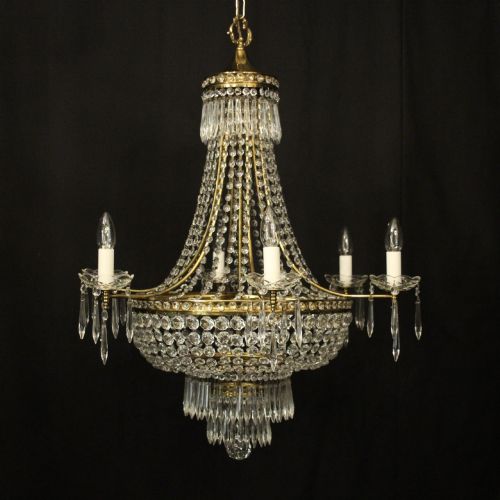
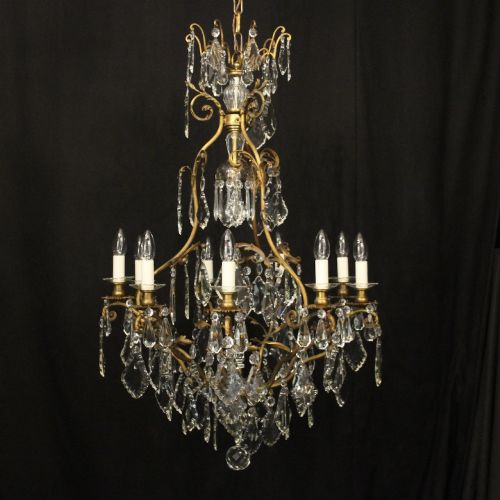
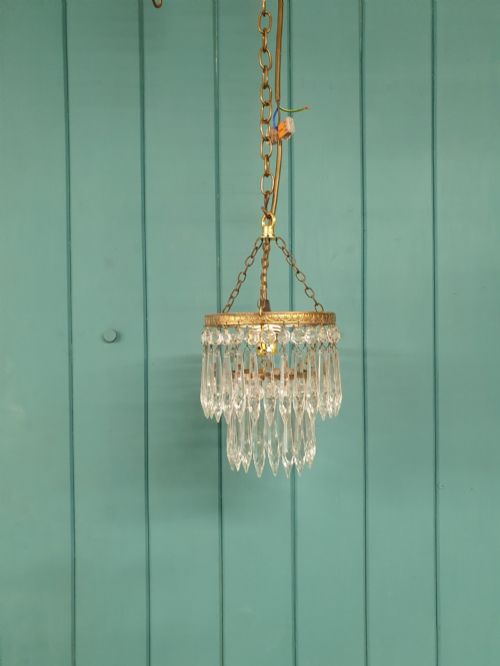
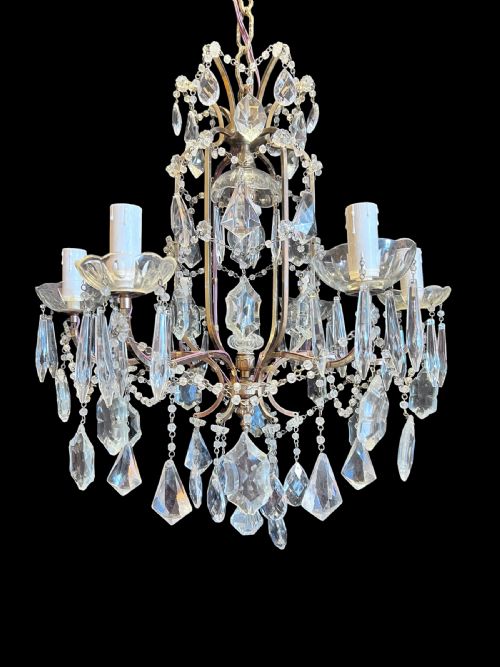
A french style light fitting encompasses chandeliers, wall lights, ceiling lights, and lanterns originating from periods spanning the late nineteenth century into the 1930s. Buyers searching this phrase typically encounter multi-arm chandeliers, hall lanterns, and wall sconces drawing on French Chateau, Rococo, Empire, and Neoclassical vocabularies.
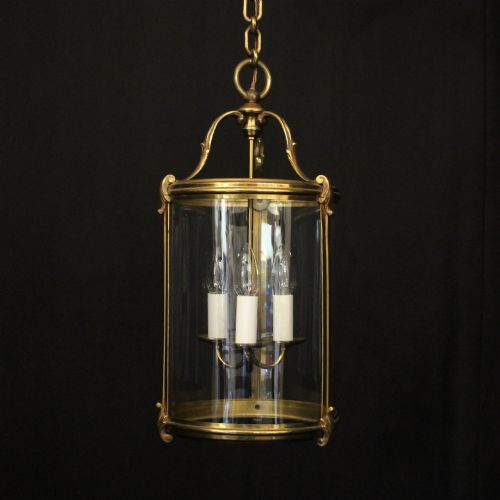
The objects take diverse structural forms, from substantial twelve-light fixtures down to small spike chandeliers and convex hall lanterns. Many pieces reflect revival aesthetics, pairing traditional French motifs with Edwardian or early twentieth-century domestic lighting requirements.
Materials and Technique
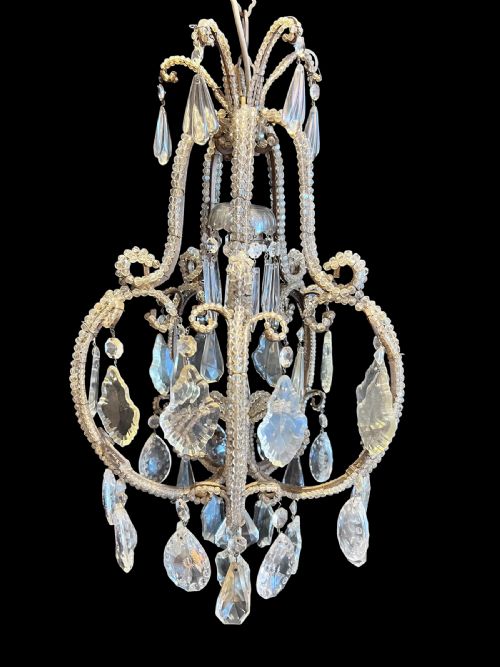
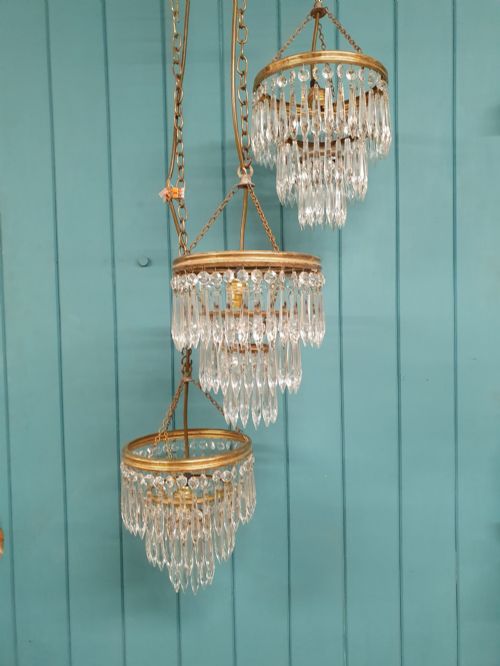
Makers constructed these fixtures primarily from cast and chased metals including brass, bronze, gilt bronze, and gilt brass, often pairing them with cut glass and crystal pendants. Frames incorporate structural metalwork supporting tiered configurations of arms, lanterns, or beaded tent and waterfall drops.
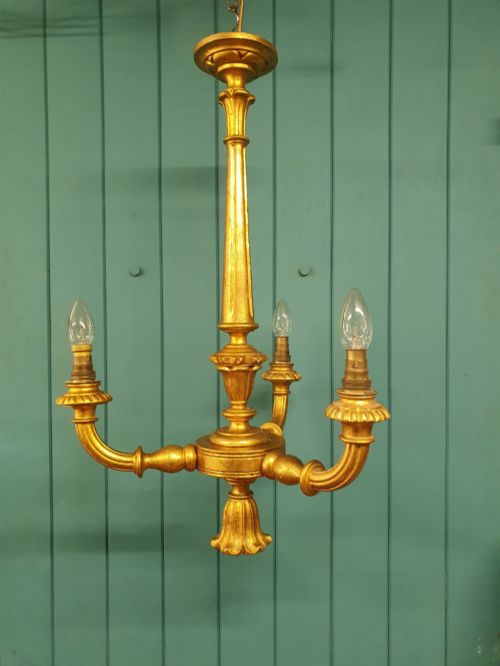
Surface treatments range from dark bronze patination to applied gilding and silver gilding on bronze, brass, or gesso. Crystal components are cut and pinned to metal armatures, diffusing light through faceted pendants, beads, and domes.
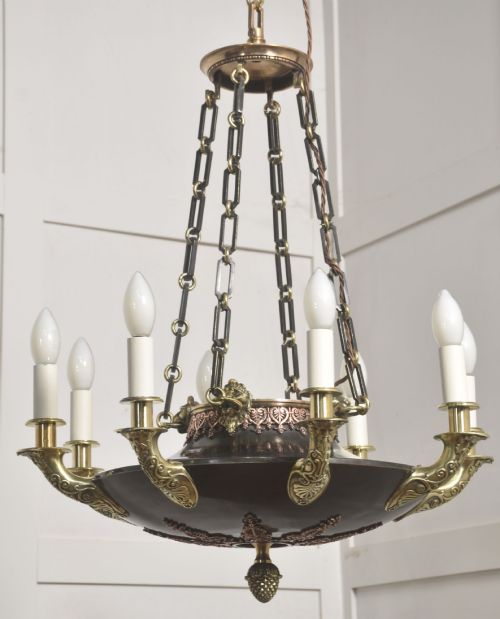
Several pieces feature cast lion masks keeping watch from the brasswork.
The Measure of Quality
Quality rests upon the crispness of metal casting and the depth of surface gilding or patination across the frame. Finely chased bronze or brass retains sharp botanical and architectural details, whereas simpler cast metal can appear soft and uniform.
The integrity of the glass and crystal assembly further distinguishes the tier of a piece, with heavy hand-cut crystal prisms and robust pinned drops demonstrating superior original manufacture compared to pressed or replacement glass.
G.E.C
The French Style Light Fitting Glossary
- Chandelier
- A branched ornamental light fixture suspended from the ceiling. These pieces hold multiple candle-style or electric lights arranged in single or tiered tiers.
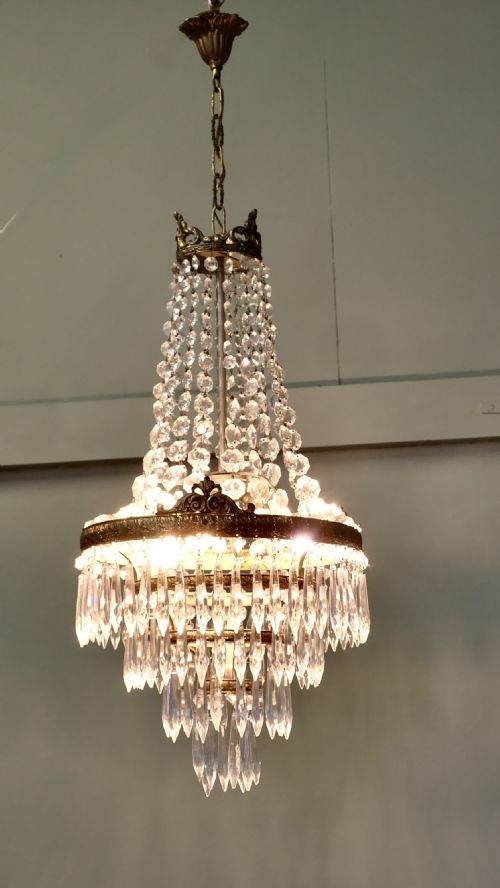
- Tent and waterfall
- A lighting configuration featuring an upper canopy of cascading crystal beads forming a tent shape above a lower ring of drops. The arrangement disperses illumination through layers of glass.
- Gilt bronze
- Bronze metal treated with a thin layer of gold leaf or mercury gilding. This technique provides a durable, lustrous surface finish seen on formal French lighting.
- Hall lantern
- An enclosed ceiling-hung light fixture designed for entranceways and corridors. They often use glazed panels held within a decorative metal frame.
- Spike chandelier
- A compact light fitting featuring an upward-pointing central spire or column from which the arms diverge. They suit smaller rooms with lower ceiling heights.
French Style Light Fitting: Frequently Asked Questions
What rooms suit a French style light fitting?
These fixtures fit reception rooms, dining areas, and entrance halls where period character is desired. Their scale demands sufficient ceiling height to let the drop hang properly.
Smaller variants like convex hall lanterns or compact spike chandeliers integrate effectively into hallways and more intimate domestic spaces without overwhelming the room.
How do I identify an Empire style fitting?
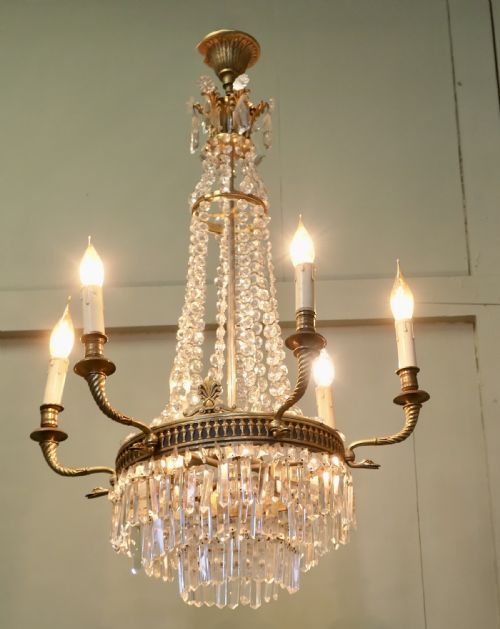
Empire style light fittings draw upon classical Roman, Greek, and Egyptian motifs popular during the early nineteenth century and later revivals. Look for symmetrical arrangements, laurel wreaths, lion masks, and architectural lines.
They frequently incorporate tent and waterfall crystal configurations or classical urn forms executed in bronze or brass.
Are these lights wired for modern use?
Most antique and vintage light fittings found on the market have been adapted for contemporary electrical standards over their lifespan. Buyers should inspect the internal wiring upon acquisition to ensure compliance with current safety regulations.
Original candle tubes and sockets are often replaced or restored by professional electricians to accommodate standard modern bulbs.
What is the difference between gilt bronze and gilt brass?
Gilt bronze, also known as ormolu, involves an alloy of copper and tin that accepts chasing and fire gilding with exceptional sharpness. It yields a rich, heavy warm tone that resists wear.
Brass is an alloy of copper and zinc, which tends to be lighter in weight and produces a slightly brighter, brassy yellow appearance when polished beneath its gilt surface.