

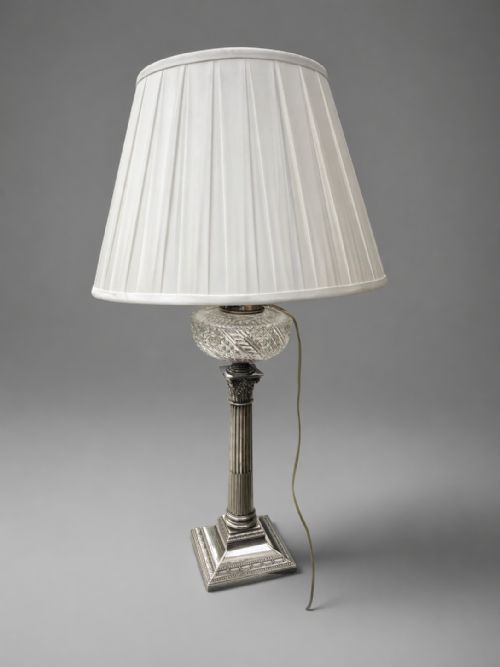


Vintage Glass Bedside Lights
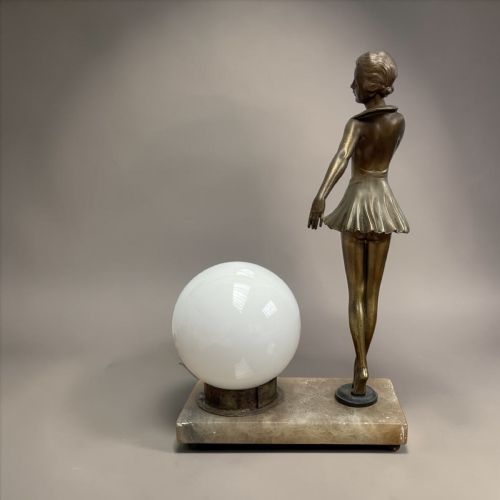
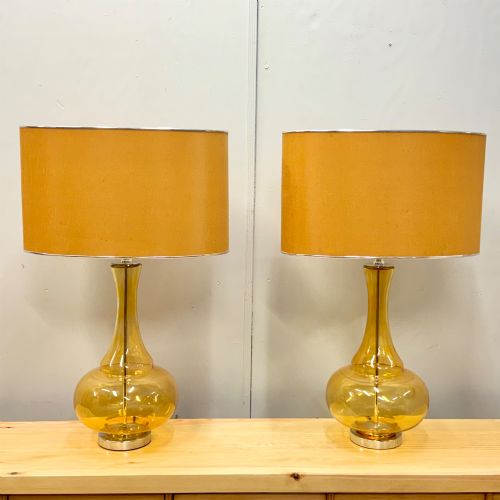
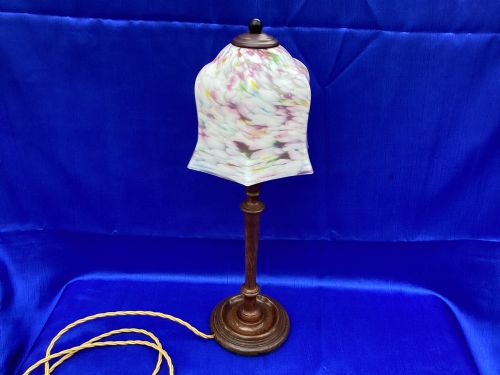
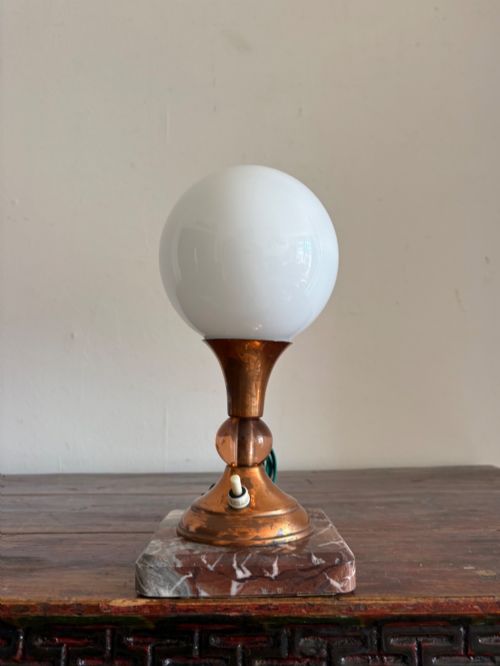
These vintage glass bedside lights bring period character and warm illumination to a room, ranging from simple mushroom shades to sculptural figural designs.
Vintage Glass Bedside Lights
Vintage glass bedside lights encompass table and desk lamps designed to sit on a nightstand, providing functional light through decorative glass components. When searching for vintage glass bedside lights, buyers encounter pieces spanning the Victorian era through the mid-twentieth century, with a strong representation of Art Deco designs.
How they were made
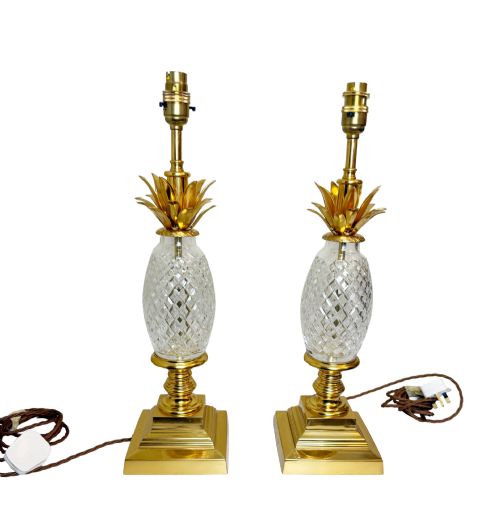
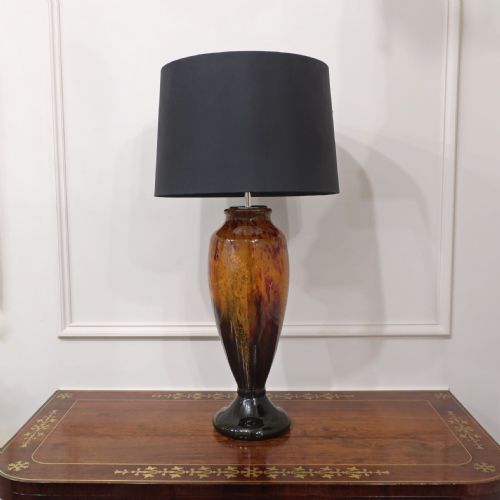
Makers combined glassblowing and pressing techniques to create shades and bodies in opaline, mottled, and cut crystal finishes. Metalworking methods such as casting or forging provided structural support in brass, chrome, or ormolu, anchoring the glass elements securely to marble or metal bases.
What varies in quality
Quality rests in the weight and clarity of the glass, the depth of cut crystal facets, and the integrity of the metal mounts. Pieces featuring signed work from established glasshouses or detailed figural castings demonstrate superior craftsmanship compared to standard commercial productions.
Fratelli Toso·Charles Schneider·Degue·Baccarat·Farraday and Son
The Vintage Glass Bedside Lights Glossary
- Opaline glass
- An opaque or translucent glass, often white or pastel-toned, popular in nineteenth and early twentieth-century lighting for diffusing light softly.
- Cut crystal
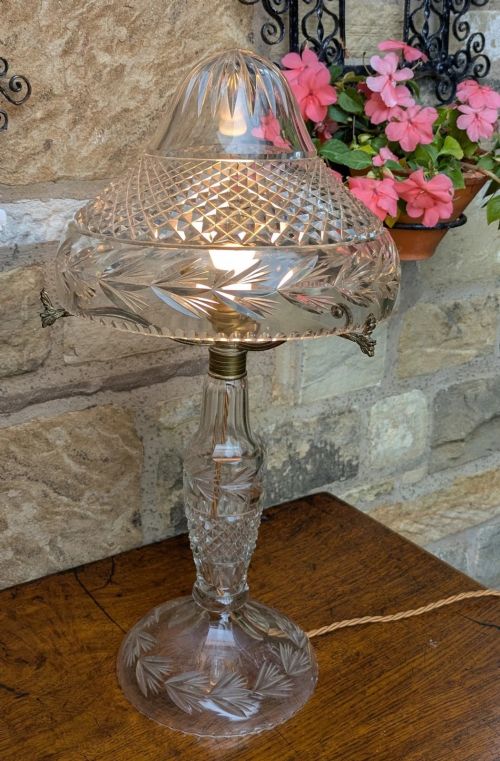
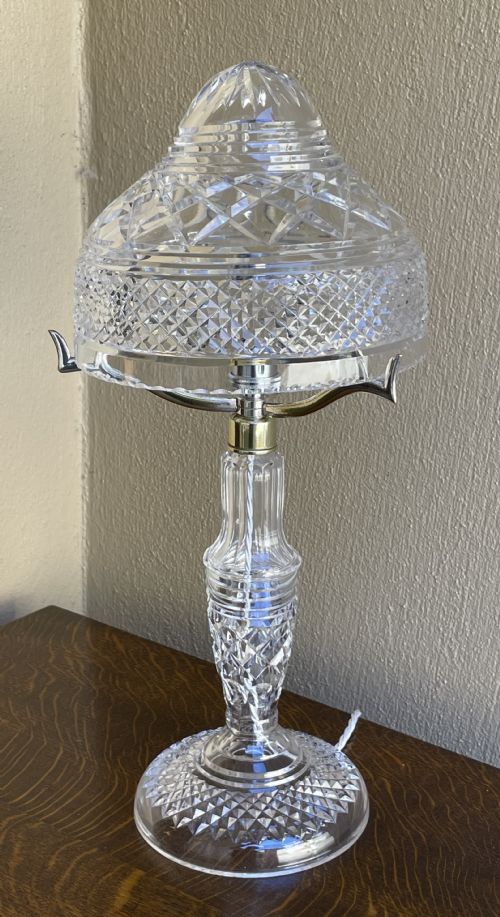
- High-clarity glass shaped by grinding and polishing geometric or floral patterns into the surface, creating pronounced refraction.
- Ormolu
- Gilt bronze mounts and decorative details applied to furniture and lighting fixtures, providing a bright metallic contrast to glass components.
- Millefiori
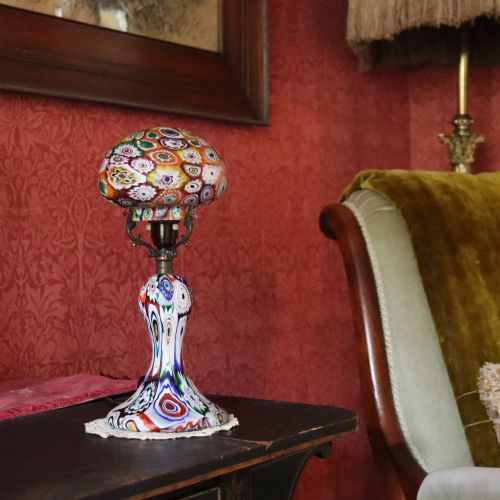
- A glasswork technique producing multicoloured mosaic patterns, frequently associated with Murano production.
Vintage Glass Bedside Lights: Frequently Asked Questions
How do I identify Art Deco glass lamps?
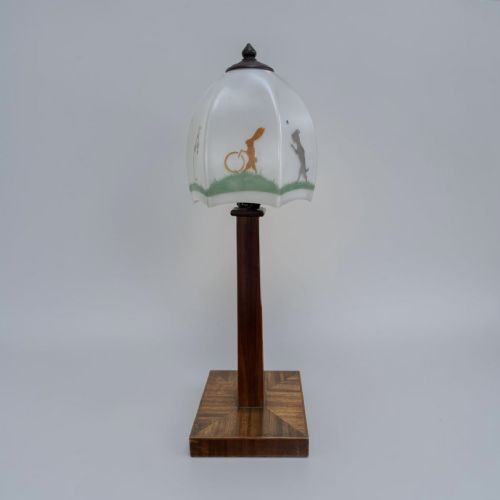
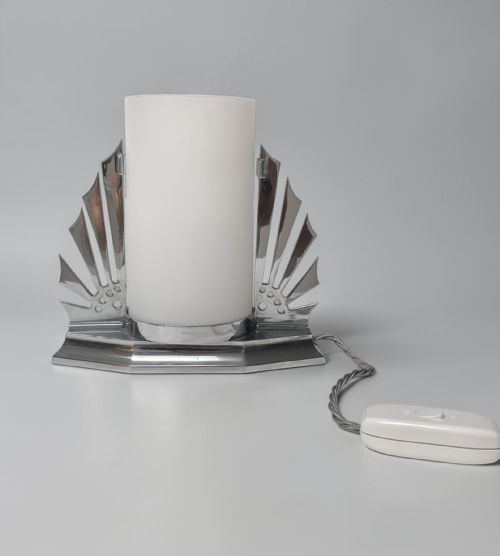
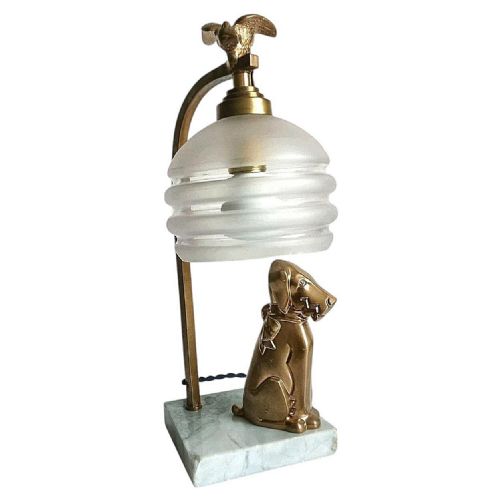
Art Deco glass lamps typically feature geometric forms, stylized figures, or mottled glass shades paired with chrome, wrought iron, or marble bases. Their design reflects the modernist aesthetic prevalent during the nineteen-twenties and nineteen-thirties.
Look for symmetrical lines and contrasting material textures that distinguish them from earlier Victorian or Arts and Crafts lighting fixtures.
Are these lamps suitable for modern bedside tables?
Many vintage table and desk lamps scale appropriately for contemporary nightstands, offering soft ambient illumination through frosted or opaline shades. Their compact footprints accommodate smaller surface areas while adding distinct period detail to a bedroom.
Wiring should be inspected and updated by a professional to ensure safety standards are met for current household use.
What is the difference between opaline and frosted glass?
Opaline glass is an opaque or semi-translucent material manufactured with opacifiers to create a milky appearance with gentle light diffusion. Frosted glass achieves its translucent quality through chemical etching or sandblasting the surface.
Both materials were utilised across the Victorian and early twentieth-century periods to soften the glare of electric bulbs.