
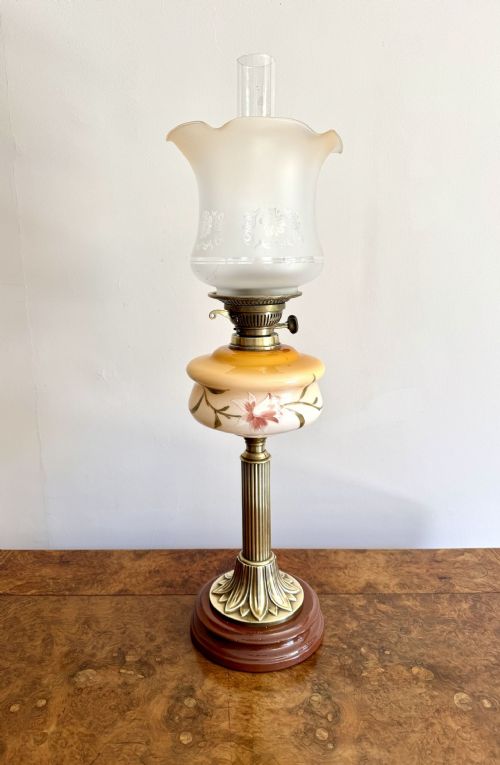


Amber Glass Table Lamp
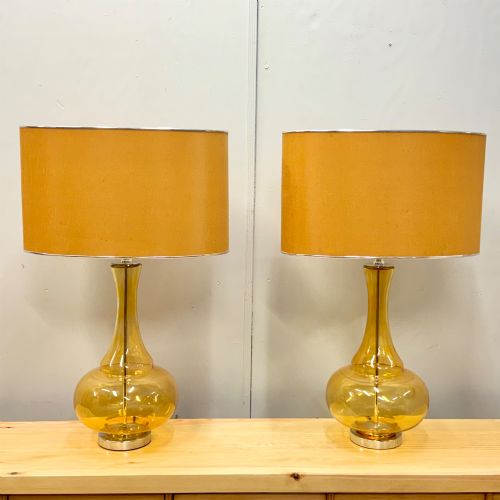
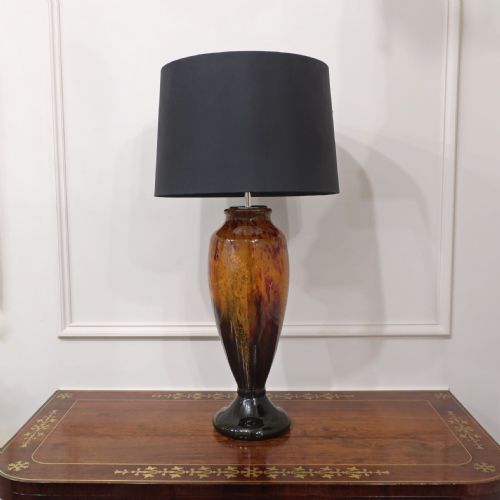
These amber glass table lamps bring a warm, rich glow to a room, drawing on decades of design from the nineteenth century into the twentieth.
Amber Glass Table Lamp
An amber glass table lamp uses tinted glass to diffuse a deep, warm light, drawing on styles that range from heavy nineteenth century oil lamps to sleek 1930s designs.
Most pieces encountered here date from the early twentieth century, showing strong influences from Art Deco, Art Nouveau, and Edwardian tastes.
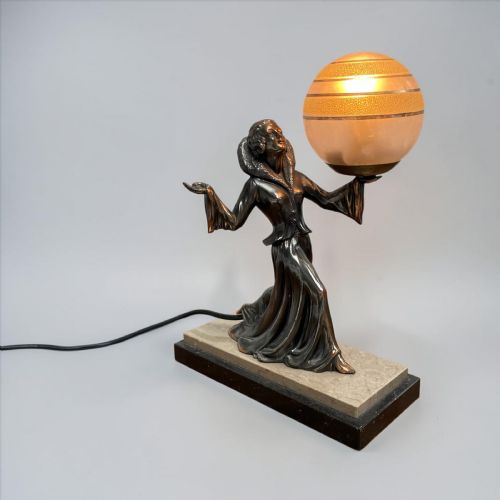
Makers paired the amber glass with materials such as brass, bronze, patinated metal, and marble to create sturdy and decorative lighting for desks and side tables.
Materials and construction
The primary visual impact comes from moulded or enameled amber glass, often paired with frosted elements or mounted on metal bases.
Foundations rely on cast brass, bronze, patinated metal, and sometimes marble to anchor the weight of the glass body and shade.
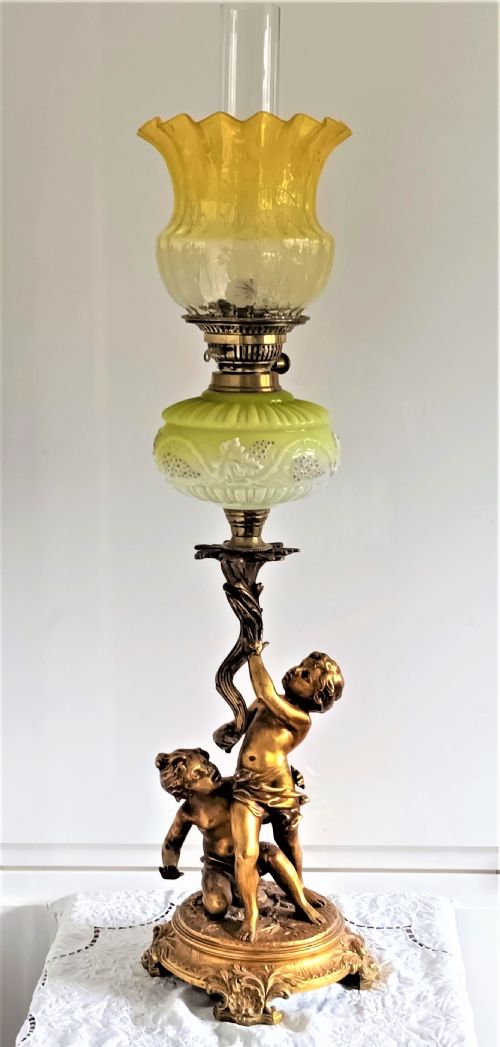
Some nineteenth century oil lamps retain their original weights, having traded paraffin for modern wiring without losing an ounce of their nineteenth century charm.
Judging quality and craftsmanship
Quality rests in the weight and clarity of the glass, alongside the precision of metalwork found in brass mounts and cast bases.
Works attributed to notable glass houses or foundries demonstrate finer surface detail in the metal and richer tones within the amber glass.
Charles Schneider·Daum·The Charles Parker Company·Walther and Sohne
The Amber Glass Table Lamp Glossary
- Amber glass
- Glass coloured with sulphur and carbon compounds to produce a warm yellowish-brown hue. It became especially popular during the Art Deco period for soft interior lighting.
- Art Deco
- A design style from the 1920s and 1930s characterised by stylised geometric forms and modern industrial materials. Lamps from this era often feature streamlined glass and metal structures.
- Patinated metal
- Metal surfaces showing a natural or chemically induced ageing effect that darkens and enriches the tone. This finish adds depth to the brass and bronze components of older lamps.
- Oil lamp
- A lighting device that burned liquid fuel before electrification, many of which later underwent conversion to electrical table lamps while retaining their original burners and fonts.
Amber Glass Table Lamp: Frequently Asked Questions
How do I date an amber glass table lamp?
Dating relies on stylistic clues such as geometric Art Deco lines or flowing Art Nouveau motifs, as well as the materials used in the base.
Examining the wiring, switches, and maker stamps or signatures on the glass or metal components provides further confirmation of the period.
Were these lamps originally electric?
Many examples began life as oil lamps during the nineteenth or early twentieth centuries and received electrical conversions later.
Purpose-built electric models emerged more frequently by the 1920s and 1930s alongside the rise of domestic household power.
How should I clean amber glass?
Gentle cleaning with a soft cloth and mild soapy water preserves the surface finish without scratching the glass or wearing down metal patination.
Harsh chemical cleaners should be avoided, particularly around enameled details or aged brass mounts.
What styles are most common?
Art Deco designs featuring mottled or pressed amber glass dominate the selection, alongside heavier Victorian and Edwardian brass oil lamp conversions.
European workshops produced many of the most decorative shades, pairing deep amber tones with wrought iron or patinated metal.