



Vintage Mottled Glass Lamp
These vintage mottled glass lamp pieces offer diffused lighting and atmospheric colour, bringing authentic early twentieth century character into a room.
Vintage Mottled Glass Lamp
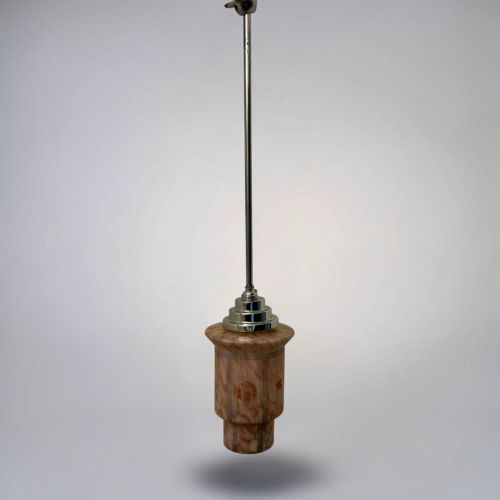
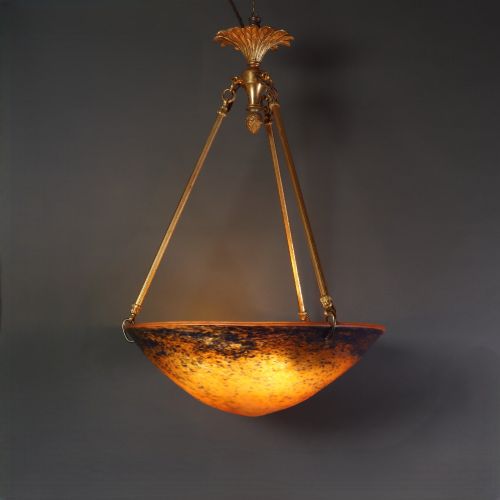
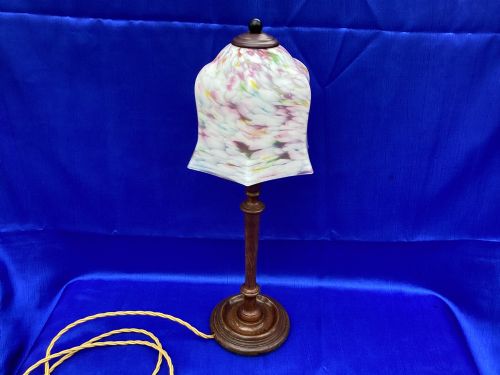
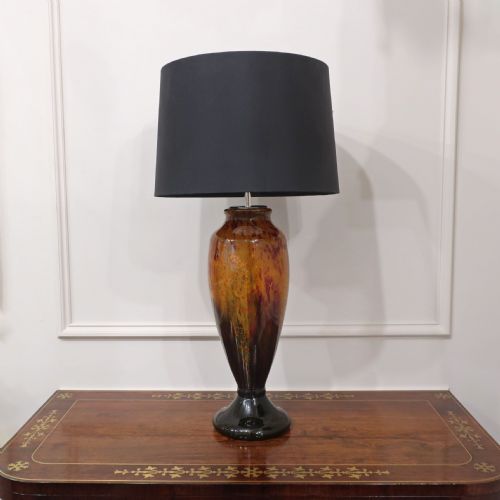
When you search for a vintage mottled glass lamp, you are looking at domestic lighting fixtures dating predominantly from the early decades of the twentieth century. The selection spans table lamps, wall lights, and hanging chandeliers created during the Art Deco, Arts and Crafts, and Art Nouveau periods.
The version you are most likely to meet on this page is a French Art Deco table lamp featuring a wrought iron base supporting a patterned glass shade. These pieces frequently combine industrial metalwork with artistic glass production characteristic of the interwar years.
How they were made
The makers of these lamps relied on specialised glass techniques, producing mottled and pate de verre finishes that catch and diffuse light. Molten glass was manipulated to incorporate swirls of colour and textured surfaces before cooling.
Metal components such as wrought iron, brass, and chrome were forged, cast, or turned to provide sturdy structural bases and wall mounts. These materials were chosen for their durability and their ability to complement the rich tones of the glass shades.
Vintage Mottled Glass Lamp Retail Price Guide 2026
Typical asking prices for vintage mottled glass lamp among the pieces listed under this phrase on Sellingantiques today, from the lower quarter to the upper quarter. They describe what is for sale here now, not the wider market.
Listings feature items spanning the nineteenth century through to the 1930s, utilising materials including wrought iron, brass, marble, and mottled glass.
What varies in quality
The distinction between ordinary and exceptional pieces rests primarily on the artistic execution of the glass shade and the sophistication of the metal mounting. Signature work from recognised glasshouses displays superior depth of colour and subtlety in the mottling effect.
The harmony between the base and the shade determines the overall integrity of the piece. Superior examples feature custom forged wrought iron or detailed brass work designed specifically to house the glass, rather than generic components assembled at a later date.
Charles Schneider·Daum·Degue·Muller Freres
The Vintage Mottled Glass Lamp Glossary
- Mottled glass
- Glass featuring a spotted or streaked pattern of colours that diffuses light evenly across a room. This finish became popular in decorative lighting during the early twentieth century.
- Pate de verre
- A glass-working technique where finely crushed glass is packed into a mould and fused in a kiln. It produces a dense, sugar-textured surface with rich tonal graduation.
- Wrought iron
- Iron that is heated and hammered into shape by hand, resulting in a fibrous texture and unique surface character. It provides the heavy, stable framework for many continental table lamps.
- Opaline
- A semi-translucent milky glass often tinted with pastel or rich colours. It softens light sources effectively without creating harsh glare.
Vintage Mottled Glass Lamp: Frequently Asked Questions
How do I date a mottled glass lamp?
Dating relies on stylistic markers from the Art Deco and Art Nouveau movements, alongside manufacturing methods visible in the metal and glass. Comparing the construction techniques with documented periods helps narrow down the decade of production.
Examine the electrical fittings and wiring methods where original components survive, though many pieces have been re-wired for modern domestic use. The style of the wrought iron or brass base often provides a reliable indicator alongside the glass signature.
Are these lamps suitable for daily use?
These lamps function well for ambient or accent lighting in modern interiors. Their primary purpose is to provide warm, diffused illumination rather than bright task lighting.
Ensure that any vintage wiring is checked by a qualified electrician before connecting it to a modern power supply. Modern LED bulbs that emit low heat are often recommended to protect historical glass shades from thermal stress.
How should I clean a vintage glass shade?
Clean the glass gently using a soft, dry cloth to remove dust and surface particles. Avoid harsh chemical cleaners that might damage the textured surface or historical finishes.
If the glass requires washing, remove the shade from the metal base and use lukewarm water with a mild detergent. Dry the piece thoroughly before reassembling the lamp.
What is the difference between French and other continental lamps?
French lighting from the interwar period frequently emphasises artistic collaboration between master glassmakers and ironworkers. The resulting designs often feature prominent sculptural bases supporting distinctive coloured shades.
Other regional pieces might prioritize utilitarian forms or distinct decorative motifs tied to local arts and crafts traditions. The signature on the glass remains the clearest guide to regional origin.