


Yellow Glass Table Lights
Yellow glass table lights bring a warm glow and striking colour to a room, ranging from vibrant Victorian oil lamps to sleek Art Deco designs.
Yellow Glass Table Lights
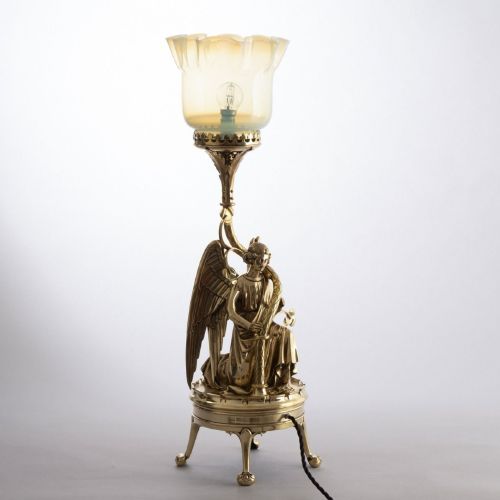
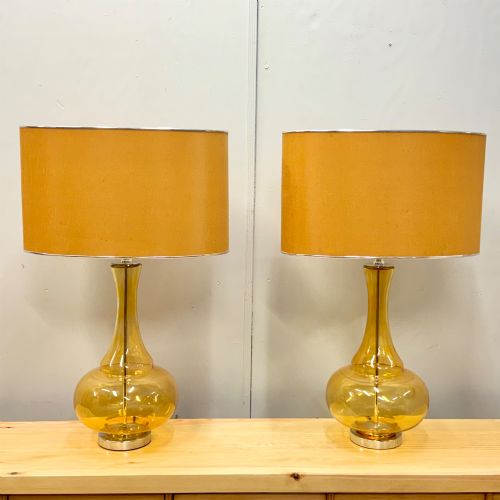
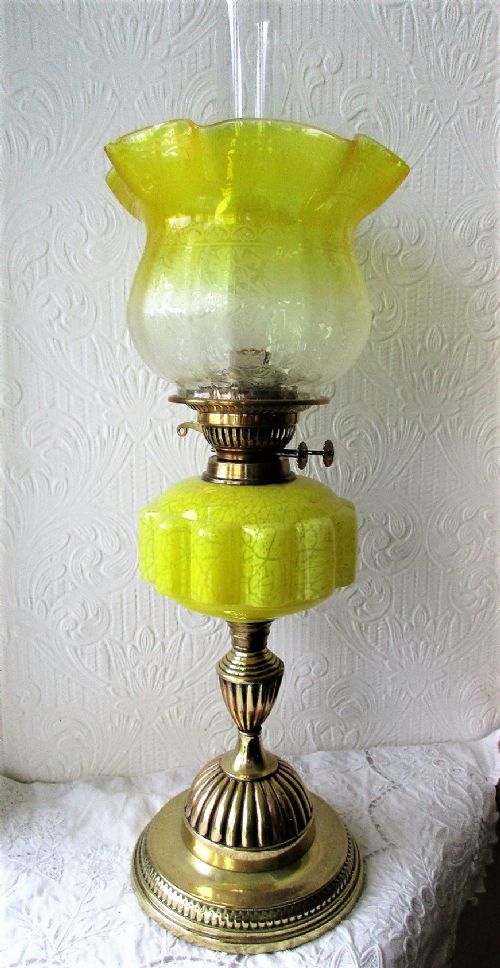
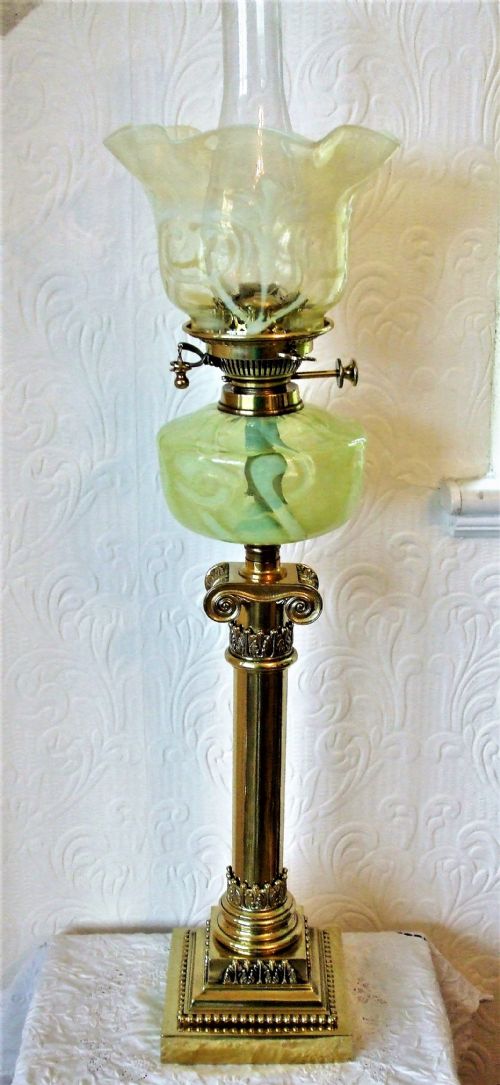
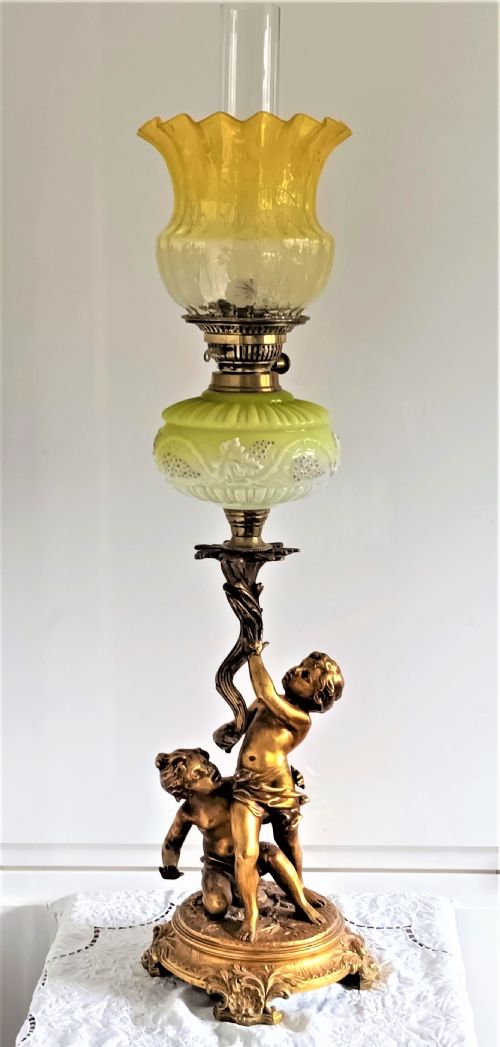
Yellow glass table lights encompass a diverse group of domestic illumination pieces, with Victorian oil lamps and Art Deco table lamps appearing most frequently across these selections. Buyers seeking yellow glass table lights will encounter forms that evolved from utilitarian nineteenth-century oil burners into electrified twentieth-century decorative centrepieces.
The materials span brass, gilt metal, and polished metal combined with distinct shades of amber glass, vaseline glass, and satin glass. Styles range from Gothic Revival and Rococo Revival to Mid-Century Modern and Mid-Century Italian aesthetics.
Many examples incorporate fabric or silk shades paired with ceramic, porcelain, or wrought iron elements. These pieces bridge the gap between functional lighting and sculptural art objects for the interior.
Materials and construction
Makers utilised mouth-blown and pressed glass techniques to achieve rich amber, vaseline, and satin colourways, often moulding the vessels into fluted columns, globular reservoirs, or figural shapes. These glass components required precise temperature control during annealing to prevent stress fractures.
Metalwork forms the structural backbone of many examples, utilising cast brass, gilt metal, and wrought iron to support heavy glass reservoirs and shades. Artisans employed silver plating, gilding, and structural mounts to secure the delicate glass elements to stable bases.
Listings feature nineteen-century Victorian and 1930s Art Deco periods predominantly, alongside materials such as vaseline glass, brass, and silk.
Assessing quality and craftsmanship
Quality reveals itself in the weight, clarity, and depth of the glass, where superior examples exhibit even colour saturation and crisp mould seams without excessive bubbles or surface distortions. The integration between the glass body and the metal mounts demonstrates the maker's precision.
Finer specimens feature intricate chasing on brass and bronze components, sophisticated burner mechanisms, and high-relief decorative motifs such as columns or cherubs. The presence of undamaged original shades and well-preserved gilding elevates the piece considerably.
Karl Palda·Degue·Hinks·Meissen
The Yellow Glass Table Lights Glossary
- Vaseline glass
- A type of glass containing uranium dioxide that produces a distinctive yellow-green fluorescence under ultraviolet light. It gained immense popularity during the Victorian era for decorative tablewares and lighting.
- Peg lamp
- A small oil lamp fitted with a tapered metal peg at the base designed to drop directly into the candle socket of a larger candelabrum or candlestick. This clever adaptation allowed dual-purpose illumination in period parlours.
- Ionic column
- A classical architectural order featuring volute scrolls on the capital, frequently emulated in the brass stems of nineteenth-century oil lamps. Such designs reflect the Victorian appetite for classical revivalism in domestic furnishings.
- Satin glass
- Glass treated with hydrofluoric acid to produce a velvety, matte finish rather than a high gloss. This technique softens the appearance of yellow and amber tones in decorative lighting.
- Ormolu
- Gilded bronze or brass applied to decorative objects and furniture mounts, providing a brilliant golden finish. It frequently appears alongside glass components in monumental Art Deco lighting.
Yellow Glass Table Lights: Frequently Asked Questions
How do I date an antique oil lamp?
Dating relies heavily on examining the burner mechanisms, maker's marks stamped on the brass thumbwheels, and the stylistic vocabulary of the base and collar. Victorian examples often feature complex patent burners alongside Gothic or classical metal mounts.
Later Art Deco and mid-century pieces discard these elaborate nineteenth-century mechanical fittings in favour of streamlined silhouettes, simplified switches, and geometric glass shades.
Are these lamps still suitable for daily use?
Most antique oil lamps and early electric table lights have been professionally converted to modern electrical standards to ensure safety in contemporary homes. They provide functional ambient lighting while retaining their historical character.
Buyers should inspect the wiring and consult a qualified electrician if any rewiring is required before plugging the lamp into a mains supply.
What is the difference between vaseline glass and amber glass?
Vaseline glass contains trace amounts of uranium, giving it a translucent yellow hue that glows vividly under UV light. It belongs primarily to the nineteenth-century Victorian repertoire.
Amber glass derives its warm brownish-yellow colour from sulphur and carbon or iron compounds. This tone appears frequently across both Victorian production and later twentieth-century Art Deco designs.
How should I clean vintage glass lighting?
Gentle maintenance preserves the delicate surface finishes of antique glass and metal components. Use a soft, dry microfibre cloth to remove dust from both the glass reservoirs and any attached fabric or silk shades.
Avoid harsh chemical cleaners or submerging metal-mounted glass parts in water, as this can damage original gilding, patination, and adhesive bonds within the structure.