
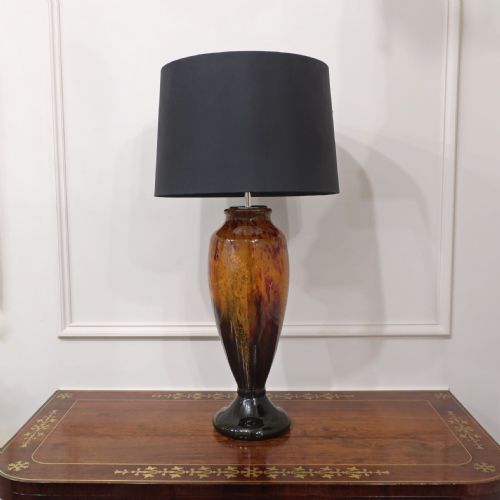
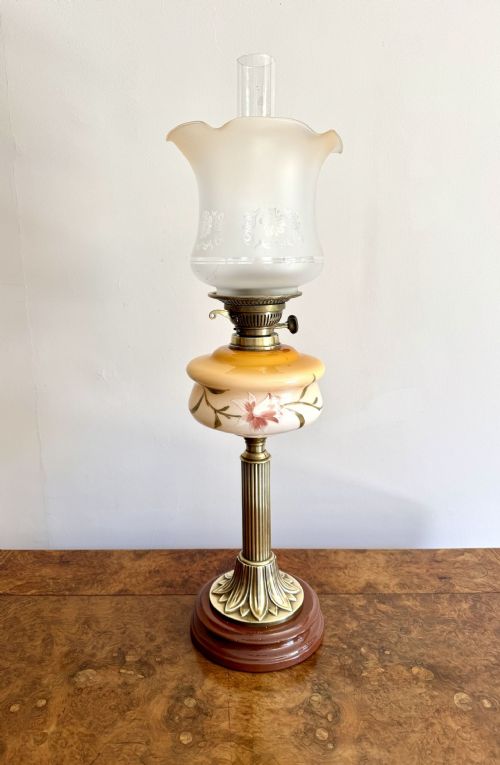


Vintage Amber Table Light
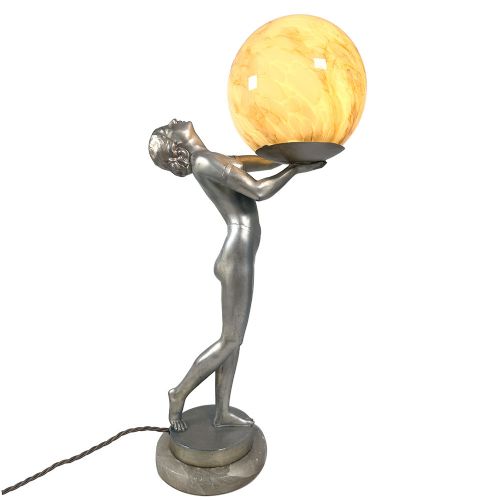
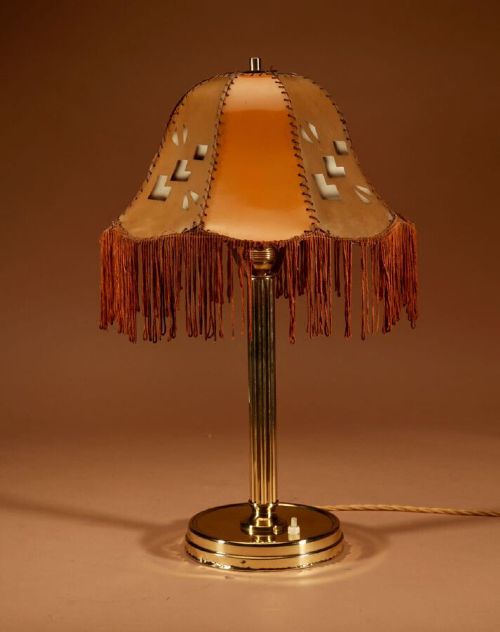
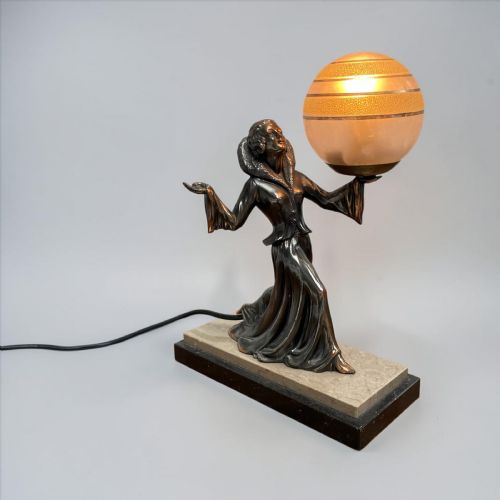
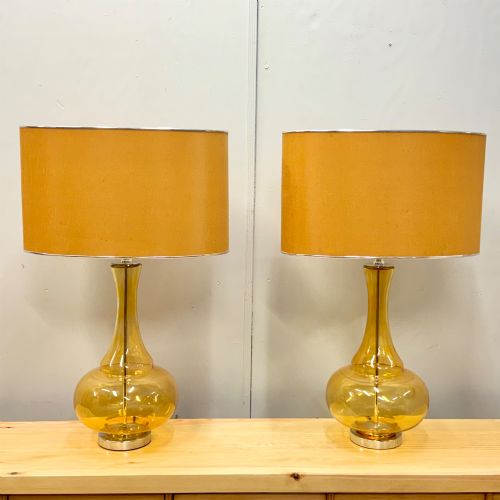
These vintage amber table light pieces bring warmth and atmosphere to a room, ranging from early oil lamps to Art Deco designs.
Vintage Amber Table Light
A vintage amber table light brings warm, diffused illumination to a room, drawing on forms produced across the early twentieth century. You encounter table lamps, converted oil lamps, and desk lamps spanning periods from Victorian times through Edwardian and Art Deco eras.
The most common versions on this page date from the 1920s and 1930s, displaying characteristic Art Deco styling alongside earlier Jugendstil and Arts and Crafts examples. These pieces serve as both functional illumination and sculptural objects for interior spaces.
Materials and construction
Makers utilised moulded amber glass and mottled glass for shades and bodies, frequently pairing these transparent and translucent components with patinated brass, wrought iron, and standard metal bases. Some designs incorporate alternative early synthetics such as celluloid and Catalin phenolic Bakelite alongside traditional marble and leather elements.
Fabric silk shades complement the glass components on several specimens, while structural frameworks rely on cast and turned metal techniques. Construction methods reflect the transition from domestic oil burning to electrified illumination during the early decades of the twentieth century.
Object forms on this page include standard table lamps, converted oil lamps, and desk lamps executed in Art Deco and Arts and Crafts styles.
Evaluating craftsmanship
Quality separates standard production items from ambitious sculptural works through the complexity of the glass moulding and the finish of the metal mountings. Superior pieces display deep colour saturation in the amber glass, sophisticated patination on the metal elements, and cohesive styling across both base and shade.
The integrity of the construction distinguishes finer examples, where sculptural figures, such as lady lamp bases or cubist forms, are rendered with clear detail rather than generic mass production. Evidence of named workshops or distinctive regional manufacture elevates the standing of a lamp within its period.
Charles Schneider·Daum·The Charles Parker Company
The Vintage Amber Table Light Glossary
- Art Deco
- A design style prevalent in the 1920s and 1930s characterised by geometric shapes, streamlined forms, and modern industrial materials. It replaced the flowing organic curves of earlier Edwardian and Art Nouveau aesthetics.
- Jugendstil
- The continental European manifestation of Art Nouveau, prominent around the turn of the twentieth century. It focuses on stylised natural forms and linear patterns.
- Catalin
- A cast phenolic formaldehyde resin developed in the 1920s and 1930s. It yields vibrant colours and translucent qualities well suited to decorative lighting bases.
- Patinated metal
- Metal surfaces showing a tarnish or surface treatment developed through age or chemical application. This finish gives depth and character to brass and iron components.
- Mottled glass
- Glass incorporating swirling colours or uneven distribution of pigment during manufacture. It produces a dappled lighting effect when illuminated from within.
Vintage Amber Table Light: Frequently Asked Questions
How do I date a vintage amber table light?
Dating relies on stylistic markers, such as the geometric lines of 1920s Art Deco or the flowing motifs of Edwardian and Jugendstil periods. Material choices like early plastics, wrought iron, or converted brass oil reservoirs also point to specific decades.
Examining the wiring methods, switch types, and construction assembly helps confirm whether a piece originates from the early twentieth century or represents a later interpretation.
Were these lamps originally electric or oil?
Many examples began as burning oil lamps featuring brass fonts and burners before undergoing conversion to electricity in later decades. Others were manufactured specifically as electric lamps from the outset during the expansion of domestic power.
Conversion status does not diminish authenticity, as contemporary domestic lighting often adapted older quality metal bases to new technologies.
How should I style these lamps in a modern interior?
These lamps function effectively as accent lighting on sideboards, desks, or bedside tables, where their coloured glass adds a warm focal point to a room. Their distinct historical silhouettes contrast well with minimalist contemporary furniture.
Pairing an amber glass lamp with neutral surroundings allows the warm tones of the glass and patinated metal to stand out.