




Vintage Gesso Fireplace Mirror
A vintage gesso fireplace mirror commands a room, anchoring the hearth with deep moulding and reflective glass.
Vintage Gesso Fireplace Mirror
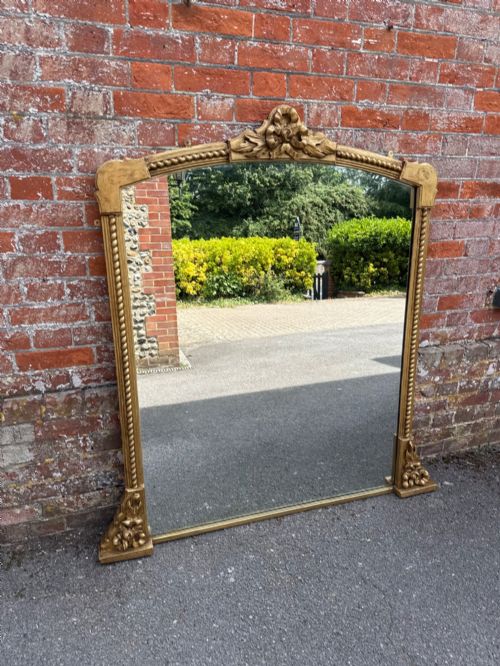
A vintage gesso fireplace mirror is typically a large overmantel mirror designed to sit directly above a mantelpiece. Most examples found here originate from the nineteenth century, particularly the Victorian era, alongside a mid-twentieth century piece.
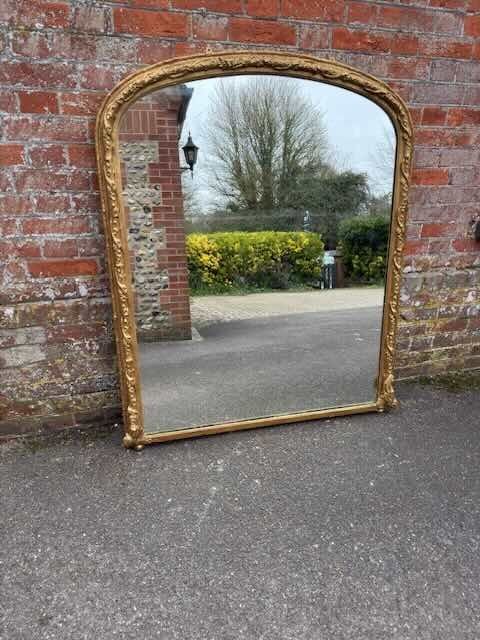
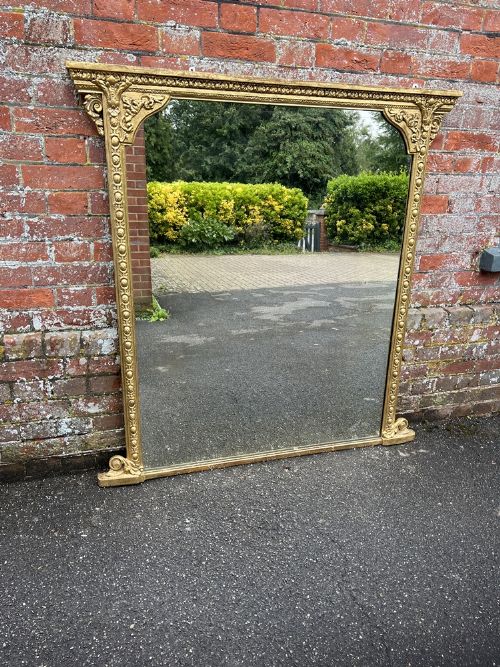
The dominant forms are grand arch top, shaped top and column framed overmantels. These heavy architectural glasses reflect light down the length of a room and visually balance the physical mass of a fireplace.
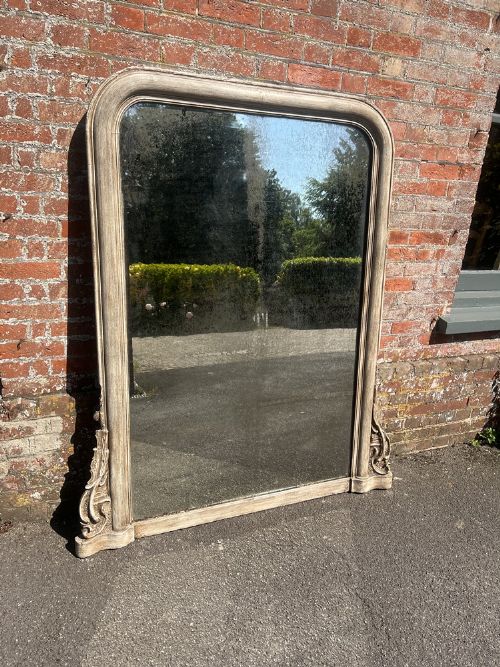
English and French stylistic influences predominate, spanning classical, Rococo revival, and neoclassical traditions. The majority utilise substantial wooden frames coated in thick gesso before receiving paint, gold leaf, or silver gilt finishes.
What varies in quality
The sophistication of the carved wood and gesso ornamentation determines the distinction between standard and superior examples. Deeply modelled arch tops and intricate column framing require advanced artisan skill compared to simpler plain designs.
The integrity of the original finish also separates pieces, whether original gilt or historical painted surfaces. The weight and proportion of the frame relative to the mirror glass dictate the overall visual harmony.
Victorian mirror frames often hide chalk maker marks and tally numbers scrawled beneath the gesso by nineteenth-century workshop hands.
The Vintage Gesso Fireplace Mirror Glossary
- Gesso
- A plaster-based material applied to wood frames to create a smooth surface for gilding or painting. It allows for intricate relief moulding that holds sharp detail.
- Overmantel mirror
- A large wall mirror specifically proportioned to hang above a fireplace mantel. These pieces traditionally span the width of the hearth below.
- Giltwood
- Wood that has been decorated with gold leaf or a gold-coloured metallic finish. This technique creates a luminous surface that catches candlelight and daylight.
- Arch top
- A frame design where the upper edge curves into a rounded arch. This shape softens the rigid vertical lines common in nineteenth-century interiors.
- Rococo revival
- A nineteenth-century design style marked by ornate, asymmetrical scrolls and naturalistic plant motifs. It draws inspiration from earlier French decorative arts.
Vintage Gesso Fireplace Mirror: Frequently Asked Questions
How do I hang a heavy overmantel mirror?
These substantial pieces require secure wall fixings anchored directly into masonry or heavy studwork to bear the combined weight of wood, gesso, and glass.
Professional mirror hangers typically utilise heavy-duty brackets or flush-mounting cleats distributed evenly across the frame structure.
Can these mirrors sit directly on a mantelpiece?
Many nineteenth-century overmantels were constructed to rest their weight on the wooden shelf of the fireplace while secured to the wall with safety brackets.
Check the base of the frame for flat bearing surfaces before allowing the mirror to rest directly on slate or marble mantels.
How do I clean antique gesso and gilt surfaces?
Dust the carved relief work gently with a soft, dry brush to prevent abrasive particles from scratching delicate gold leaf or painted layers.
Avoid liquid cleaners entirely, as moisture softens historic gesso and causes the decorative surface composition to flake away from the wood.
Are these mirrors original Victorian pieces?
The majority of listings date from the Victorian period between eighteen-sixty and eighteen-eighty, featuring traditional construction methods and materials.
A small selection includes later twentieth-century interpretations built using the same heavy gesso techniques on carved wooden foundations.