


Victorian Painted Chimney Glass
Victorian painted chimney glass brings domestic warmth and architectural scale to a room through decorative framing and reflective light.
Victorian Painted Chimney Glass
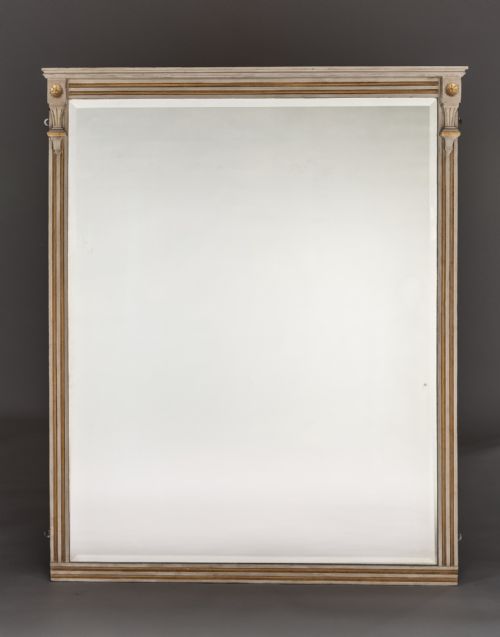
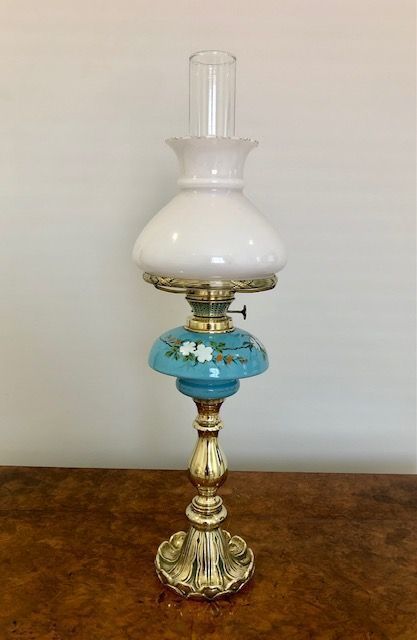
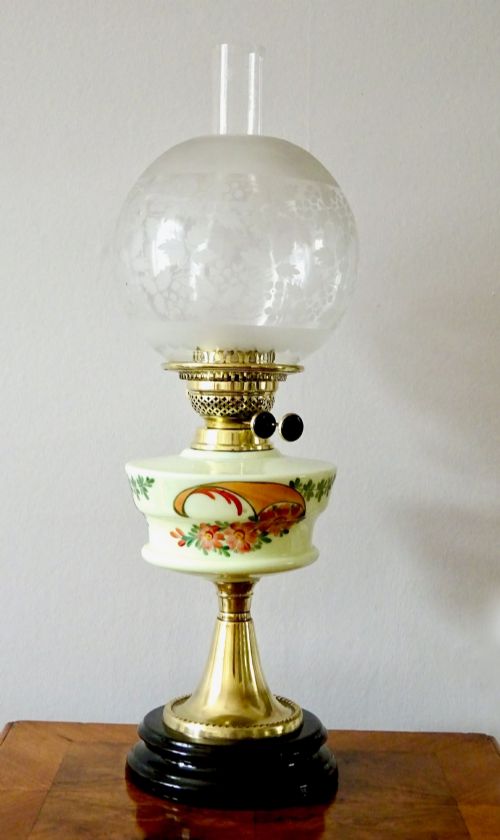
Victorian painted chimney glass primarily takes the form of large overmantel mirrors designed to sit above a fireplace, alongside functional oil lamps with glass or ceramic reservoirs. These objects emerge from the nineteenth century, with pieces spanning the 1860s through to the early decades of the twentieth century. The overmantel mirrors dominate the selection, offering substantial proportions and shaped tops that reflect interior space.
The aesthetic vocabulary encompasses Victorian styles alongside Aesthetic Movement influences, incorporating ebonised finishes and parcel-gilt details. Frames often display carved wood and gesso construction, providing heavy architectural presence suitable for period reception rooms. Oil lamps complement these large mirrors, bringing smaller scale lighting elements fashioned from brass, porcelain, and glass.
Distinctions in quality and execution
The standard of carving and the depth of the gesso relief set individual overmantel mirrors apart, determining the crispness of the frame's architectural details. Superior examples exhibit precise hand-carving beneath the painted and parcel-gilt layers rather than simpler surface decoration.
The integration of the painted finish with gold leaf reveals the maker's hand, where finer pieces balance painted polychrome details with well-applied gilding. In lighting, the quality resides in the weight of the brass components and the finish of the porcelain or cranberry glass shades.
Listings feature items spanning the 1860s to the 1910s, uniting nineteenth-century overmantel mirrors with period oil lamps.
The Victorian Painted Chimney Glass Glossary
- Overmantel mirror
- A large wall glass specifically proportioned to hang on the chimney breast above a fireplace mantelpiece. These frames often utilise arched or shaped tops to draw the eye upward.
- Gesso
- A plaster-like mixture applied to wood frames and carved or moulded into decorative reliefs before gilding or painting. It provides the smooth foundation for intricate surface ornamentation.
- Parcel-gilt
- A decorative treatment where portions of an object are selectively highlighted with gold leaf while other areas remain painted or polished. This technique adds contrast to carved wooden frames.
- Cranberry glass
- A rich pink or red transparent glass created by adding gold chloride to the molten mixture. It appears frequently in Victorian oil lamp shades.
- Aesthetic Movement
- A late nineteenth-century design style that emphasised visual beauty over narrative meaning, often featuring ebonised wood and stylised decoration.
Victorian Painted Chimney Glass: Frequently Asked Questions
Where should an overmantel mirror hang?
These large mirrors belong directly above a fireplace mantelpiece, where their generous scale reflects light across the room and balances the hearth below. Their architectural frames anchor the chimney breast as the visual centrepiece of the interior.
Alternatively, substantial wall locations in reception rooms accommodate the proportions of these large nineteenth-century pieces. Positioning them opposite windows maximises the natural light they cast into the space.
How do oil lamps function?
Victorian oil lamps burn combustible fuel drawn through a fabric wick housed in a metal burner mechanism atop a reservoir. The glass chimney directs the flame and improves combustion while protecting the surrounding space.
Shades made of glass or porcelain sit above the burner to diffuse the light downwards. Today, these lamps serve primarily as decorative lighting and interior display objects.
What defines the Aesthetic Movement style?
The Aesthetic Movement emerged during the later Victorian decades, prioritising visual refinement and craftsmanship over heavy historicism. Pieces from this current often utilise ebonised wood surfaces paired with subtle gilding and painted highlights.
This design direction favours clean lines and restrained ornament, distinguishing these mirrors from more heavily carved Victorian classical revivals.
How are nineteenth-century frames dated?
Dating relies on stylistic markers, construction techniques, and materials visible within the wood, gesso, and glass. The presence of specific design vocabularies, such as Aesthetic Movement ebonising or Grand Regency revival forms, helps place pieces within decades like the 1860s or 1880s.
Subtle shifts in mirror glass manufacturing and frame assembly methods further clarify the period of production between the mid-nineteenth and early twentieth centuries.