
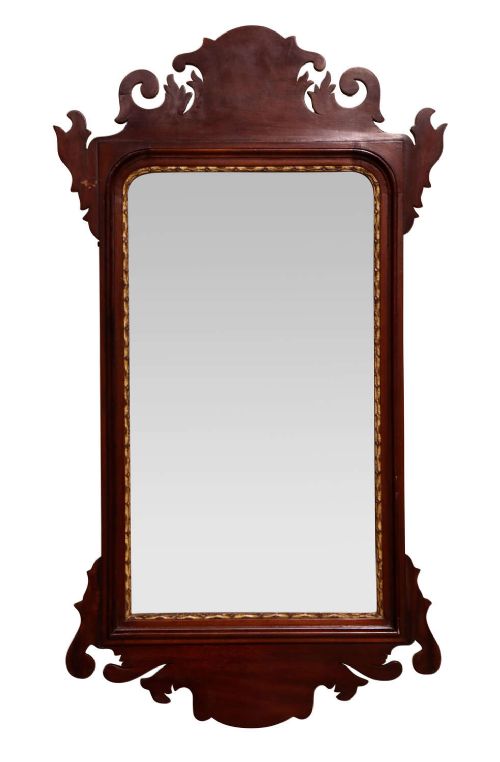
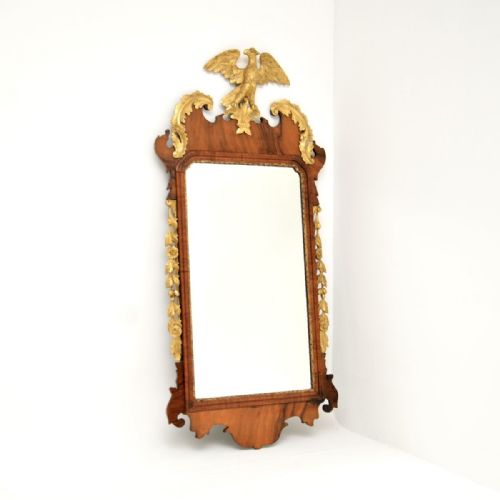
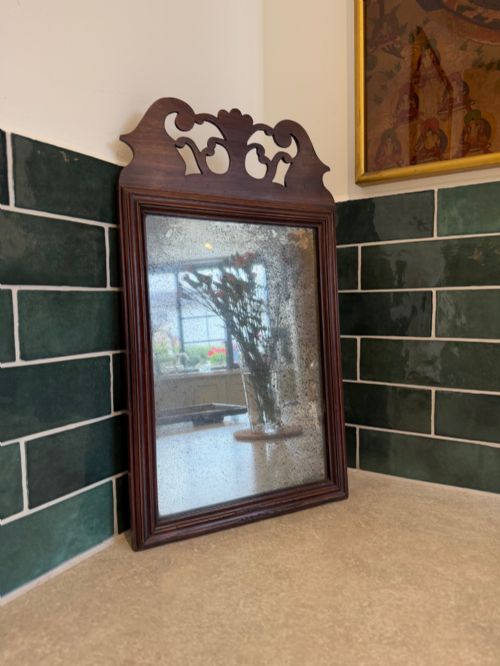
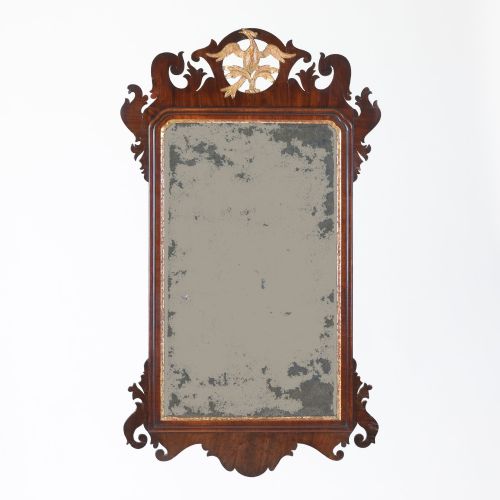







Vintage Fretwork Wall Mirror
These vintage fretwork wall mirrors bring architectural depth and carved mahogany or walnut elegance to any hallway or reception room.
Vintage Fretwork Wall Mirror
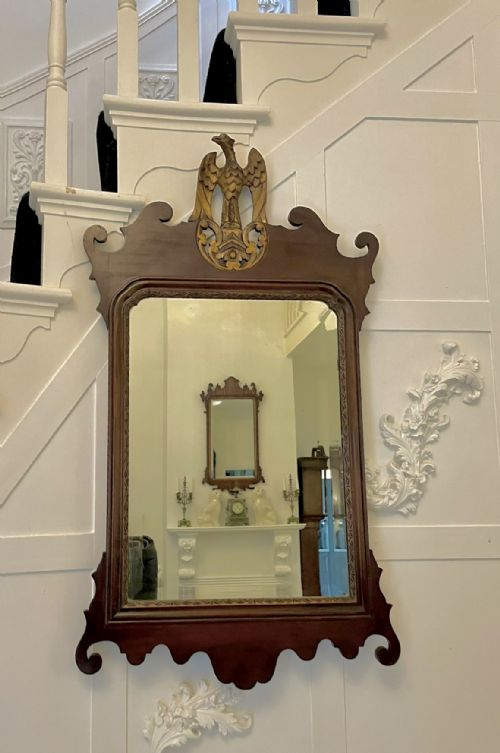
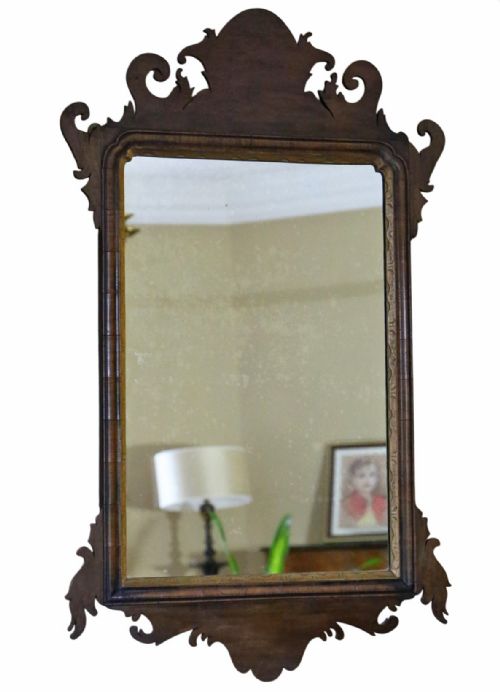
A vintage fretwork wall mirror displays intricate pierced wooden frames, often drawing on 18th-century Chippendale and Georgian traditions. These pieces range from authentic 18th-century examples to later revivals spanning the Victorian, Edwardian, and 1920s periods.
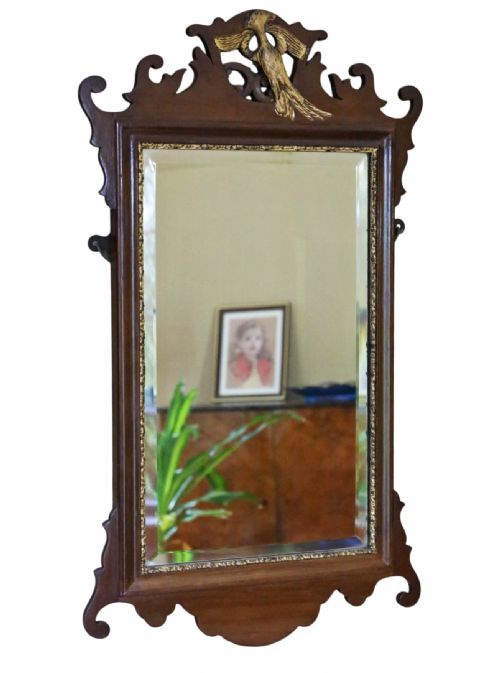
The most common versions met on this page are mahogany and walnut wall mirrors styled in the Georgian revival taste. Such mirrors frequently feature shaped crests, scrollwork ears, and sometimes gilded motifs like the iconic Ho-ho bird.
Makers across different eras also utilised sycamore, yew wood, oak, and parcel-gilt highlights to enrich the silhouette. Whether small or large, these wall-hanging mirrors combine utilitarian glass with decorative fret-cut borders.
Materials and construction
Craftsmen shaped these frames using dense cabinet timbers such as mahogany, walnut, and sometimes sycamore or yew. Pierced fretwork patterns were meticulously hand-sawn or fret-cut from thin timber boards to achieve delicate, symmetrical designs.
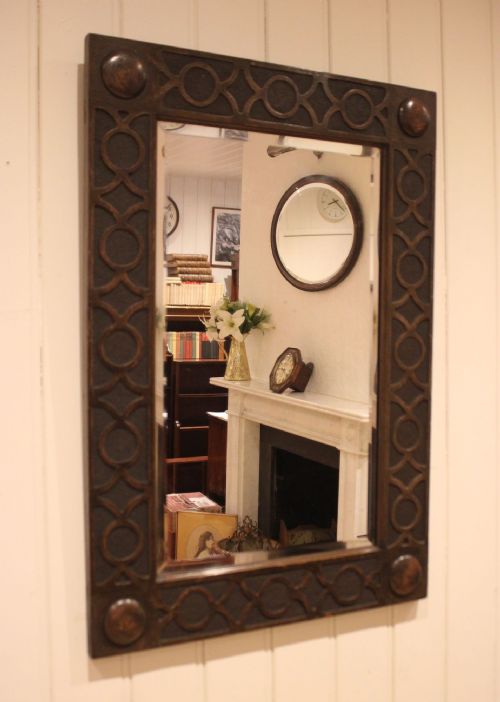
Surfaces often combined polished wood veneers with applied gesso, parcel gilding, or gilt slips framing the mirror glass. Brass elements, such as inlaid wires or hanging brackets, appear alongside bevel-edged glass in various examples.
Listings feature walnut and mahogany predominantly, alongside rarer examples in sycamore, oak, and yew wood.
Judging quality and craftsmanship
Quality rests in the crispness of the pierced fretwork and the depth of the carved details on the crest and ears. Superior examples exhibit clean, sharp angles in the fret-cut edges rather than soft or rounded contours.
The choice of timber grain also dictates distinction, particularly in figured walnut or rich mahogany veneers. Finer mirrors integrate harmonious proportions, intact gilt slips, and well-preserved original mirror glass.
The Vintage Fretwork Wall Mirror Glossary
- Fretwork
- Ornamental design created by piercing wood with a fretsaw to form intricate geometric or scrolling patterns. This technique defines the silhouette of the frame.
- Parcel-gilt
- Partially gilded woodwork where gold leaf highlights specific carved areas, such as the crest or inner moulding, against a dark wood background.
- Gesso
- A plaster-like mixture applied to wood surfaces to form a smooth base for gilding. It allows intricate relief ornaments to be moulded onto the frame.
- Ho-ho bird
- A stylized Chinese phoenix commonly depicted perched at the peak of 18th-century and revival mirrors. This ornamental motif originates from contemporaneous Chinoiserie tastes.
- Gilt slip
- A narrow inner frame finished in gold leaf that sits between the main wooden border and the mirror glass. It provides a reflective boundary that catches the light.
Vintage Fretwork Wall Mirror: Frequently Asked Questions
Where should I hang a fretwork mirror?
These mirrors suit spaces where light and reflection enhance the room, such as above a fireplace mantel, in a reception hall, or in a morning room.
Their decorative scrollwork and carved crests also complement the scale of a bedroom or study wall when hung securely.
How do I date a fretwork mirror?
Dating relies on examining the timber species, construction joints, backboards, and the character of the mirror glass itself. Eighteenth-century examples display hand-cut joinery and older plate glass, whilst revival pieces from the Victorian era and the 1920s show machine-sawn precision.
Styles also repeat, so checking the secondary woods and patination helps distinguish an original Georgian piece from a later Georgian revival copy.
Are these mirrors fragile?
The pierced fretwork ears and delicate crests require careful handling during placement and cleaning. Supporting the main frame structure prevents stress on the intricate wooden cut-outs.
Standard wall fixings appropriate for the weight of hardwood and glass ensure safe hanging in domestic interiors.
What is a parcel-gilt mirror?
A parcel-gilt mirror combines exposed polished wood, such as walnut or mahogany, with selective areas highlighted in gold leaf. This technique accentuates carved motifs like scrolling leaves and architectural mouldings.
The contrast between the dark grain and the bright gilt creates visual depth across the frame.