
Vintage French Study Desk
A vintage french study desk brings nineteenth-century cabinet work and leather-lined writing surfaces straight into a modern room.
Vintage French Study Desk
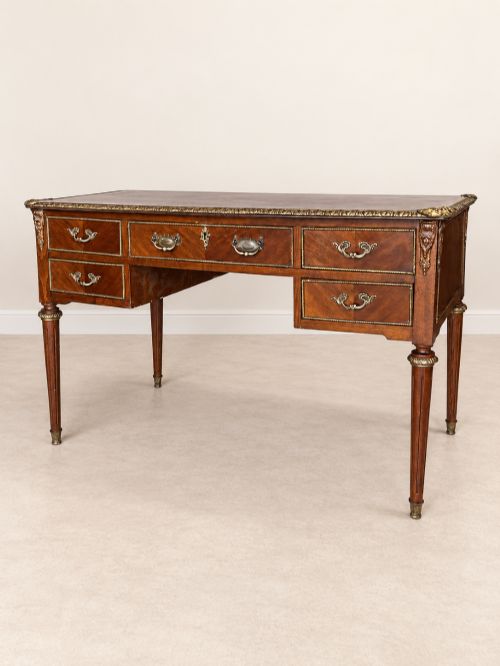
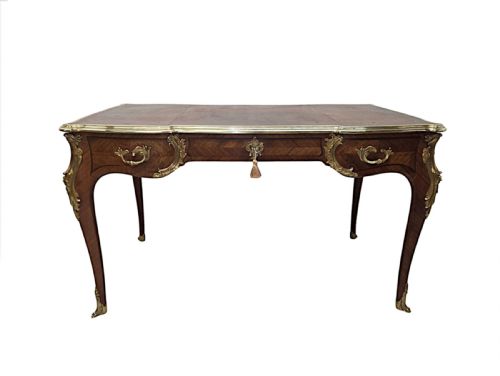
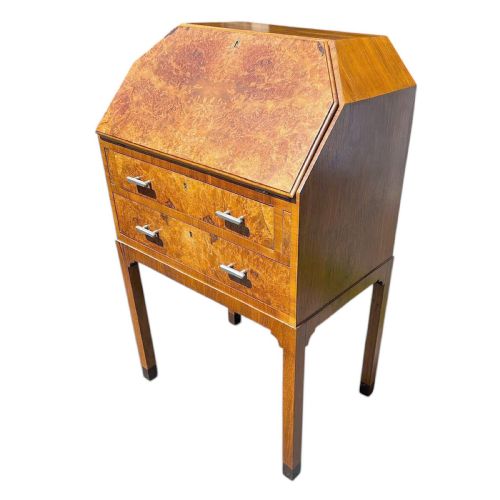
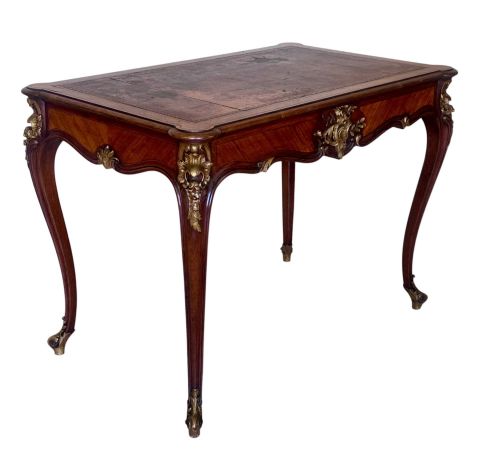
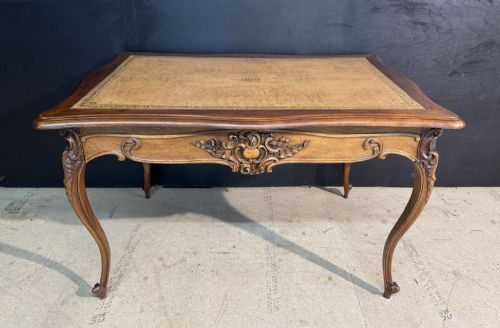
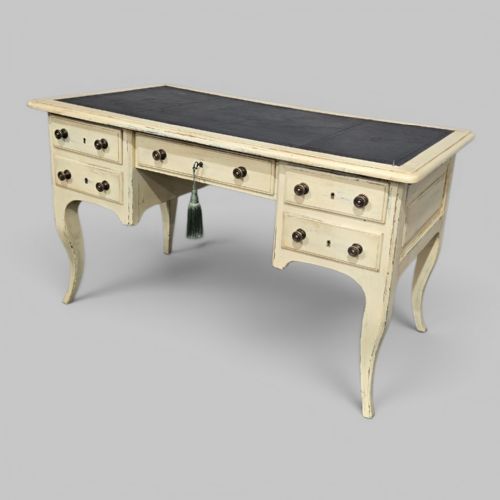
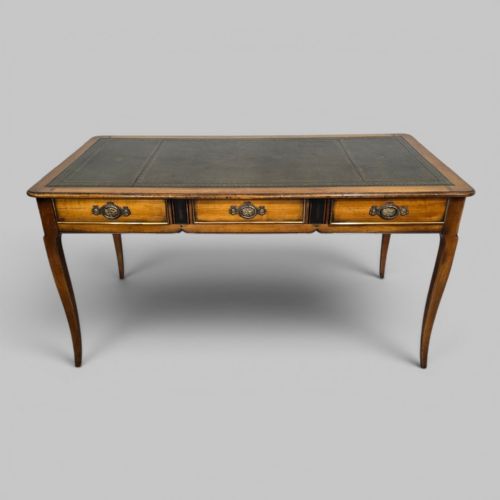
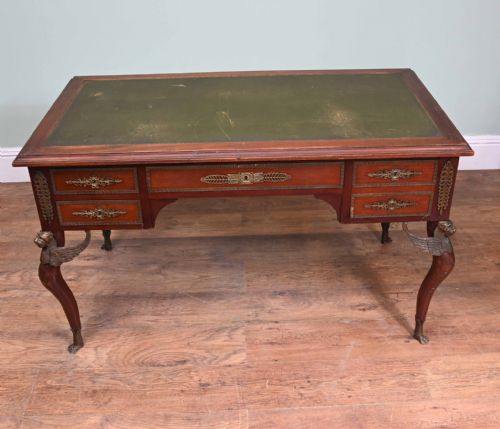
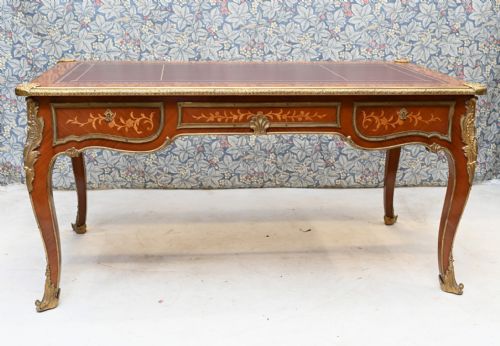
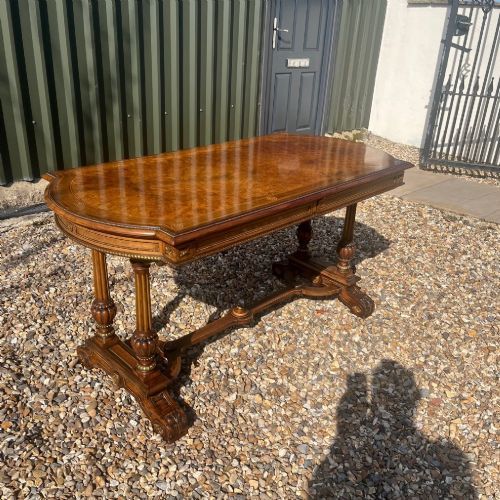
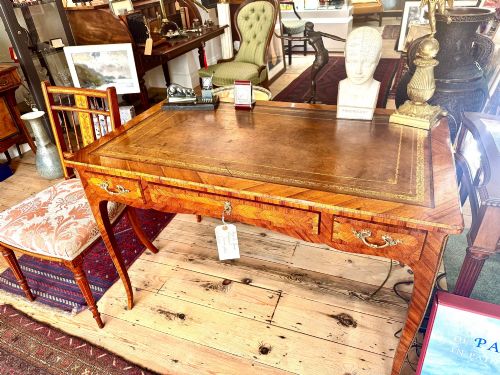
A vintage french study desk encompasses freestanding writing tables, bureau plat designs, and cylinder desks originating from the nineteenth and early twentieth centuries. These pieces typically offer a generous timber work surface, often inset with leather, supported by cabriole or tapered legs.
The selections on this page draw heavily from revival aesthetics including Louis XV, Louis XVI, and Empire styles alongside streamlined Art Deco examples. Buyers frequently encounter walnut, mahogany, and exotic veneers paired with patinated bronze or brass mounts.
Materials and Construction
Cabinet makers utilised dense hardwoods such as mahogany, walnut, kingwood, and rosewood as primary structural timbers, frequently applying intricate parquetry or marquetry patterns across the surfaces. These woods provide both structural rigidity and a rich canvas for natural grain appreciation.
The listings incorporate diverse materials including brass, leather, mahogany, ormolu, kingwood, rosewood, bronze, and walnut.
Distinctions in Execution
Quality rests primarily in the crispness of the bronze or ormolu mounts and the precision of the underlying timber joinery. Hand-chased metalwork and finely matched veneer panels demonstrate superior workshop execution.
The integrity of the structural carcass and the preservation of original leather writing inserts differentiate standard utility tables from exceptional cabinet pieces produced by recognised French makers.
CH Jeanselme and Co·Dora Heber·P J Mêne·Eileen Grey·Maurice Dufrêne·Étienne Kohlmann
The Vintage French Study Desk Glossary
- Bureau plat
- A freestanding writing table fitted with drawers across the frieze, designed to stand away from walls. These tables often feature leather tops and decorative metal mounts.
- Ormolu
- Gilded bronze applied to furniture as decorative mounts and feet. The technique involves mercury gilding on historic pieces to achieve a lasting metallic lustre.
- Parquetry
- Geometric wood inlay work forming repeating patterns across table tops and drawer fronts. Cabinet makers select contrasting timbers to create visual depth.
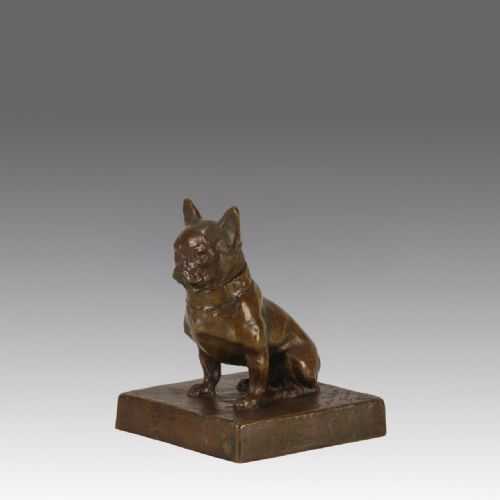
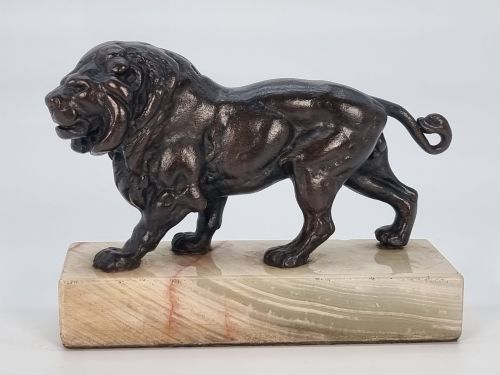
- Animalier
- A nineteenth-century artistic genre depicting realistic animals in bronze sculpture. These studies frequently appear alongside desks on this page.
- Cylinder desk
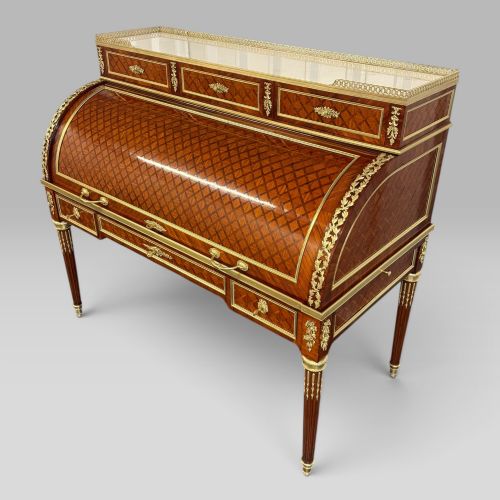
- A writing cabinet featuring a quarter-cylinder rolling shutter that conceals pigeonholes and writing drawers. It offers privacy and security for correspondence.
Vintage French Study Desk: Frequently Asked Questions
What is a bureau plat?
A bureau plat is a traditional freestanding writing table with a finished back and a row of drawers beneath the writing surface. It sits centrally in a room rather than against a wall.
These tables were utilised for correspondence and administrative duties in formal French interiors.
How do I identify Louis XVI style?
Louis XVI furniture is characterised by straight fluted legs, neoclassical symmetry, and restrained geometric mounts in brass or ormolu. This aesthetic moves away from the sweeping curves of earlier rococo designs.
Pieces from this revival emphasise architectural proportion and crisp rectangular forms.
Where should I place a partner's desk?
A partner's desk requires a central position in a study or library because it provides workspace drawers on both opposing sides. It is designed to accommodate two people working opposite each other.
Ensure adequate clearance around all sides to appreciate the freestanding timber construction.
Are these desks suitable for daily laptop use?
Many vintage writing tables offer sufficient surface area and knee clearance for contemporary laptop placement. Leather inlays provide a durable writing substrate for modern hardware.
Consider the interior drawer height if storing modern accessories and keyboards.