

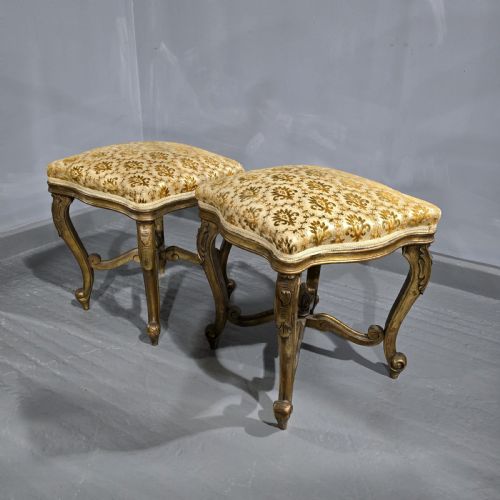


Vintage French Stool Pair
These vintage french stool pair selections bring classic seating with genuine period character into a room.
Vintage French Stool Pair
A vintage french stool pair brings together matched seating examples influenced by traditional continental design. Buyers seeking a vintage french stool pair will discover various forms including footstools and larger seating examples originating from different eras.
The evidence shows periods ranging from the early nineteenth century through to the nineteen thirties, with revival aesthetics appearing frequently. These pieces often arrive in matched pairs, demonstrating classical proportions and decorative woodwork.
Makers and craftsmen drew upon historical design idioms such as Louis XV and Regency styles to shape these items. Such seating works effectively as decorative accents or functional foot rests within traditional interiors.
How they were made
Construction relies upon timber frameworks utilising walnut, mahogany, and painted wood alongside giltwood finishes. Craftsmen shaped these wooden elements using traditional joinery and carving techniques appropriate to each specific period.
Upholstery forms an essential component of these pieces, incorporating velvet and various woven fabrics fixed across the seat structures. Metal elements such as brass occasionally appear in the hardware or decorative mounts.
The listings on this site encompass periods from eighteen hundred up to nineteen thirty, featuring materials such as velvet, mahogany, and giltwood.
What varies in quality
The degree of craftsmanship in the wood carving distinguishes standard examples from finer works, particularly where elaborate foliage or scrollwork decorates the rails. Giltwood surfaces show quality through the depth and application method of the gold leaf over the prepared gesso.
Fabric choice and upholstery execution also dictate the standard of the piece, with heavier textiles and traditional stuffing methods representing superior production values. The integrity of the underlying timber frame determines longevity and structural stability.
The Vintage French Stool Pair Glossary
- Giltwood
- Timber treated with gold leaf or metallic powder to create a lustrous golden finish. This decorative surface appears frequently on revival seating.
- Cabriole leg
- A furniture leg featuring a double curve, typically bowing outward at the top and inward near the foot. This shape derives from classical animal leg forms.
- Louis XV Revival
- A nineteenth century design movement mimicking the flowing, asymmetrical curves of the mid eighteenth century French court. Pieces in this style utilise ornate carving and cabriole supports.
- Regency
- An English stylistic period spanning the early nineteenth century that drew inspiration from classical antiquity. Furniture from this era often incorporates clean lines alongside select mahogany timbers.
Vintage French Stool Pair: Frequently Asked Questions
How do I date an old stool?
Dating relies on examining the timber species, joinery methods, and underlying construction materials used within the frame. Stylistic clues such as cabriole leg shapes or specific revival motifs also help establish the approximate decade.
Comparing the hardware and upholstery webbing provides additional context regarding when the piece was assembled or later restored by craftsmen.
Where should I place these stools?
These pieces function well as footstools before armchairs or sofas, or as standalone seating in living areas and bedrooms. Their decorative frames allow them to sit effectively beneath windows or against panelled walls.
Positioning them away from direct sunlight protects both the wooden finishes and the textile upholstery from premature fading over time.
Are these seats comfortable to use?
Comfort depends upon the firmness of the internal padding and the height of the specific frame. Many examples serve primarily as decorative accents or supportive footrests rather than lounge seating.
Original padding materials vary considerably, meaning some older pieces benefit from professional reupholstery to achieve optimal daily comfort.
What wood types are common?
Walnut and mahogany appear frequently among these furnishings, valued for their durability and attractive grain patterns. Painted wood and giltwood finishes also occur regularly, offering alternative visual textures.
Craftsmen selected these specific materials to suit the prevailing stylistic preferences of periods ranging from the Regency era to the nineteen thirties.