




Low Padded Vanity Stool
A low padded vanity stool brings comfort and period character to a dressing area, drawing on centuries of craftsmanship in walnut, mahogany, and rosewood.
Low Padded Vanity Stool
When searching for a low padded vanity stool, one encounters small seating forms primarily designed for dressing tables and bedrooms across several historic periods. The pieces appearing here span the Victorian era, the Edwardian period, and the early decades of the twentieth century, alongside revivals of earlier aesthetics.
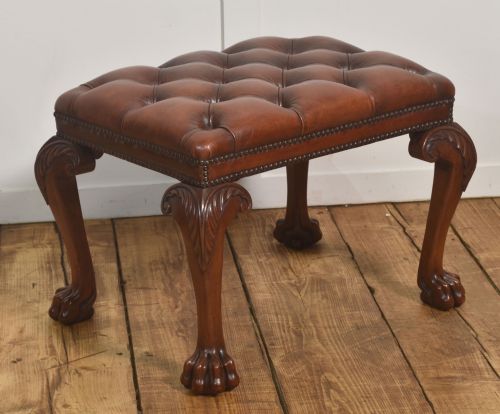
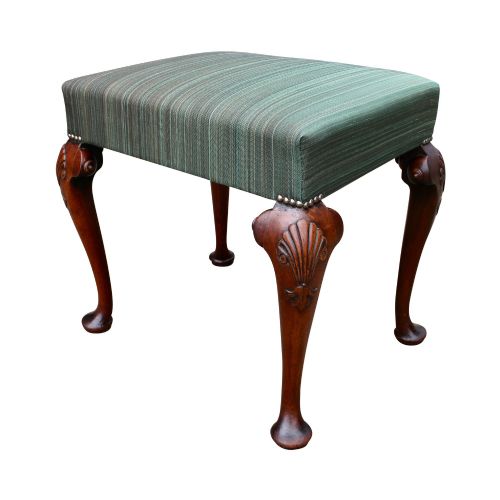
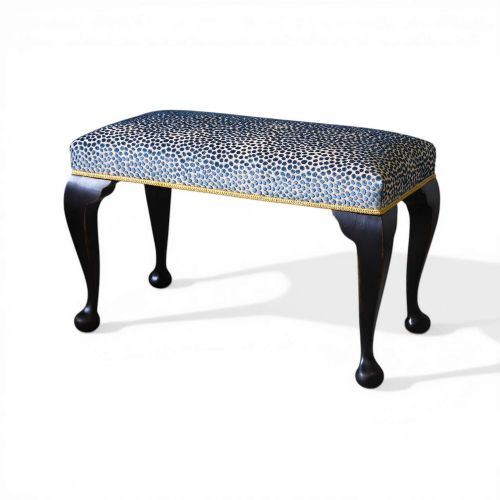
The most common examples on this page adopt the Queen Anne style with characteristic cabriole legs, or rely on mahogany and walnut frames derived from Chippendale designs. These seating forms often function as dressing stools or low footstools, balancing compact proportions with cushioned tops.
How they were made
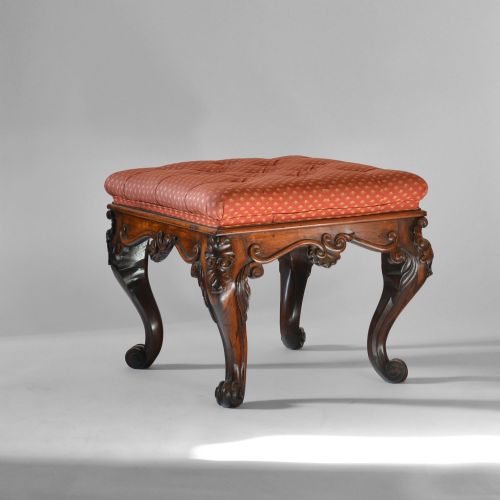
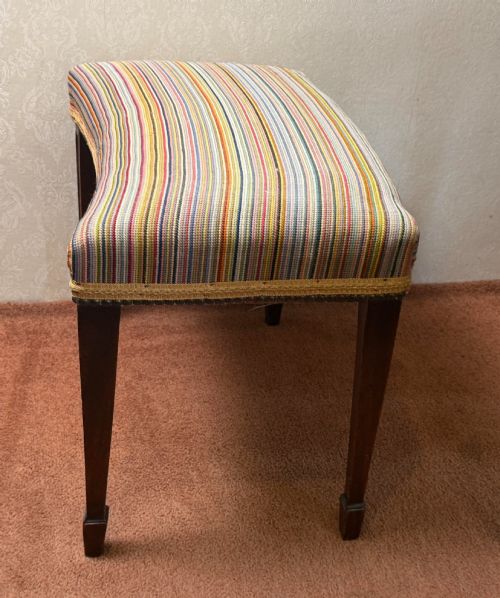
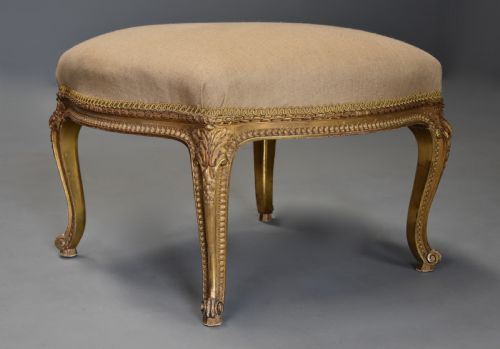
Makers utilised dense timbers such as mahogany, walnut, rosewood, and teak to build sturdy frames, occasionally turning to oak, ebonised wood, or carved giltwood. Joinery relied on traditional methods to support low-slung structures fitted with square tapering legs, turned supports, or scroll-carved cabriole legs.
Upholstery completed each piece, employing textiles like velvet, leather, chenille, needlepoint, and woven rattan stretched over padding to ensure a comfortable seat. Brass elements and maker stamps occasionally appeared on high-end French and English workshop productions.
The listings on this site span the eighteenth to the twentieth centuries, featuring walnut, mahogany, rosewood, and teak frames.
What varies in quality
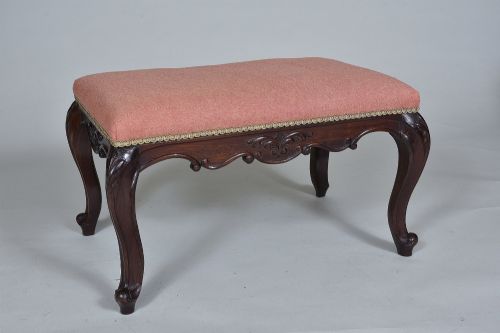
The distinction between ordinary and exceptional examples rests upon the crispness of the timber carving and the architectural proportion of the frame. Pieces featuring fluid cabriole legs with well-defined knees and scrolls demonstrate superior artisan skill compared to simpler, rigid turns.
Originality of materials also dictates standing, with period textiles and untouched timber surfaces holding greater integrity than later replacements. The weight and selection of dense hardwoods like rosewood or figured walnut further separate standard workshop output from finer parlour seating.
Loidrault Freres Paris
The Low Padded Vanity Stool Glossary
- Cabriole leg
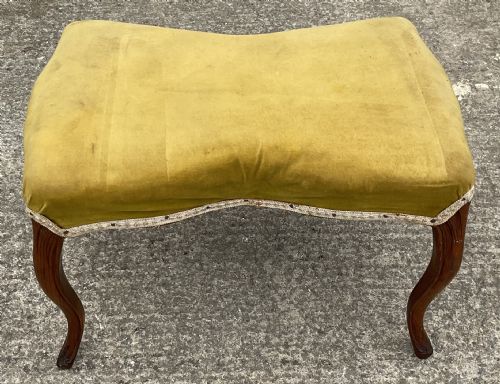
- A furniture leg that curves outward at the knee and tapers inward to an ankle, mimicking an animal's limb. This form defines many Queen Anne and Victorian style pieces on this page.
- Cross stretcher
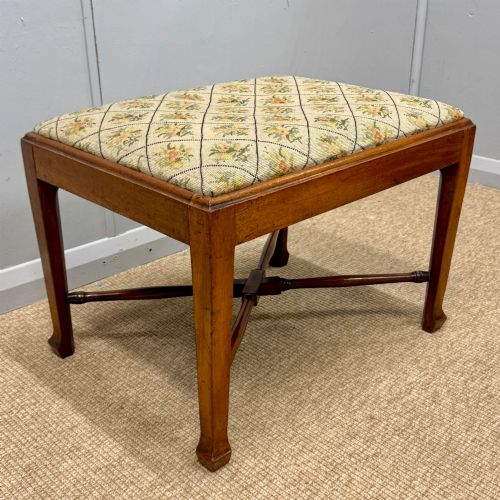
- An intersecting wooden brace connecting the legs beneath a stool for added stability. These supports often feature central finials or shaped junctions characteristic of period seating.
- Chenille
- A fuzzy, tufted fabric utilised for upholstery, popular in nineteenth-century interiors. It provides a tactile, textured surface to the padded seat.
- Needlepoint
- A type of canvaswork embroidery historically used to cover chair and stool seats. Surviving examples display intricate stitched patterns created with wool or silk threads.
- Ebonised
- Wood treated with a dark finish to imitate expensive ebony. This technique appears on specific Edwardian frames listed in the inventory.
Low Padded Vanity Stool: Frequently Asked Questions
What is a low padded vanity stool used for?
These compact seats were traditionally positioned in bedrooms and dressing rooms to provide comfortable seating before a vanity or dressing table.
Today, they serve equally well as low footstools, occasional seats in narrow hallways, or decorative accents beneath console tables.
How do I identify a Queen Anne style stool?
Queen Anne style pieces typically feature smooth cabriole legs that curve outward from the seat rail and taper down to pad or scroll feet. The wooden frames often utilise solid walnut with minimal carved ornamentation, focusing instead on graceful, flowing lines.
Later revivals from the Edwardian era and the early twentieth century frequently replicated these exact eighteenth-century proportions.
Are these stools comfortable for daily use?
Most pieces combine a sturdy hardwood frame with traditional padding and upholstery fabrics such as velvet, leather, or woven textile. The low height is specifically proportioned for seated grooming tasks.
While historic cushioning provides firm support, many examples retain enough give for practical modern lounging.
How do I date a Victorian vanity stool?
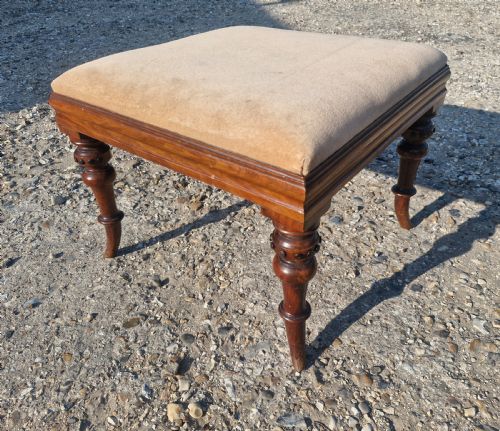
Victorian examples generally rely on walnut or mahogany timbers paired with heavy, carved cabriole legs or ornate turned supports. The presence of dense rosewood or specific upholstery types like needlepoint and chenille often points toward mid-nineteenth-century production.
Comparing the stretcher configuration and leg joinery against documented nineteenth-century cabinetmaking styles helps narrow down the exact decade.