





Vintage French Entryway Table
A vintage french entryway table brings immediate architectural character to a hallway through classic marble tops and carved timber frames.
Vintage French Entryway Table
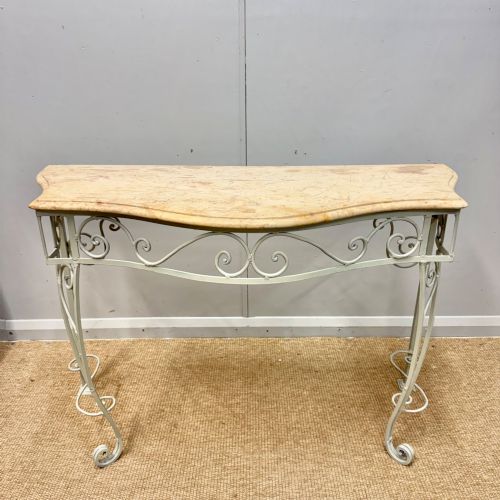
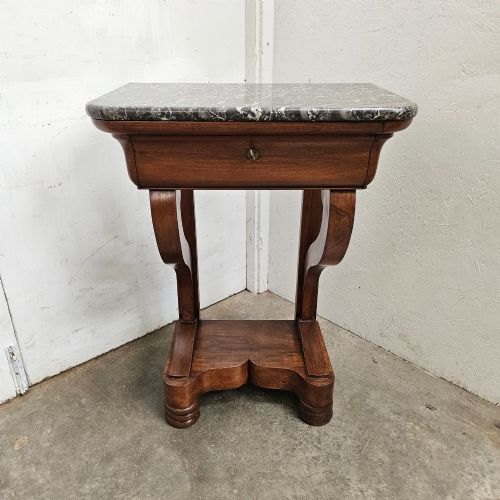
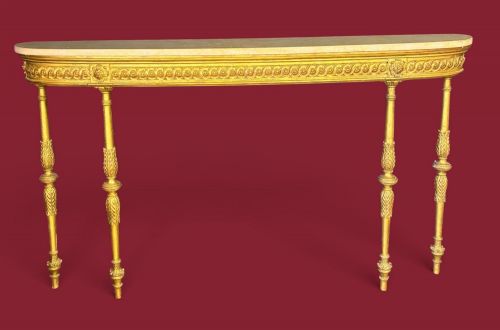
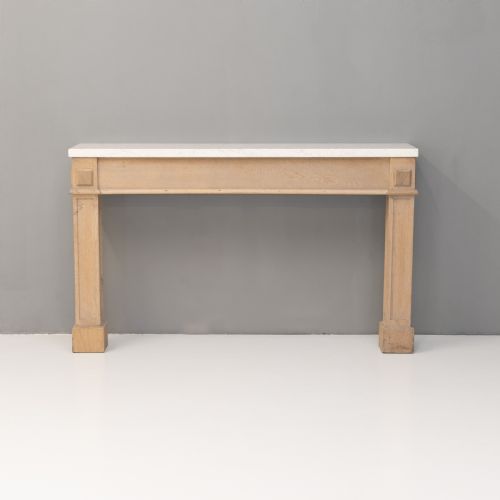
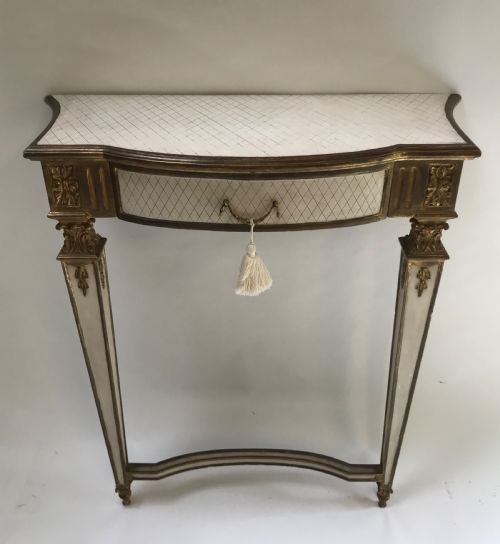
A vintage french entryway table takes the form of a console table, side table, or trestle table designed to stand flat against a wall in a narrow space. These pieces appear across periods from the nineteenth century into the early twentieth century, reflecting styles such as French country, neoclassical, and Louis Philippe.
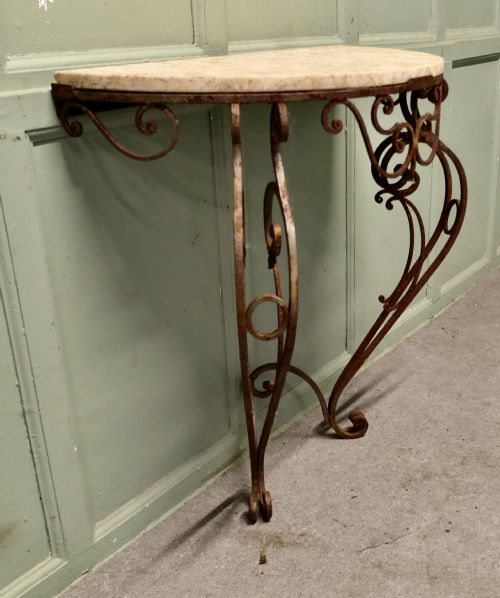
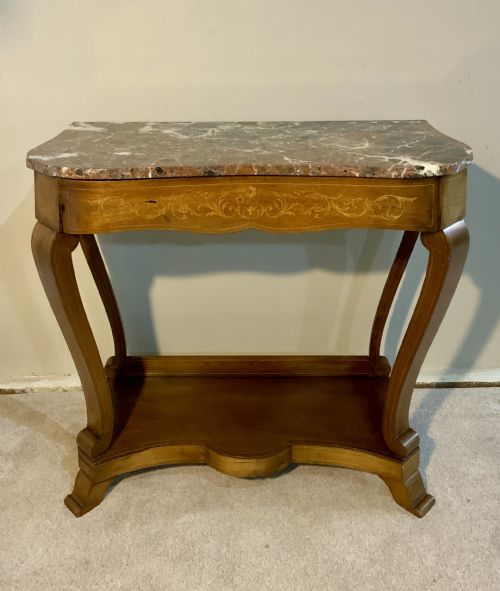
The versions most frequently met on this page combine timber bases with inset marble tops, alongside painted wood and wrought iron examples. They serve primarily as functional surfaces for hallways, drawing rooms, and landings where depth must remain minimal.
Materials and construction
Makers utilised heavy hardwoods such as walnut, mahogany, and oak for structural frames, alongside softer painted woods and scrubbed sycamore. Giltwood appears on ornate neoclassical pieces, while structural integrity relies on hand carving and joinery.
Fossil marble and plain white or grey stone form heavy inset surfaces that sit upon wooden or wrought iron bases. Wrought iron and brass elements provide structural support for industrial or rustic variants.
Listings span the nineteenth and early twentieth centuries, featuring walnut, oak, mahogany, wrought iron, and marble.
Judging the work
The distinction between ordinary and superior pieces rests on the crispness of the hand carving and the quality of the timber selection. Walnut and mahogany frames with deep, deliberate chisel work outlast softer painted pine constructions.
The integration of the marble top dictates the sophistication of the build, particularly where stones are bevelled or feature fossil inclusions. Finer examples display balanced proportions in serpentine outlines and fire-gilt or polished brass details.
The Vintage French Entryway Table Glossary
- Console table
- A table designed to be fixed against a wall, frequently supported by two front legs and relying on wall brackets or rear console legs for stability.
- Giltwood
- Timber coated with a thin layer of gold leaf or gesso, common in nineteenth century interpretations of neoclassical furniture.
- Serpentine outline
- A curved shape resembling a snake's movement, featuring alternating convex and concave lines along the front edge of the table.
- Trestle table
- A table consisting of two or more horizontal beams supported by vertical uprights or feet, utilised in rustic and country interiors.
- Fossil marble
- Limestone containing distinct fossilized remains, polished smooth to form decorative table surfaces.
Vintage French Entryway Table: Frequently Asked Questions
Where should I put a vintage french entryway table?
These narrow tables suit entrance halls, narrow landings, and corridors where floor space is limited. Their shallow depth allows them to sit flush against a wall while holding lamps, mirrors, or everyday objects.
They also function effectively in living rooms as serving surfaces or beneath wall mirrors to anchor a decorative scheme.
How do I clean a marble top?
Marble requires gentle cleaning with warm water and a soft cloth, avoiding acidic substances like vinegar or lemon juice that etch the polished surface. Regular dusting and immediate blotting of spills keep the stone in good condition.
Heavily polished antique marble benefits from specialised stone soap rather than abrasive household cleaners.
Are these tables heavy?
Most pieces possess substantial weight due to the combination of dense hardwoods and thick stone tops. Marble slabs lift out of many frames to make transport more manageable.
Securing taller or top-heavy console tables to the wall prevents tipping in busy hallways.
How do I date a nineteenth century table?
Dating relies on examining the timber grain, hand tool marks, and stylistic clues such as neoclassical motifs or Victorian proportions. Wrought iron elements and scrubbed finishes often point towards specific regional workshops.
Comparing the joinery beneath the tabletop reveals whether the piece relies on machine-cut or handmade components.