




Black Marble Console
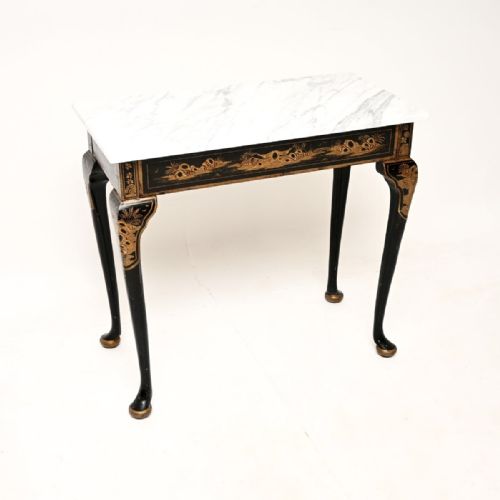
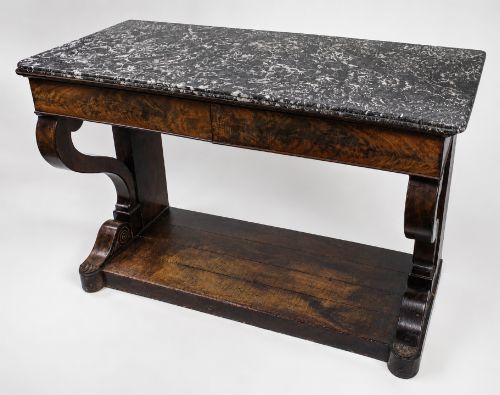
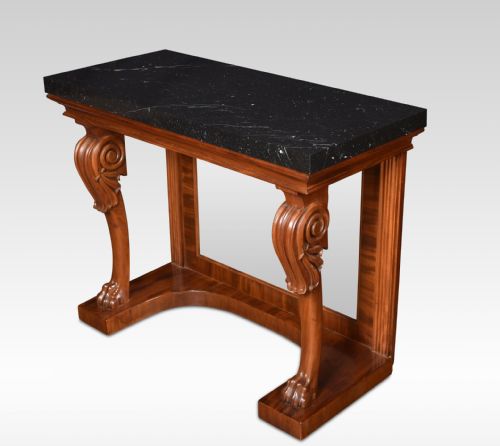
These black marble console pieces combine heavy stone tops with timber frames and ironwork, offering a sturdy surface for display.
Black Marble Console
A black marble console serves as a substantial architectural table designed to sit flat against a wall in a hallway or principal room. You will frequently encounter examples from the nineteenth century, alongside pieces reflecting Regency, French Empire, and Victorian styles.
The selection ranges from console tables and side tables to chiffoniers, buffets, washstands, and wall brackets. Timber frames in mahogany, satinwood, and painted pine often support the heavy marble slabs.
How they were made
Carpenters and cabinetmakers utilised dense timbers such as mahogany, satinwood, and elm to construct the structural frames and pedestals. Stone masons shaped and polished the heavy marble surfaces to fit precisely upon the wooden or iron bases.
Gilt, brass, and painted finishes were frequently applied to the woodwork for decorative effect, while some industrial pieces relied on robust wrought iron.
Among the iron and timber tables sit carved Black Forest side tables shaped entirely as seated hounds.
What varies in quality
The choice of primary timber and the depth of its figuring dictate the baseline quality of the frame. Flame mahogany and satinwood demand greater skill in selection and matching than plain painted pine.
The weight, polish, and thickness of the marble top, alongside the crispness of any applied brass or gilt ornamentation, separate standard workshop pieces from finer examples.
Gillows·Krieger
The Black Marble Console Glossary
- Console table
- A table designed to stand against a wall, frequently secured with brackets or resting on front legs. These pieces usually feature decorative stone tops.
- Flame mahogany
- A veneer cut from the fork of the mahogany tree, showing a distinctive flickering flame pattern. Cabinetmakers prized this figure for grand nineteenth century reception rooms.
- Chiffonier
- A low cabinet with shelves or drawers, often topped with marble. They served as side pieces for serving food or storing dining accessories.
- Regency
- A British design period spanning the early nineteenth century. Furniture from this era often incorporates classical architectural motifs and dark timbers.
Black Marble Console: Frequently Asked Questions
Where should I place a black marble console?
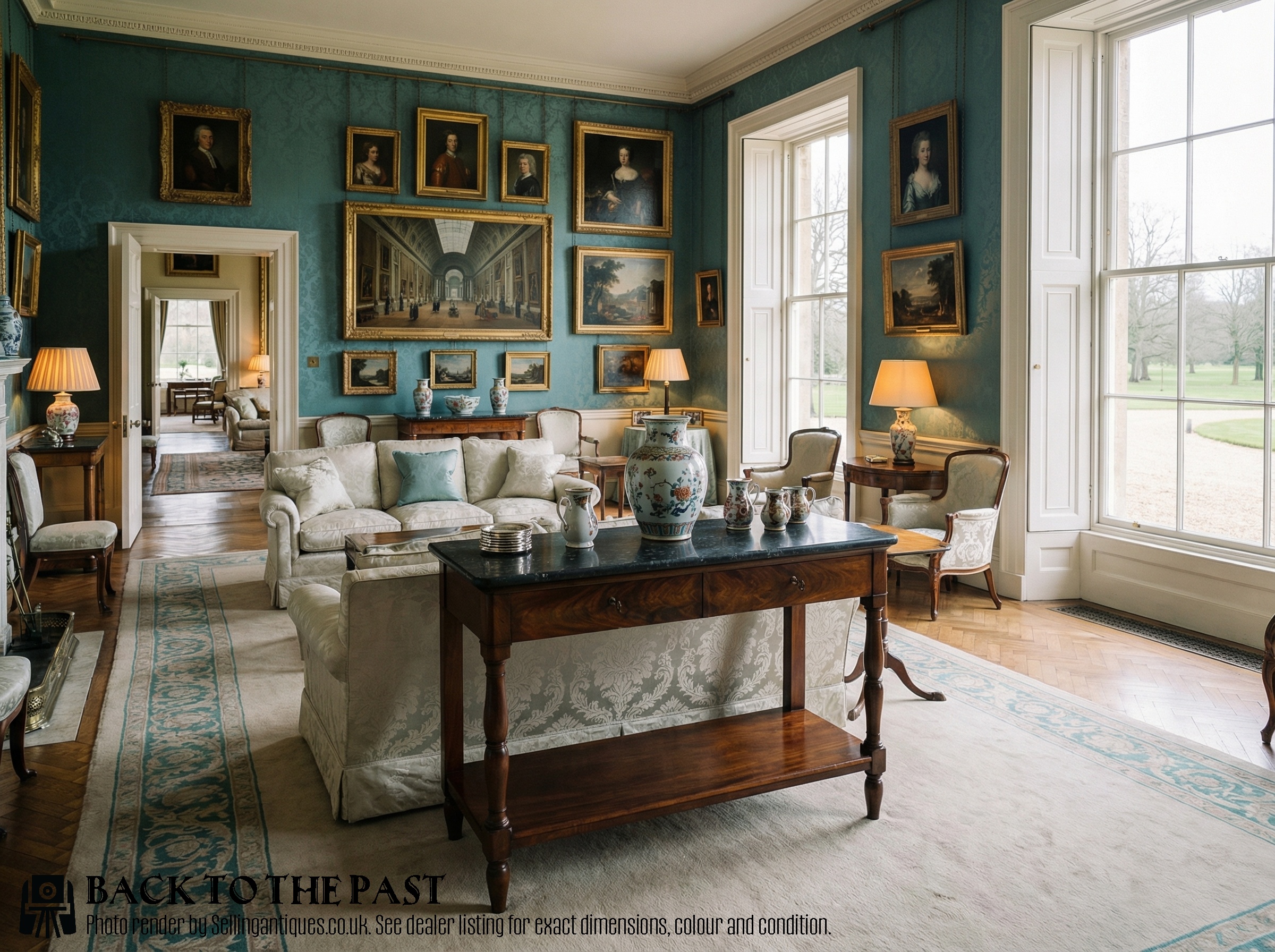
These tables suit hallways, entrance passages, and principal reception rooms where they can anchor a wall space beneath a mirror or painting.
Because they sit flat against a wall, they provide a narrow surface for lamps and decorative objects without blocking thoroughfares.
How do I care for the marble top?
Wipe the surface regularly with a damp cloth and mild soap, avoiding acidic cleaning products that can etch the stone.
Using coasters under glasses and placing felt pads under heavy objects will protect the polished finish from scratches.
Are these tables freestanding?
Most console tables rely on the wall for stability, and some lighter wall brackets require direct fixing to structural masonry.
Heavier examples with four substantial legs can stand independently, but wall attachment remains common for safety.
How can I tell the period?
Examine the timber species, construction joints, and decorative vocabulary such as French Empire mounts or Regency brass inlays.
Comparing the primary materials against recorded nineteenth and eighteenth century examples helps clarify the date.