



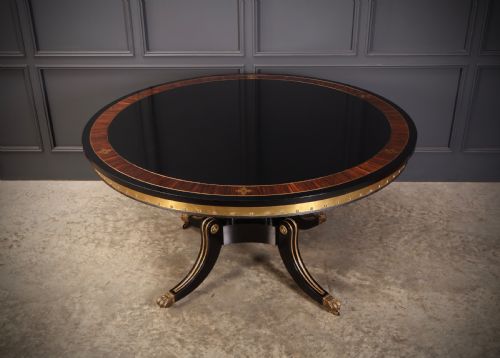


Vintage Foyer Centre Table
A vintage foyer centre table anchors a grand hallway with presence, offering a surface for a central floral arrangement and setting the tone for the interior.
Vintage Foyer Centre Table
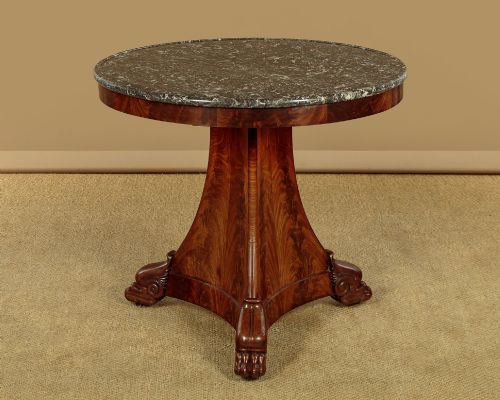
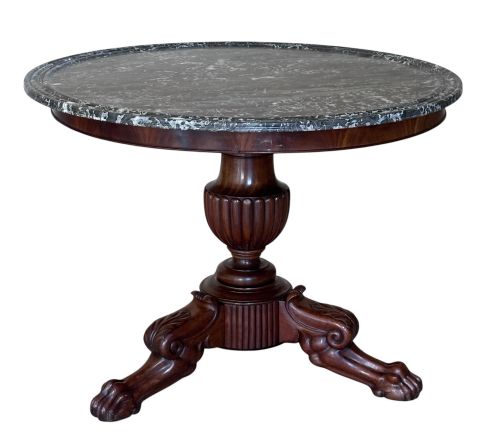
A vintage foyer centre table is designed to stand free in an entrance hall, offering a circular or oval surface viewed from every side. You will frequently meet nineteenth-century examples, often described as gueridons, alongside twentieth-century iterations influenced by Art Deco design.
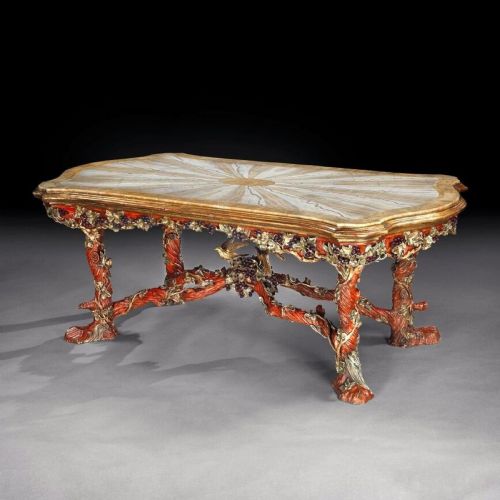
The form spans various historical styles including Regency, Victorian, and Edwardian, with regional interpretations from France, Italy, and India. These pieces function as the focal point of a room, bridging architectural scale and everyday domestic utility.
Materials and construction
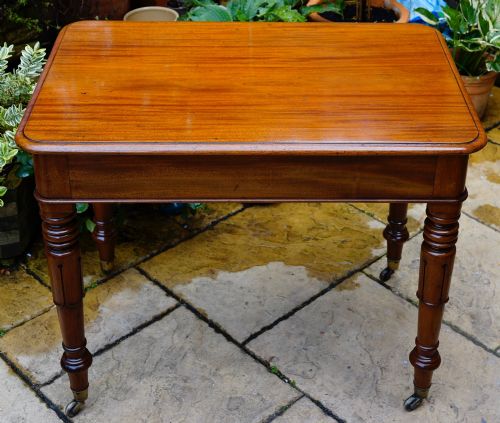
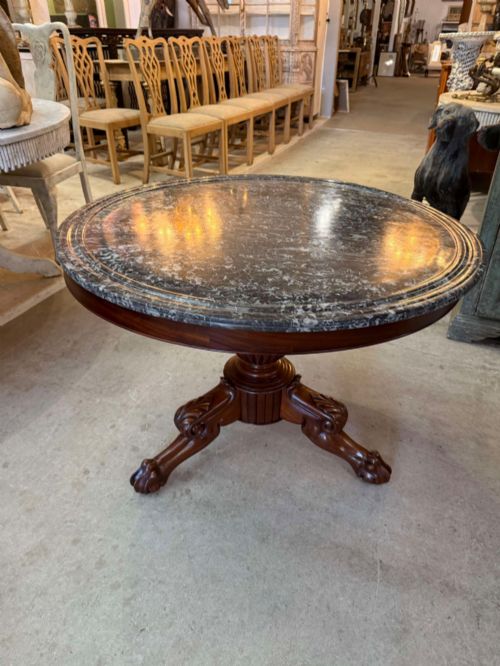
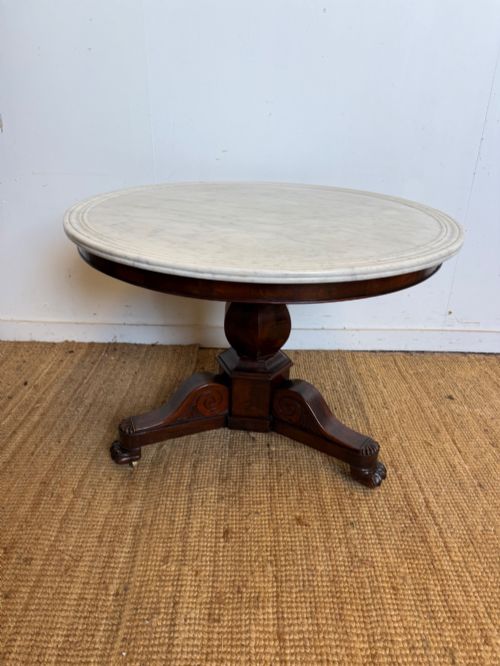
Cabinetmakers utilised dense hardwoods such as mahogany, walnut, rosewood, and ebonised wood for structural stability and rich grain figures. Tops frequently incorporate contrasting veneers like satinwood and kingwood, or heavy stone slabs including white marble, purple marble, and onyx.
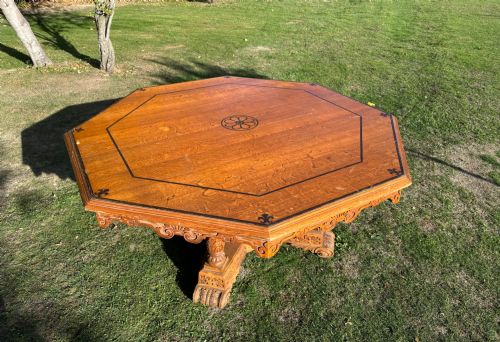
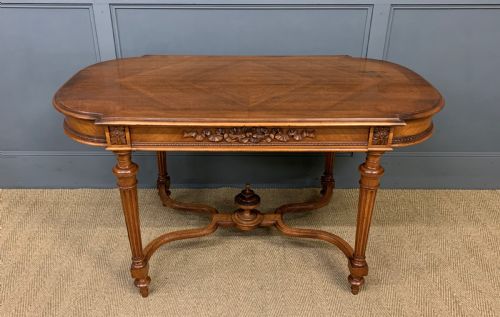
Joinery methods rely on sturdy pedestals or four-legged supports, often enhanced by brass inlays, bronze ornaments, and intricate hand-carving. French and Italian examples often employ specialised parquetry and marquetry to create geometric or floral patterns across the tabletop.
Vintage Foyer Centre Table Retail Price Guide 2026
Typical asking prices for vintage foyer centre table among the pieces listed under this phrase on Sellingantiques today, from the lower quarter to the upper quarter. They describe what is for sale here now, not the wider market.
Several tables feature hand-carved elephant figures supporting the structure, recording distant nineteenth-century trade influences.
What separates the best from the rest
The distinction lies in the ambition of the timber selection and the precision of surface decoration. Tables featuring matched veneer patterns, detailed scroll carving, or heavy stone inserts demonstrate superior craftsmanship compared to plain timber versions.
Proportion and stability dictate overall merit, particularly in freestanding gueridons where the weight of a marble top requires robust underframe construction. Original mounts and intact brass or bronze ornamentation elevate an example above standard production.
Amleto Bertoni
The Vintage Foyer Centre Table Glossary
- Gueridon
- A small freestanding table, typically round, originating in seventeenth-century France and frequently utilised as a centre table or lamp stand.
- Marquetry
- The art of applying decorative pieces of veneer to a structure to form intricate pictorial or geometric designs.
- Tilt-top
- A hinged table mechanism allowing the surface to fold vertical when not in use, saving space in domestic interiors.
- Ebonised
- Timber treated with a finish to imitate expensive ebony, popular in nineteenth-century cabinetmaking.
- Parquetry
- Geometric mosaic woodwork used for floors and tabletops, constructed from small blocks or strips of timber.
Vintage Foyer Centre Table: Frequently Asked Questions
Where should a centre table go?
These tables are designed to sit directly in the middle of an entrance hall or large foyer, allowing movement around all sides. They work best beneath a hanging pendant light or chandelier.
Ensure there is enough clearance space around the perimeter for doors to open and people to walk comfortably without obstruction.
Can a centre table hold heavy items?
Nineteenth-century pedestal forms and heavy timber frames are structurally sound enough to support large decorative objects, bronze ornaments, and ceramic bowls. Stone and marble tops add considerable weight and stability.
Lighter occasional tables from the twentieth century suit smaller floral displays or lamps rather than heavy sculptures.
How do I identify a Victorian table?
Victorian examples often feature dark hardwoods such as mahogany or rosewood, coupled with substantial turning and carved scrollwork. Many incorporate tilt-top mechanisms or heavy pillar bases.
Proportions tend to be generous and robust, reflecting the interior tastes of the nineteenth century.
What is an Art Deco centre table?
Art Deco pieces utilise exotic veneers like birds-eye maple, ebony Macassar, and birch, often paired with geometric ebonised details. The silhouettes favour clean lines and streamlined curves rather than traditional carving.
These tables frequently date from the nineteen-twenties and nineteen-thirties, reflecting modernist design movements.