



French Marble Foyer Table
A French marble foyer table brings classical proportion and cool stone surfaces straight into a hallway, offering a striking centrepiece for any entrance.
French Marble Foyer Table
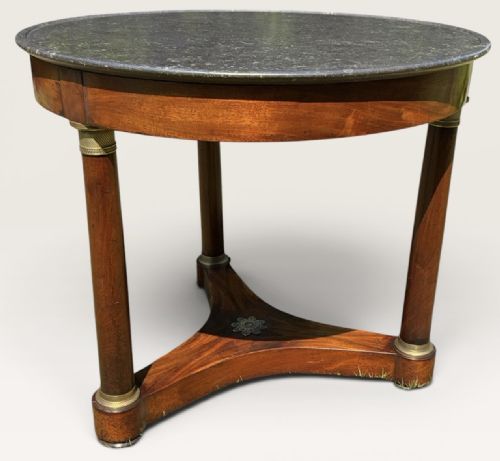
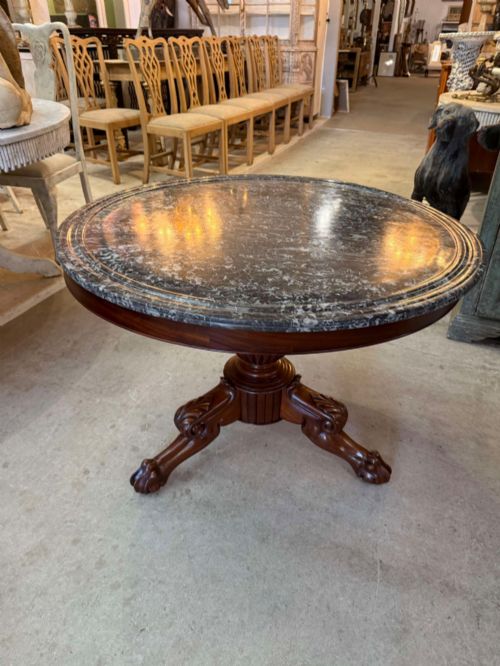
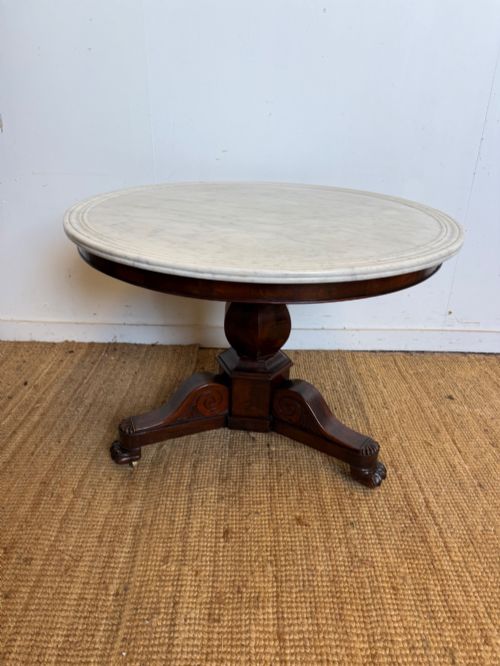
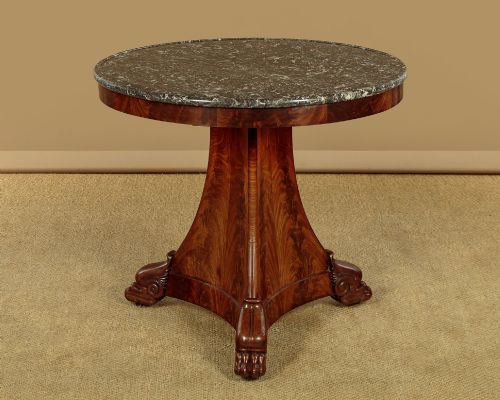
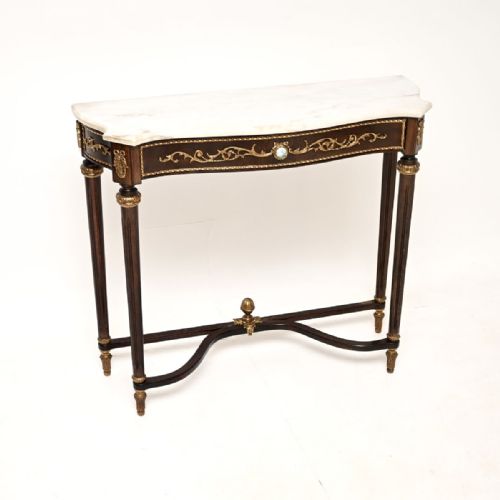
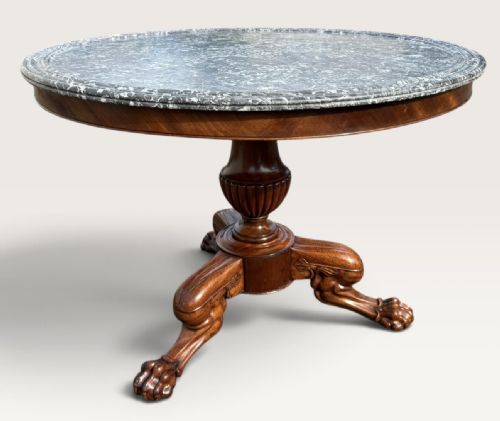
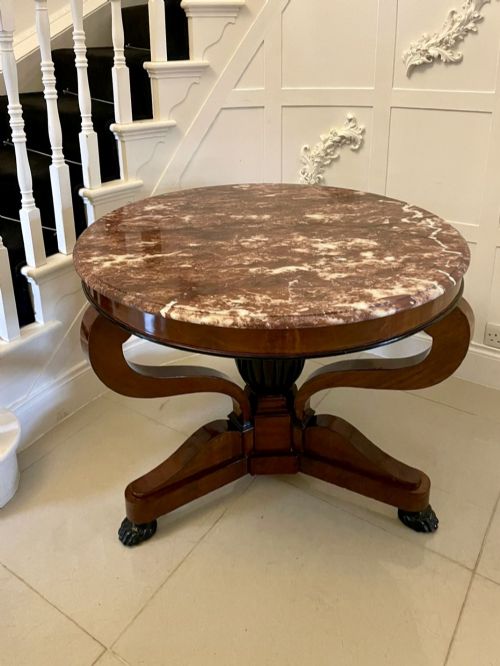
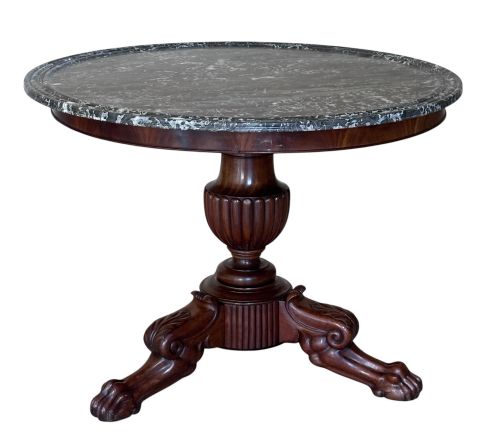
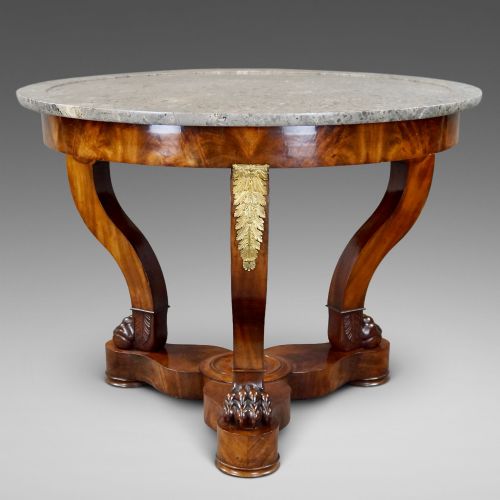
When searching for a french marble foyer table, collectors encounter pieces primarily configured as centre tables, console tables, and occasional tables. These forms date predominantly from the nineteenth century, spanning periods such as the 1800s, 1850s, 1860s, and 1900s, with select examples reaching back to the eighteenth century.
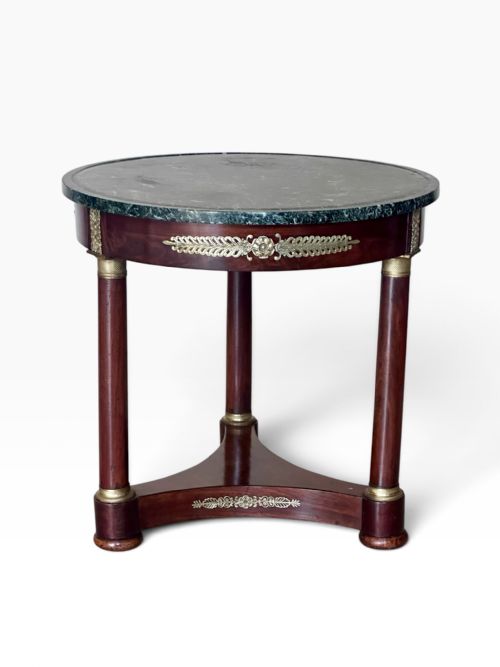
The most common formats on this page are circular guéridons and console tables designed to sit against a wall or anchor the middle of a room. Stylistically, the selection draws heavily on French Empire, Louis XVI, Rococo Revival, and Neoclassical traditions, reflecting the grandeur of continental reception rooms.
How they were made
Cabinetmakers constructed these tables using a sturdy timber carcase beneath a heavy stone slab. The structural frames utilise woods such as mahogany, walnut, oak, burr elm, and kingwood, often selected for rich grain patterns or flame figures.
Surface ornamentation relies on metalwork and gilding to catch the light in a hallway. Ormolu mounts, brass details, and carved giltwood or parcel silvered finishes complement the smooth marble tops fitted neatly to each base.
French Marble Foyer Table Retail Price Guide 2026
Typical asking prices for french marble foyer table among the pieces listed under this phrase on Sellingantiques today, from the lower quarter to the upper quarter. They describe what is for sale here now, not the wider market.
At least one nineteenth-century table stands ready to greet visitors accompanied by carved rams' heads.
What varies in quality
The distinction between ordinary and exceptional examples lies in the ambition of the carving and the choice of materials. Tables featuring elaborate giltwood motifs, figural supports like rams' heads, or finely figured kingwood and burr elm demonstrate superior craftsmanship.
Proportion and the integration of the marble top dictate the visual success of the piece. A heavier execution in the bronze mounts and a precise fit of the stone indicate a workshop of higher standing.
The French Marble Foyer Table Glossary
- Guéridon
- A small circular table on a central pillar or tripod base, originating in seventeenth-century France. These pieces often serve as centre tables in grand halls.
- Console table
- A table designed to stand against a wall, traditionally supported by fixed brackets or console legs. They provide a shallow surface well suited to narrow entranceways.
- Ormolu
- Gilded bronze applied as decorative mounts to furniture frames. The technique involves mercury amalgamation, producing a bright metallic lustre.
- French Empire
- A neoclassical design style spanning the late eighteenth and early nineteenth centuries. It draws inspiration from ancient Roman and Greek motifs.
French Marble Foyer Table: Frequently Asked Questions
Where should I place a console table?
Console tables fit naturally against entrance walls or beneath hallway mirrors. Their shallow depth allows them to occupy narrow spaces without obstructing movement.
They provide a functional surface for keys and post while establishing the decorative tone of the interior.
What is a guéridon table used for?
Guéridons serve primarily as centre tables in large rooms or statement pieces in spacious foyers. Their circular shape allows people to walk freely around them.
Historically, they held lighting or decorative objects in the middle of a reception space.
How do I identify French Empire style?
French Empire pieces display formal symmetry and classical motifs drawn from antiquity. Look for architectural lines paired with striking bronze or ormolu mounts.
Common decorative elements include sphinxes, laurel wreaths, and animal paw feet.
Are marble tops original to the tables?
Most marble tops on these tables were fitted during manufacture to match the weight and recess of the wooden frame. The stone provides a durable, cool surface designed to contrast with the timber base.
Inspect the seating of the marble within the rebate to understand how it rests on the structure.